How to Choose a Floor Scrubber Machine for Your Facility
Release time: 2026-10-26
How to Choose a Floor Scrubber Machine for Your Facility
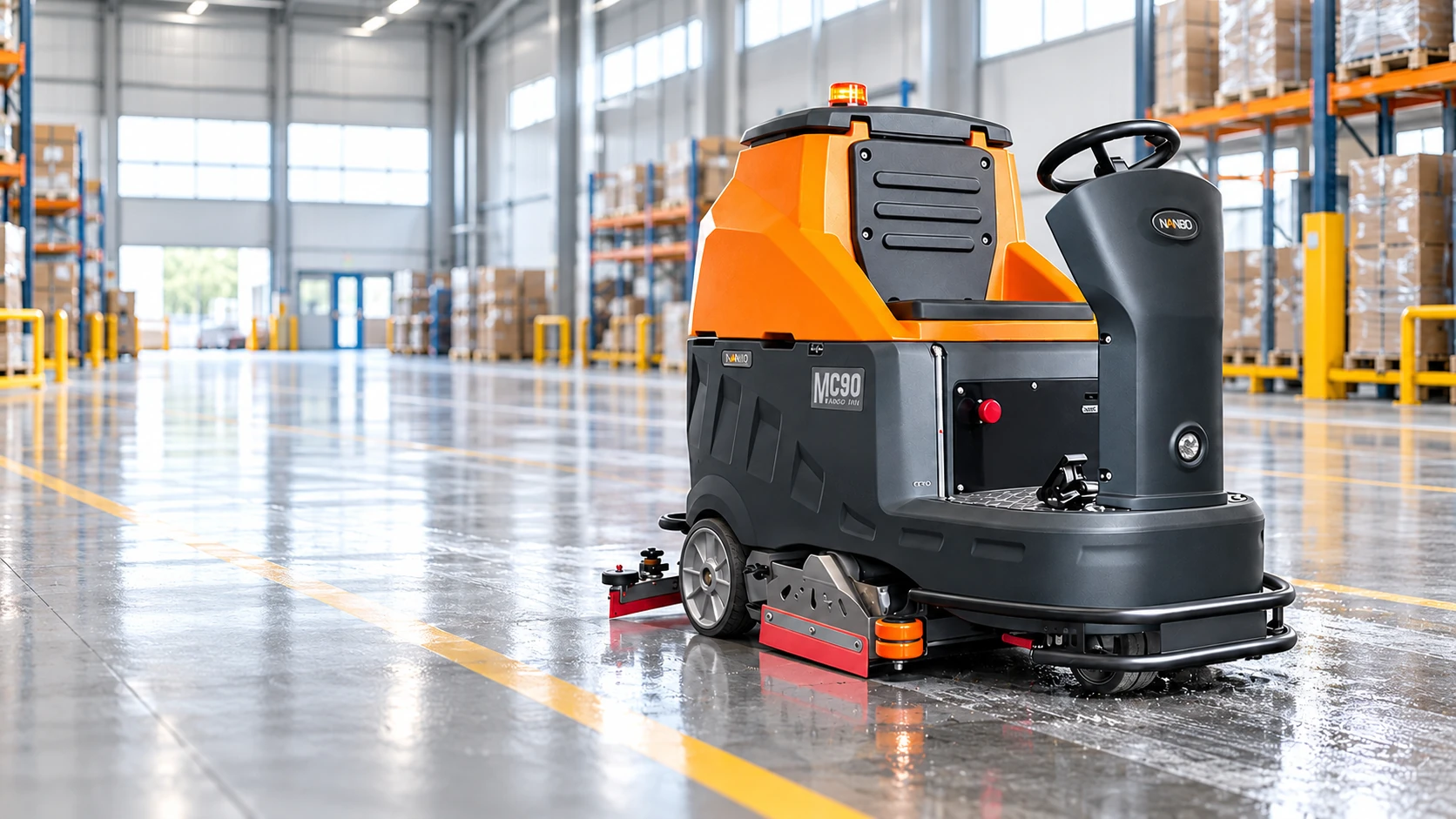
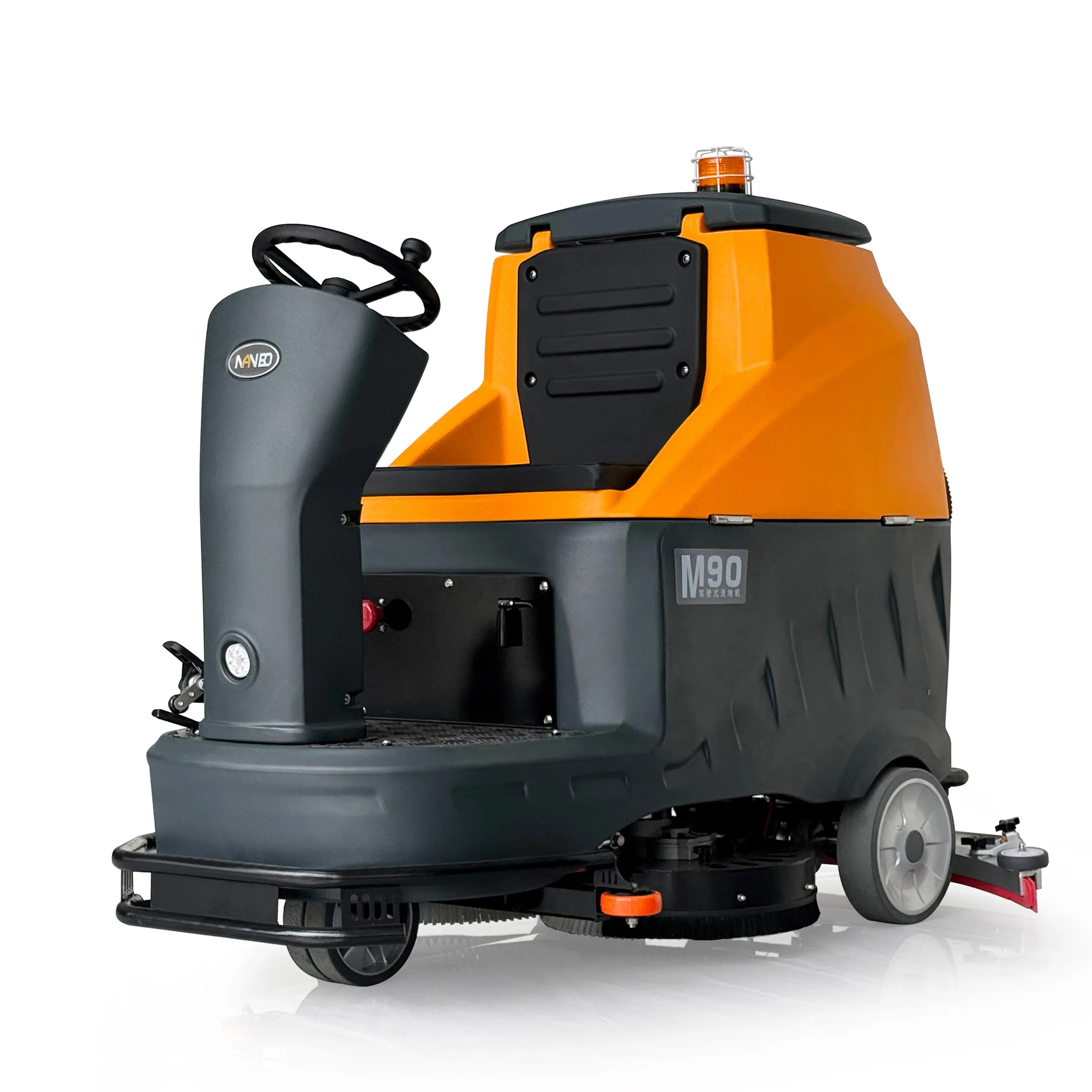
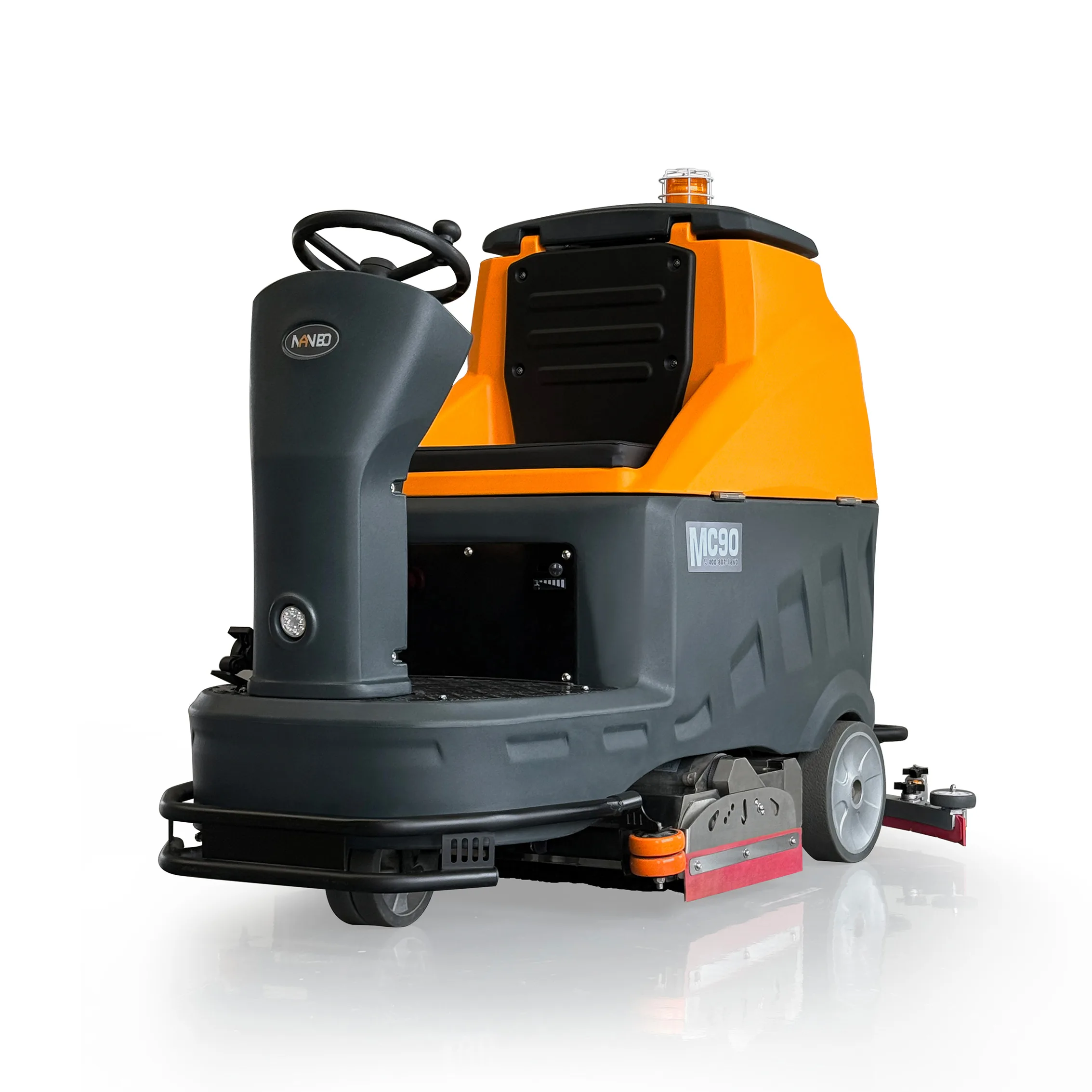
A NANBO MC90 ride-on sweeper-scrubber working on a large industrial hard floor.
Choosing a floor scrubber machine is not only a question of facility size. The correct machine must fit the narrowest aisle, handle the actual soil, recover water effectively, run for the required shift and remain practical to maintain. A model with the highest published productivity can still perform poorly if it is too wide, needs frequent refilling or cannot manage the debris found on site.
Quick Answer
Choose a floor scrubber machine by measuring the cleanable floor area, narrowest aisle, turning space, floor material, soil type and available cleaning time. Walk-behind models suit tighter indoor routes. Compact ride-on units reduce operator walking. Wide-path ride-on machines suit large open floors, while a sweeper-scrubber is useful when loose debris and wet soil must be handled in one process.
Floor Scrubber Selection at a Glance
| Site condition | Better starting format | Main point to verify |
|---|---|---|
| Narrow aisles and frequent obstacles | Walk-behind scrubber | Machine width and maneuverability |
| Small-to-medium site with long routes | Compact ride-on scrubber | Turning radius and elevator access |
| Large warehouse or factory | Wide-path ride-on scrubber | Real field productivity and tank capacity |
| Loose chips, screws or grit plus wet soil | Sweeper-scrubber | Debris size, hopper and recovery system |
| Quiet indoor environment | Low-noise scrubber dryer | Published operating noise and drying result |
| Multiple daily shifts | High-runtime or fast-charge configuration | Battery, charging window and maintenance plan |
The right floor scrubber machine format should remain practical across the entire route, including access points, refill locations and storage areas.
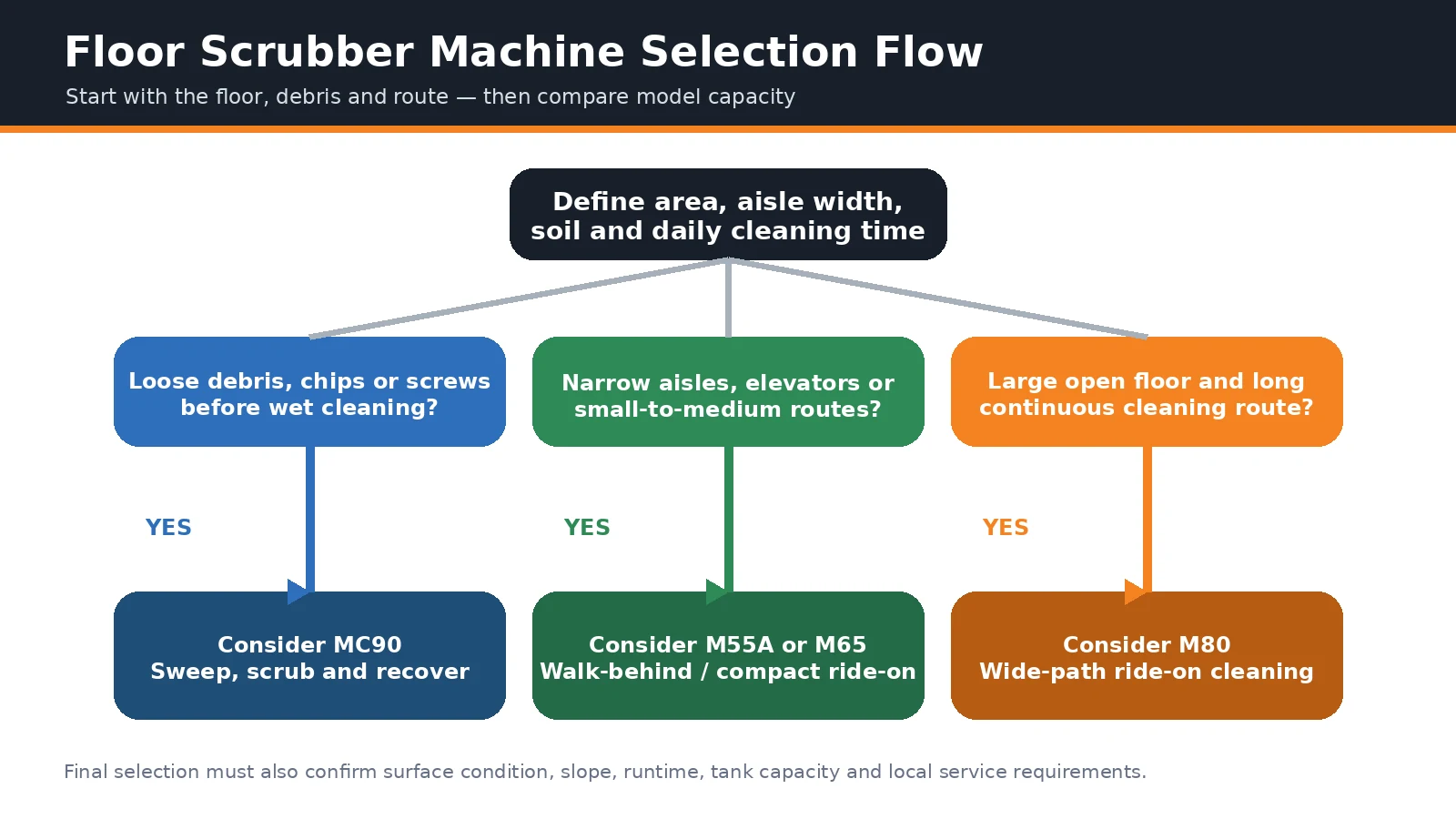
Start with the actual route and contamination before comparing rated capacity.
What Is a Floor Scrubber Machine?
A floor scrubber machine applies cleaning solution, agitates the floor with disc or cylindrical brushes and collects the dirty liquid through a squeegee and vacuum system. Unlike manual mopping, the process controls solution delivery and removes much of the contaminated water immediately, helping the cleaned route return to service more quickly.
The name covers several formats. Walk-behind machines are controlled by an operator walking behind the unit. Ride-on machines carry the operator and are designed for longer routes. Sweeper-scrubbers add a debris collection function for suitable loose material. The correct format depends on the complete cleaning process, not the product name alone.
How a Floor Scrubber Machine Works
The normal cleaning sequence has five stages:
- Clean water and an approved detergent are delivered to the brush area.
- Disc or cylindrical brushes loosen soil from the hard floor.
- The operator maintains a controlled travel speed and overlap.
- The rear squeegee gathers dirty solution for vacuum recovery.
- The operator checks edges, turns and heavily contaminated sections.
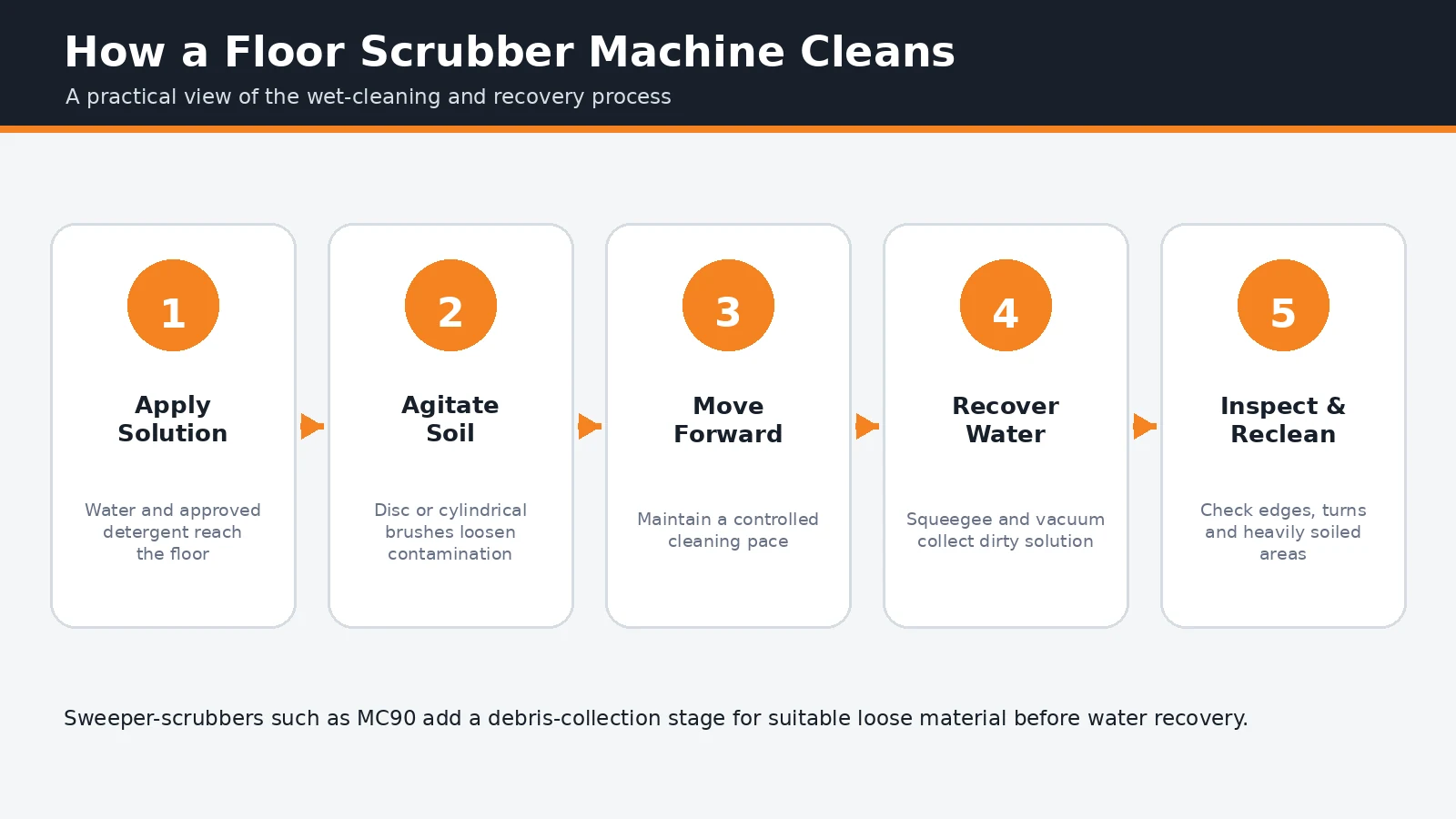
A sweeper-scrubber adds debris collection when the machine and debris type are suitable.
The cleaning result depends on more than brush pressure. Brush or pad selection, detergent, travel speed, water flow, squeegee condition and floor profile all affect the outcome. For that reason, buyers should describe the floor and soil instead of requesting a machine only by tank size or motor power.
Step 1: Measure the Real Cleaning Area
Begin with the area that the operator can actually clean. Remove fixed production lines, racks, storage zones, offices and inaccessible spaces from the total building area. Then record how often the route must be cleaned and how much time is available per shift.
Published productivity is normally a screening value. It represents working width and travel speed under favorable conditions. Real output is lower because the operator must turn, overlap passes, slow near obstacles, refill solution, empty the recovery tank and inspect missed sections.
A floor scrubber machine with a lower rated output may still finish first when it can move through the route with fewer reversals and interruptions.
A practical estimate is:
`Estimated field output = published productivity × site efficiency factor`
For early planning, the site efficiency factor should reflect route complexity. An open warehouse may retain more of the rated output than a crowded workshop. Do not use one universal percentage for every project. A short on-site trial provides a better basis for the final decision.
Step 2: Measure Aisles, Doors and Turning Space
The widest machine is not automatically the best floor scrubber machine. Measure the narrowest aisle, doorway, loading-bay transition and elevator entrance. Also check whether the machine can turn at aisle ends without repeated reversing.
Working width is not the same as total machine width. The squeegee may extend beyond the brush deck, while guards and wheels also affect clearance. Buyers should request the complete machine dimensions and confirm the route with a margin for safe operation.
For multi-floor facilities, record elevator door width, platform size and load capacity. A compact ride-on unit may reduce walking while still moving between levels, but only when the complete dimensions and weight are suitable.
Step 3: Identify Floor Material and Soil
A floor scrubber machine must match both the surface and contamination.
Common hard floors include:
- Epoxy flooring
- Concrete
- Ceramic tile
- Terrazzo
- Granite and marble
- PVC flooring
- Stone tile
- Dry-shake hardener floors
Then classify the soil. Light dust and routine traffic film need a different setup from oil, coolant, rubber marks or compacted industrial dirt. Confirm chemical compatibility before using detergent on sensitive stone or coated flooring.
Loose material requires separate attention. Wood chips, metal fragments, screws or welding residue may need pre-sweeping. Where suitable, a sweeper-scrubber such as the NANBO MC90 can combine debris collection, scrubbing and water recovery. However, the debris size and quantity still need confirmation before selection.
Step 4: Choose Walk-Behind, Ride-On or Sweeper-Scrubber
Walk-Behind Floor Scrubber
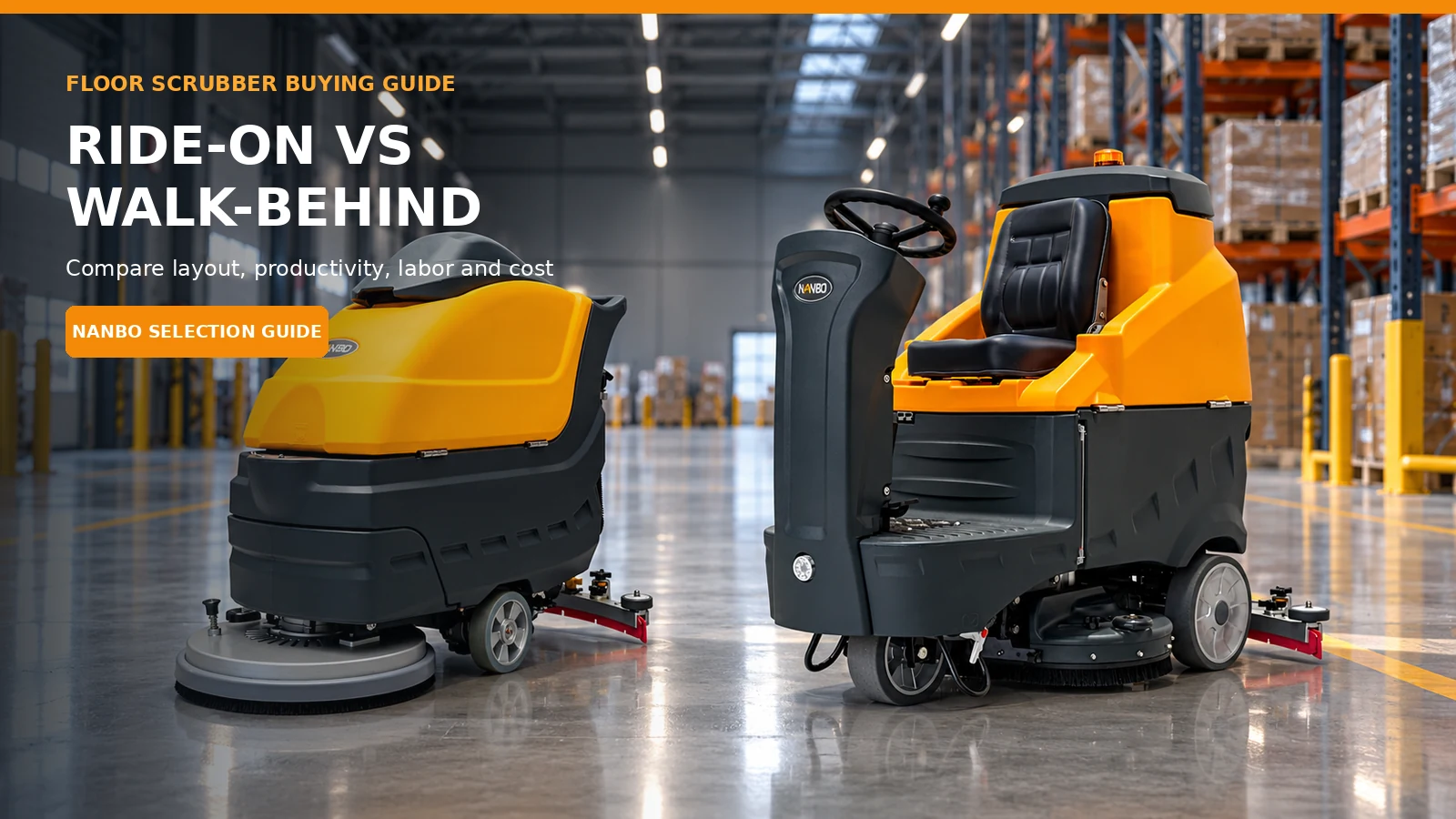
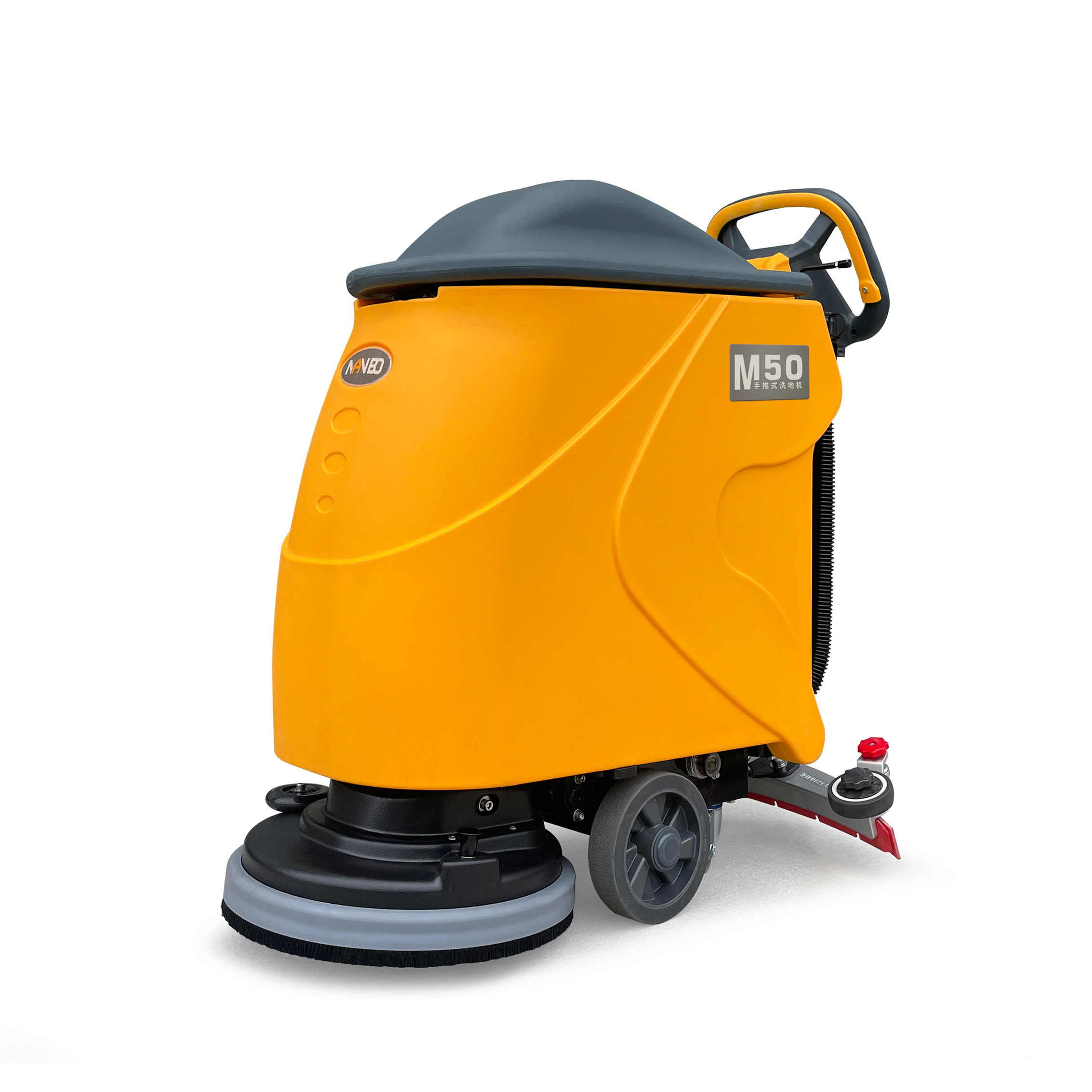
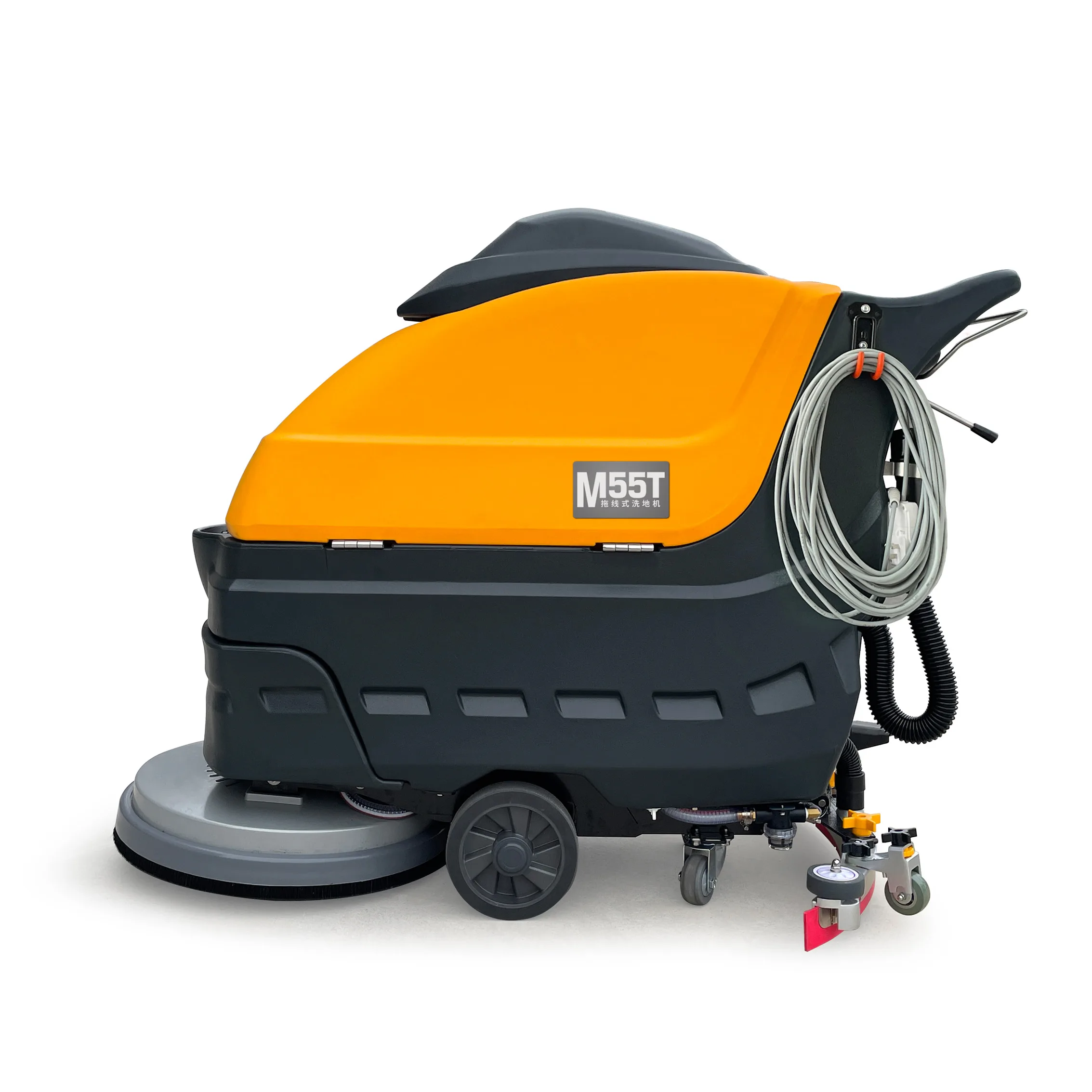
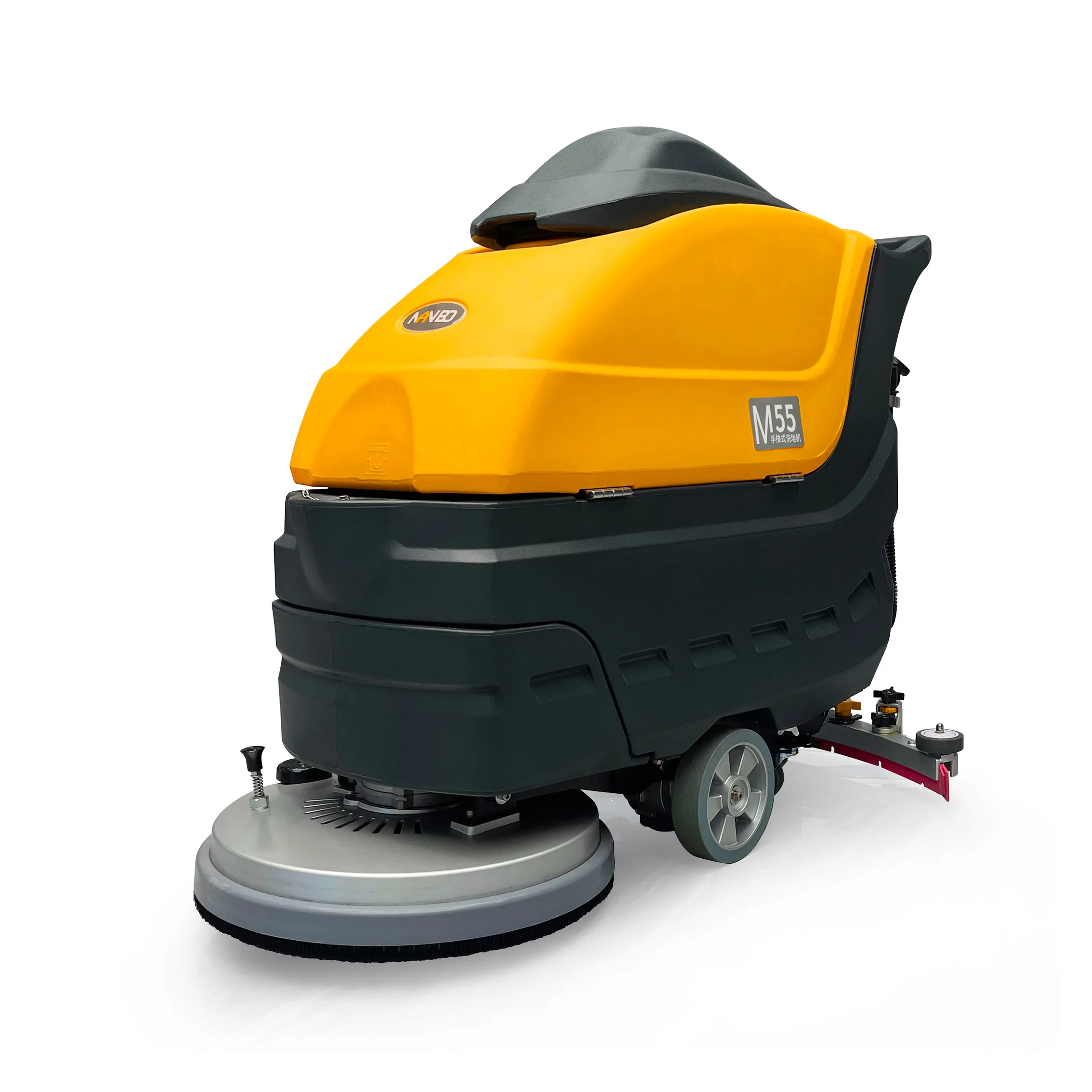
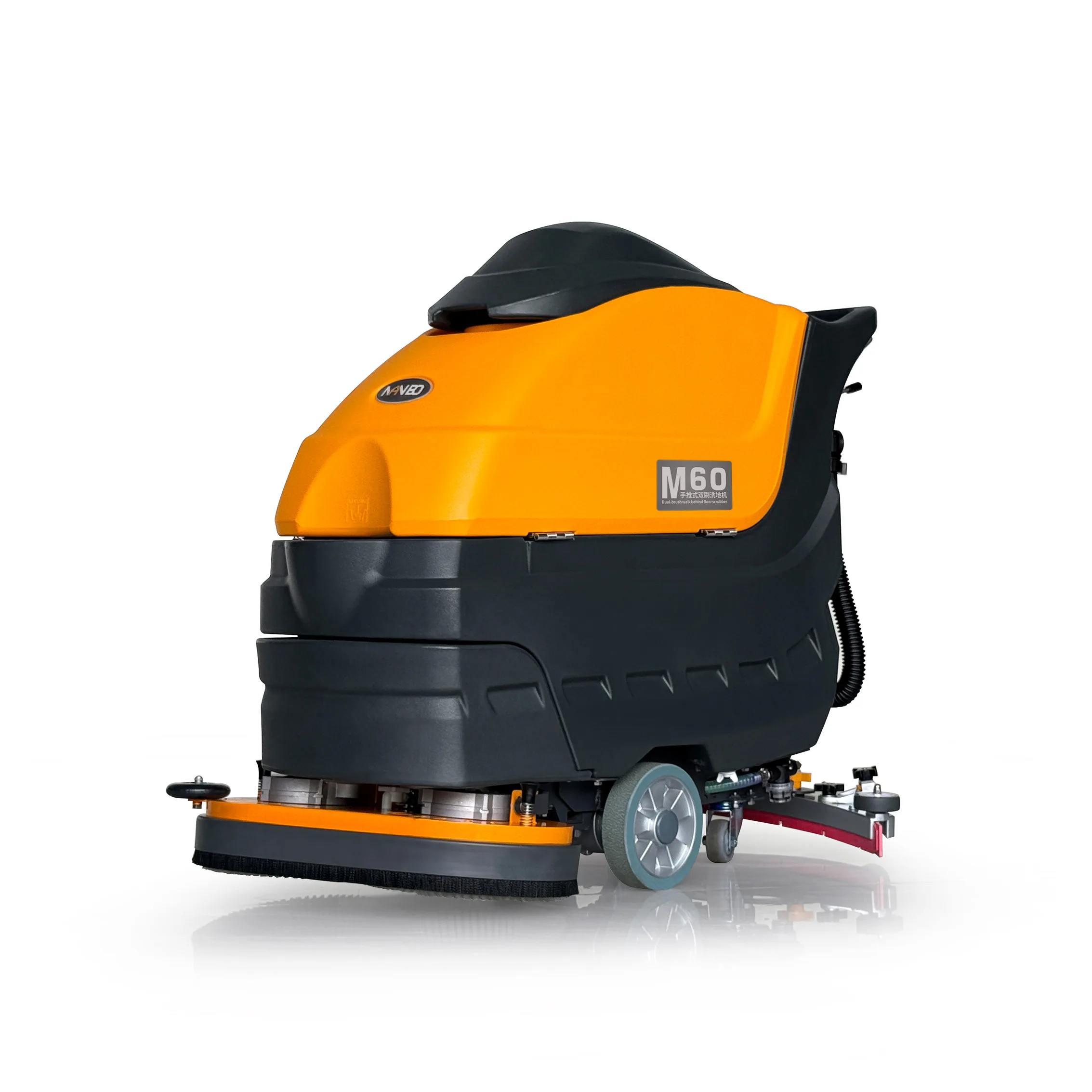
A walk-behind floor scrubber machine is a strong starting point for narrower routes, frequent obstacles and smaller cleaning zones. It is easier to position around shelving, production equipment and doorways. Buyers should compare whether the unit is brush-assisted or motor-driven because the drive system affects operator effort on longer routes.
Compact Ride-On Floor Scrubber
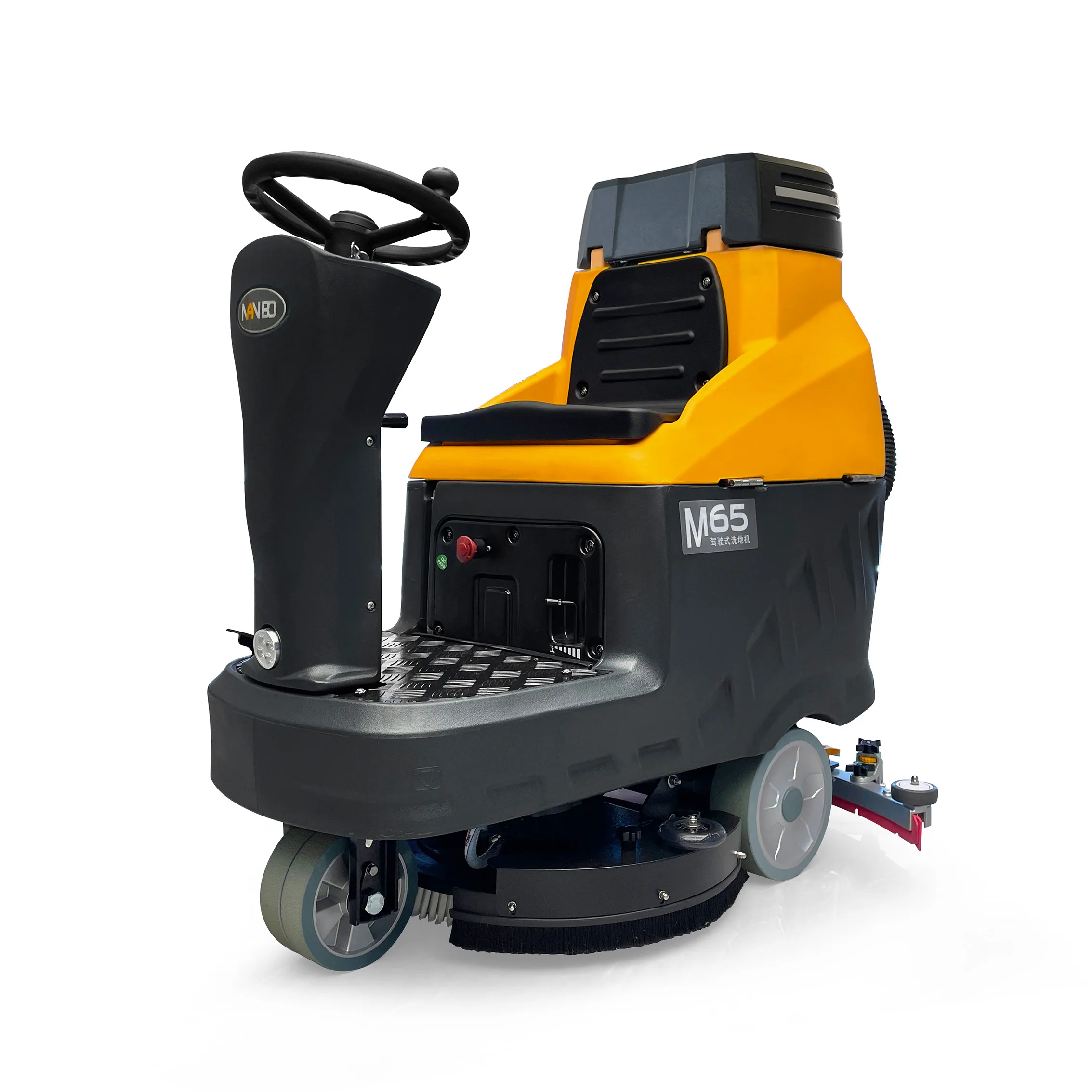
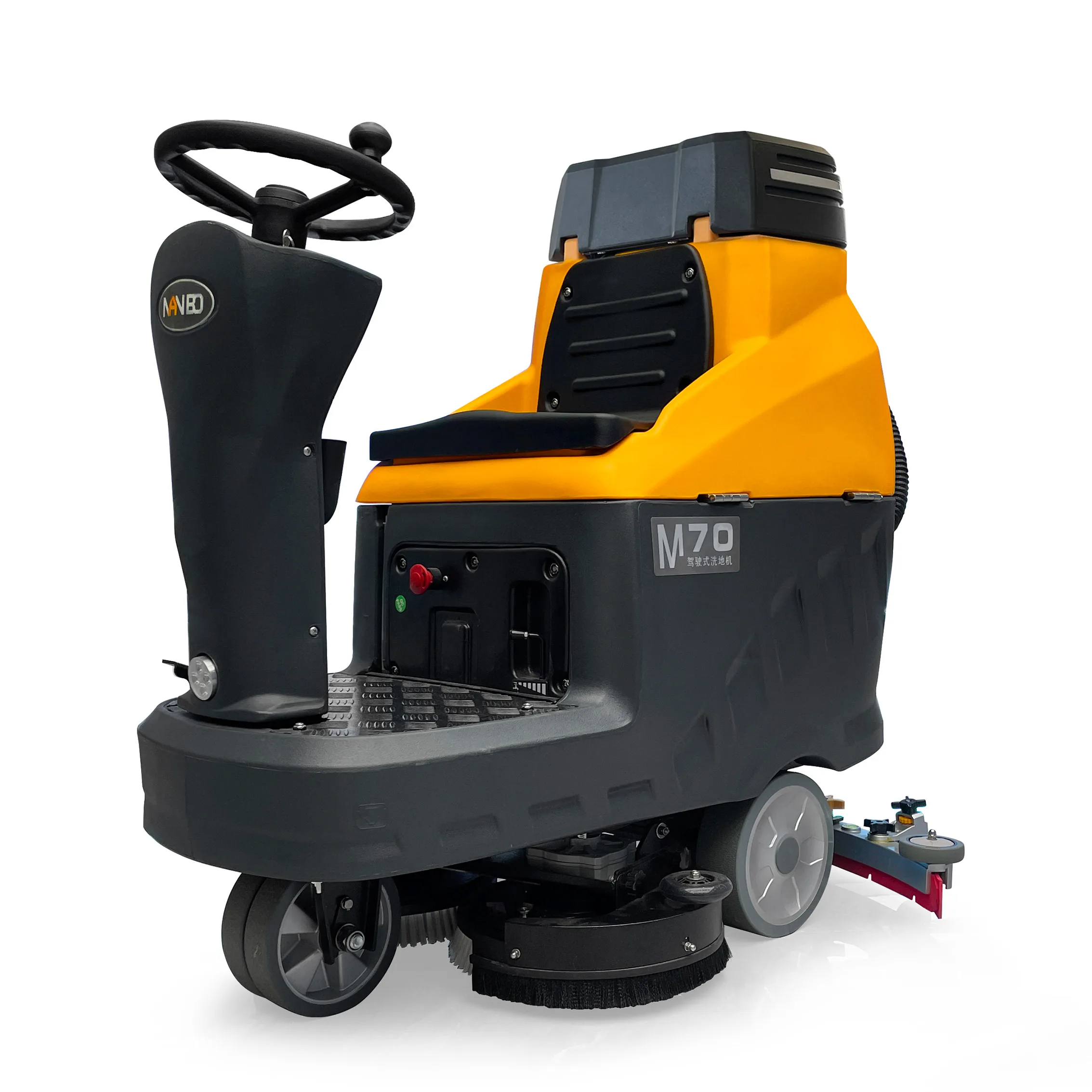
A compact ride-on unit reduces operator walking and can improve consistency on medium routes. It must still fit the narrowest aisle and turning area. Check visibility, braking, ramp performance and whether the machine can access every floor that needs cleaning.
Wide-Path Ride-On Floor Scrubber
A wide-path ride-on floor scrubber machine is designed for large open areas such as warehouses, factories and parking facilities. Larger tanks and a wider cleaning path can reduce interruptions, but the machine requires more storage space and a suitable charging area.
Ride-On Sweeper-Scrubber
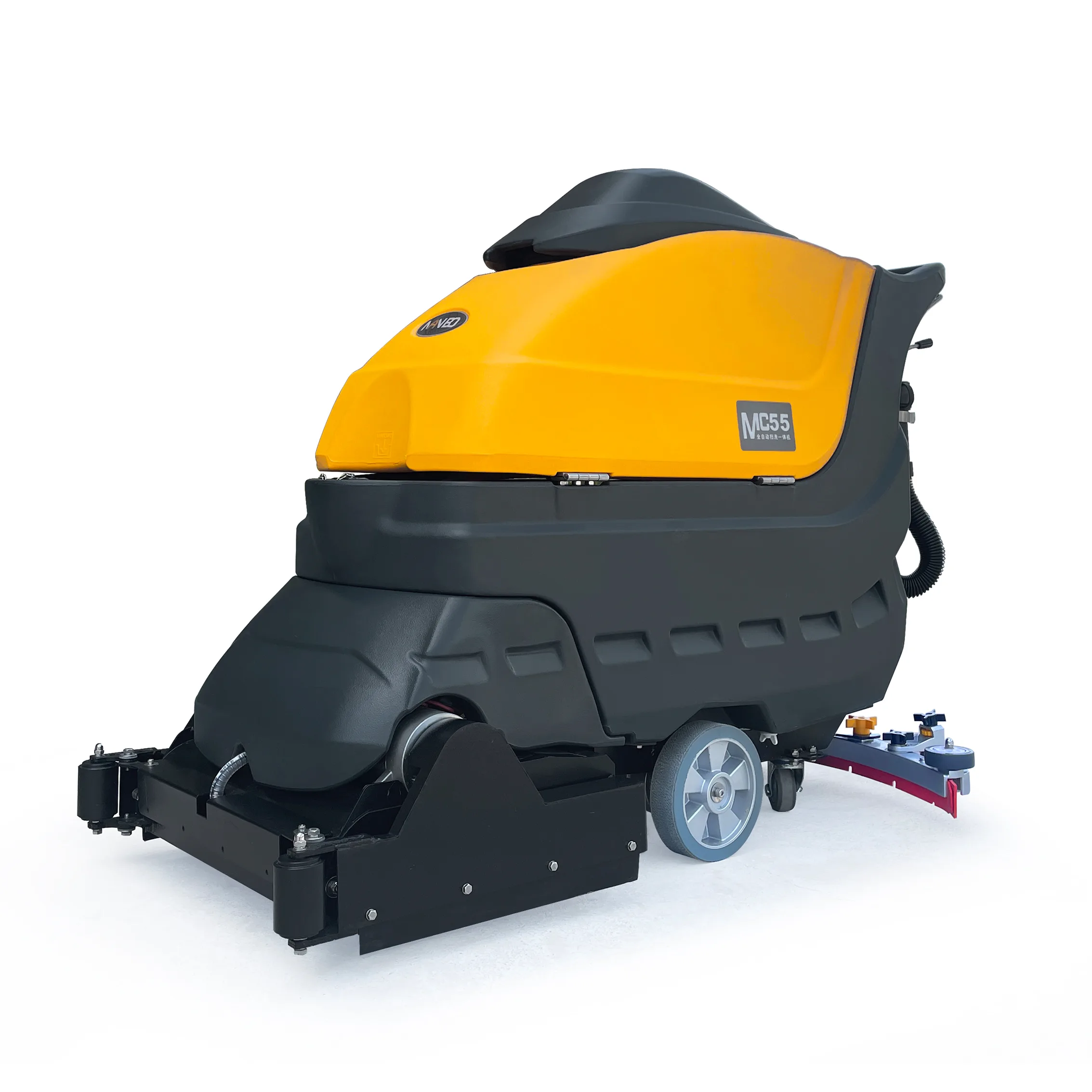
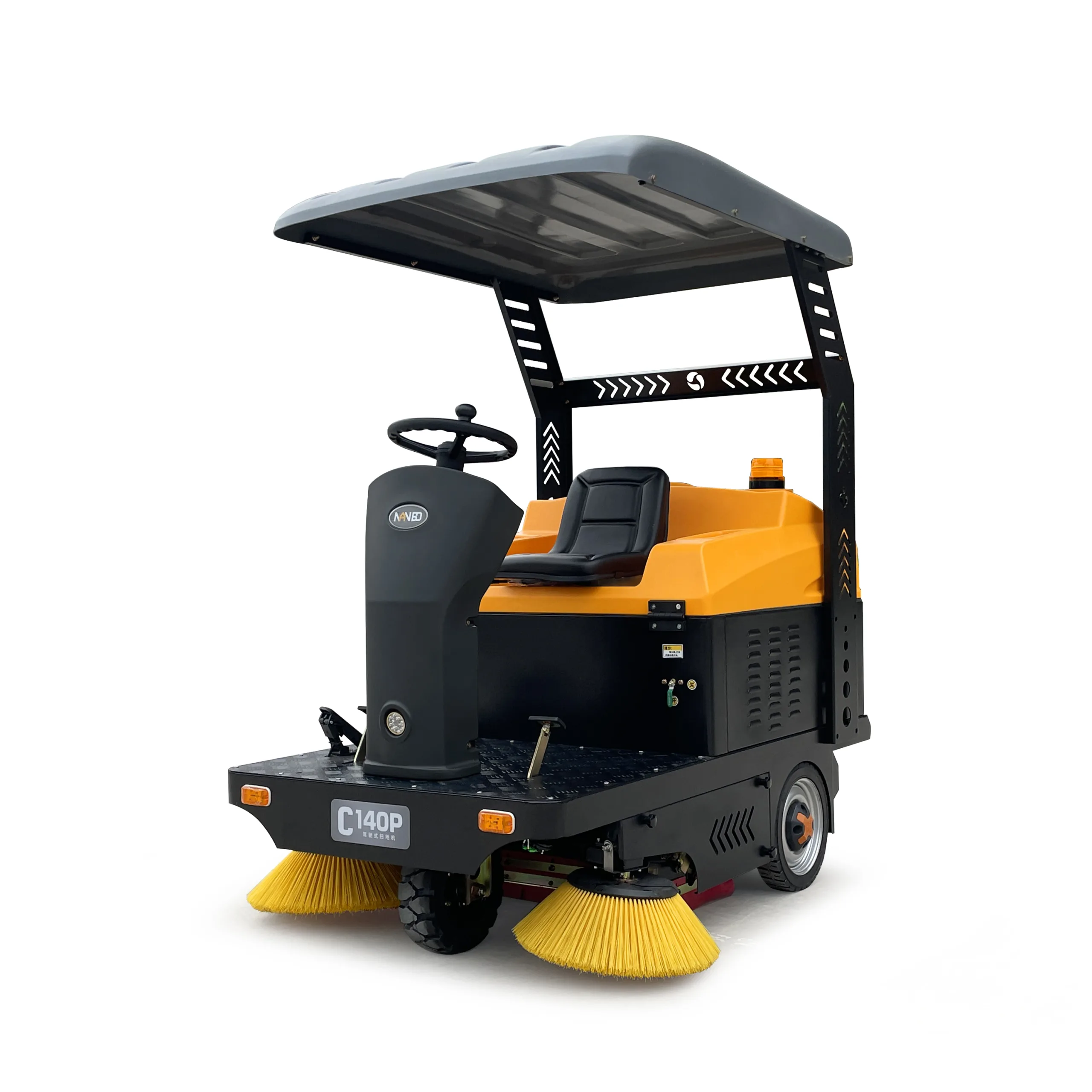
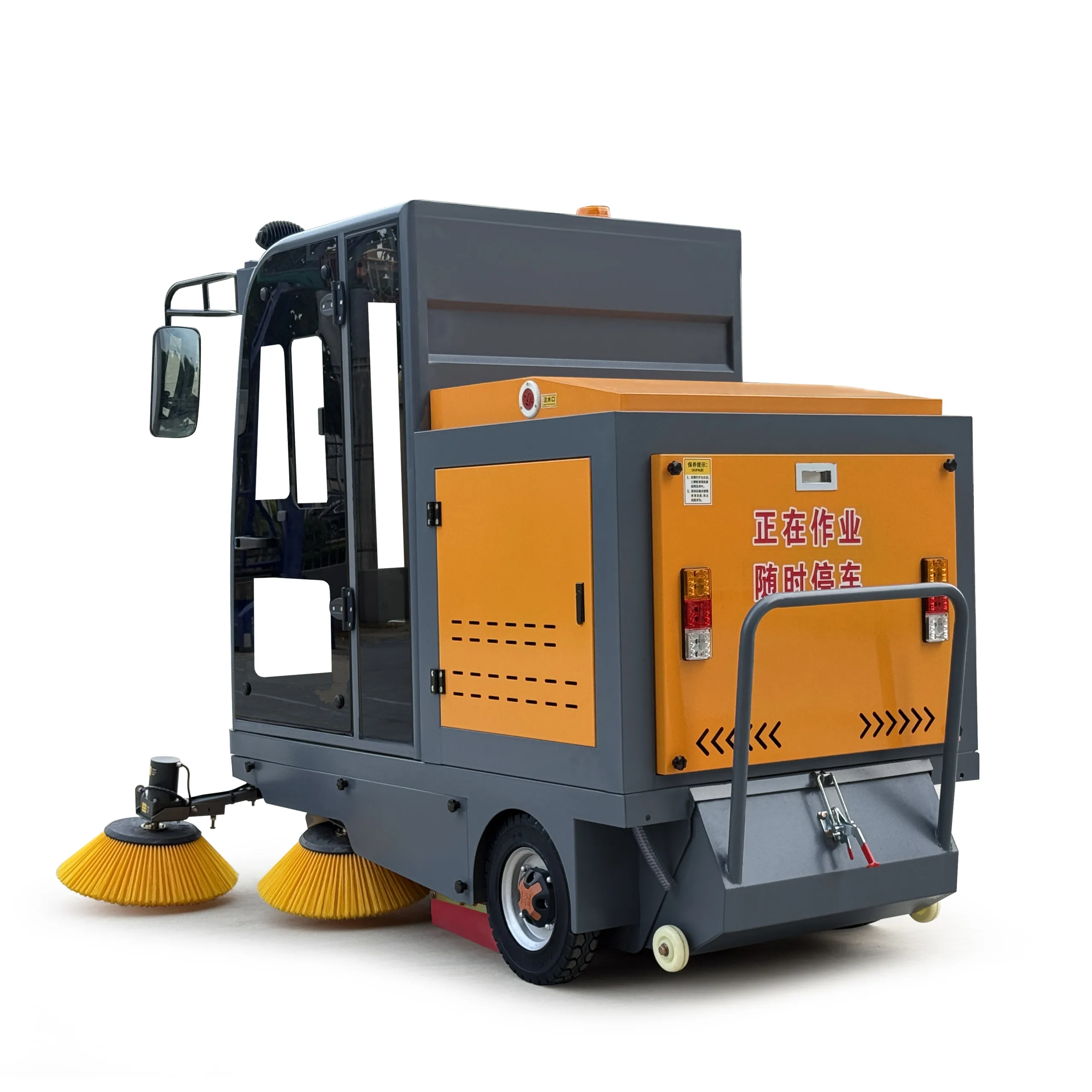
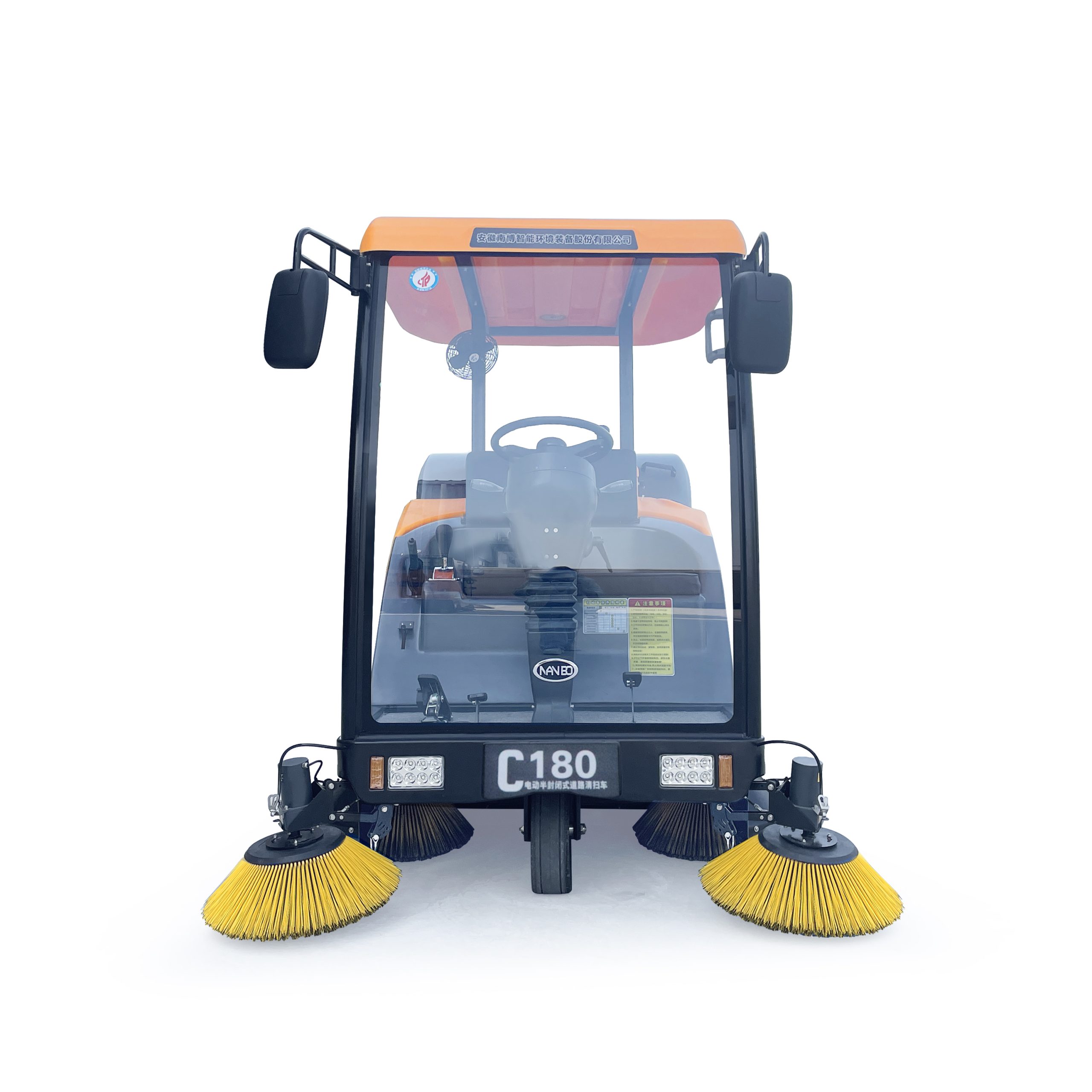
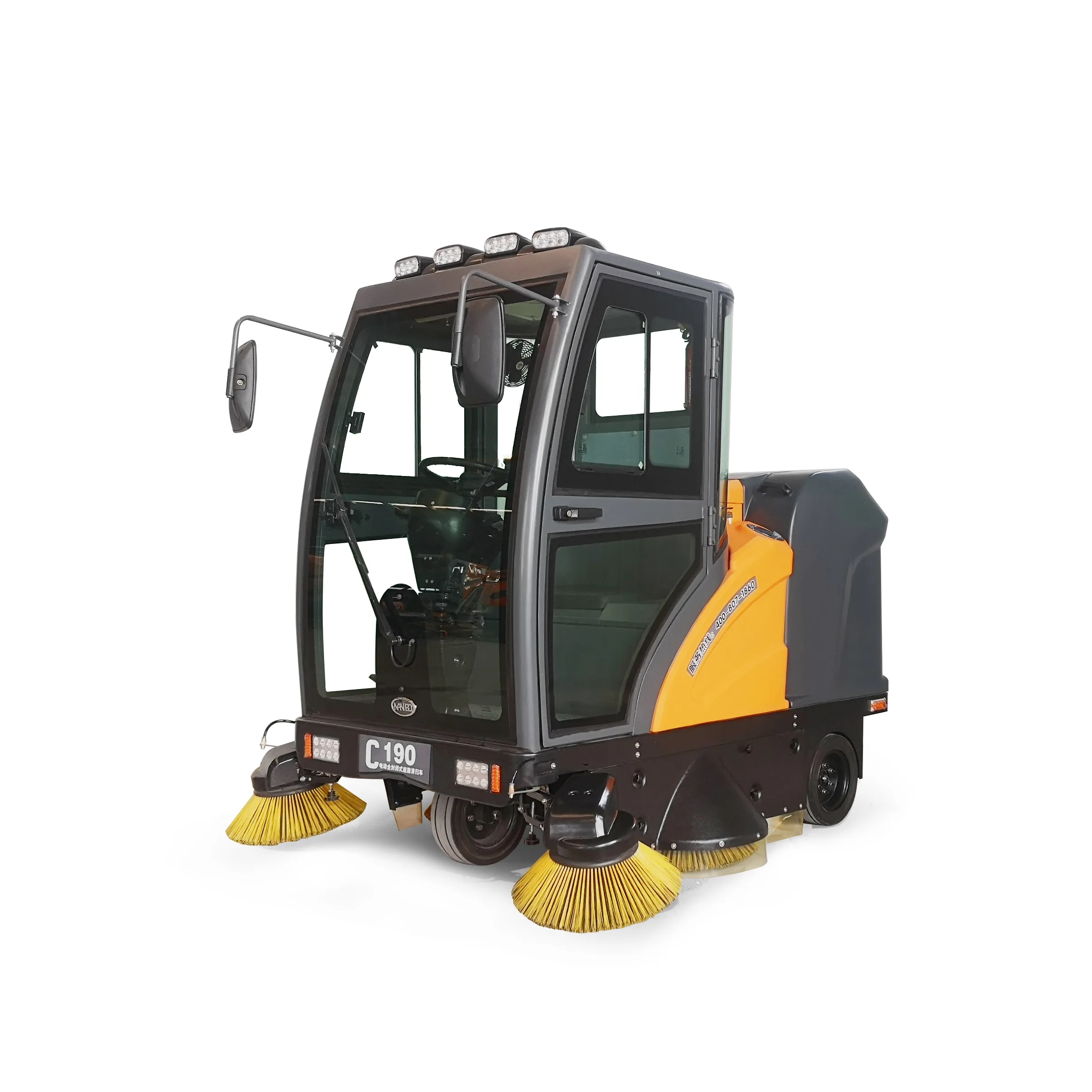
A sweeper-scrubber is designed for sites where suitable loose debris and wet contamination occur together. It can reduce the need for separate sweeping and scrubbing passes. Buyers should verify the cylindrical brush system, debris hopper, squeegee, filtration requirements and the size of material that the machine is expected to collect.
Step 5: Compare Working Width, Tanks and Runtime
Three specifications work together:
- Working width affects area covered in each pass.
- Tank capacity influences how often the operator stops to refill or empty.
- Operating time determines whether the machine can complete the planned route within the available shift.
A very wide floor scrubber machine can lose its productivity advantage if it cannot pass through an aisle. A long runtime does not solve a small recovery tank that fills repeatedly in a heavily soiled area. Review these specifications as one system.
NANBO Floor Scrubber Model Comparison
The following figures are published model ratings and should be confirmed against the ordered configuration.
| Model | Format | Maximum productivity | Maximum working width | Solution / recovery tank | Operating time | Best starting application |
|---|---|---|---|---|---|---|
| M55A | Motor-driven walk-behind | 3,500 m²/h | 850 mm | 60 / 70 L | 3–4 h | Narrow indoor routes |
| M65 | Compact ride-on | 3,900 m²/h | 850 mm | 85 / 95 L | 3–4 h | Small-to-medium venues |
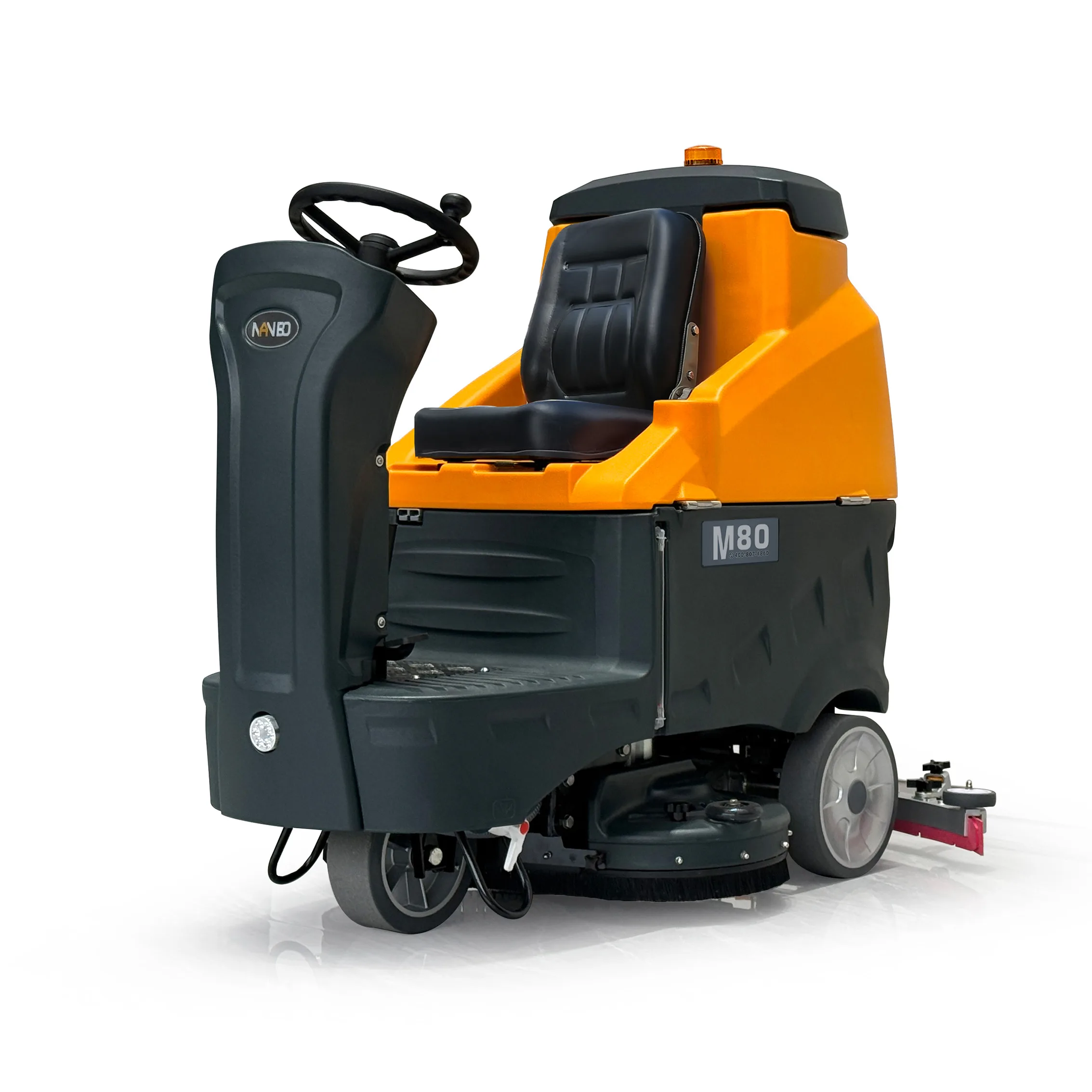
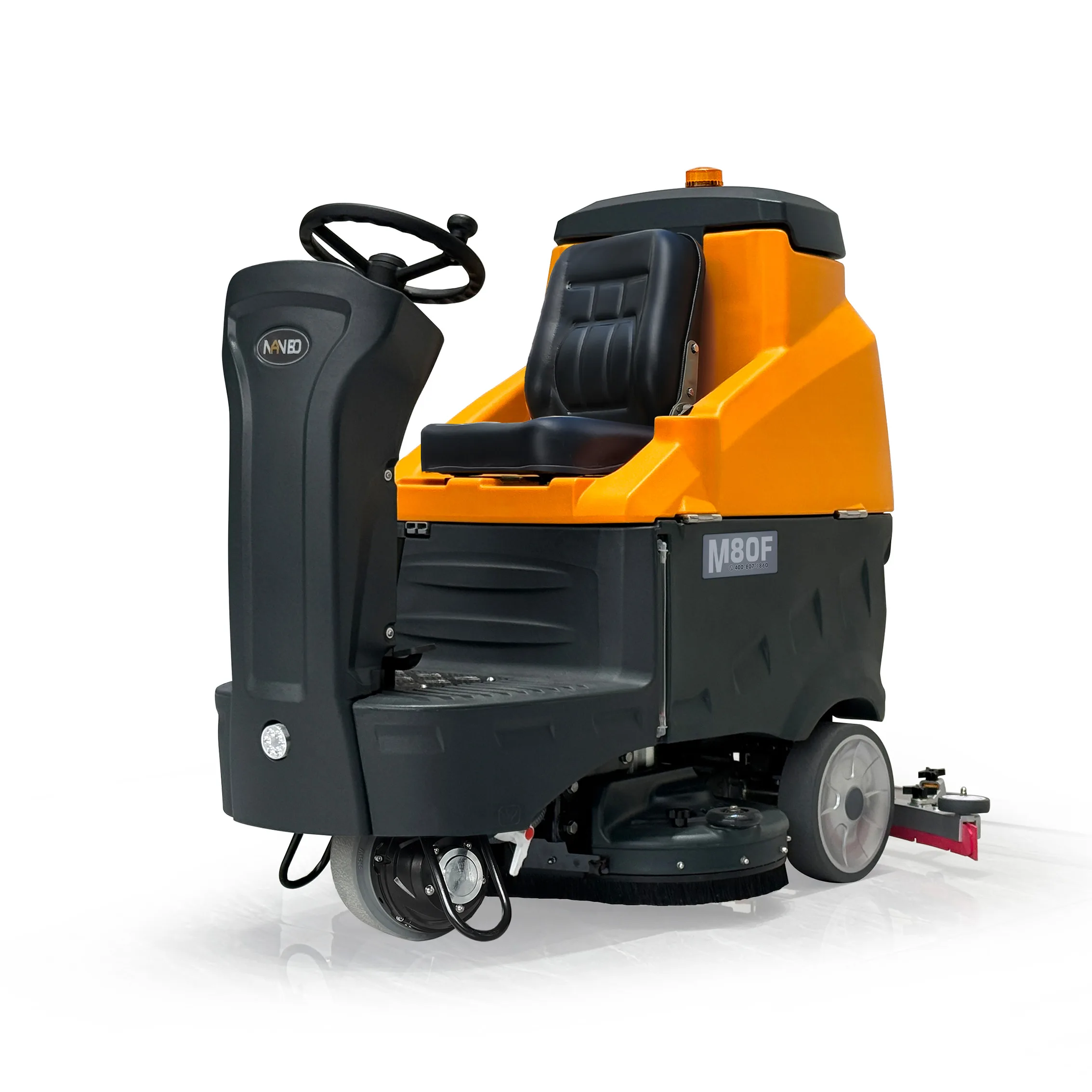
| M80 | Ride-on, dual disc | 5,500 m²/h | 1,050 mm | 130 / 140 L | 4–5 h | Large open hard floors |
| MC90 | Ride-on sweeper-scrubber | 6,200 m²/h | 1,150 mm | 200 / 210 L | 3–4 h | Debris plus wet industrial soil |
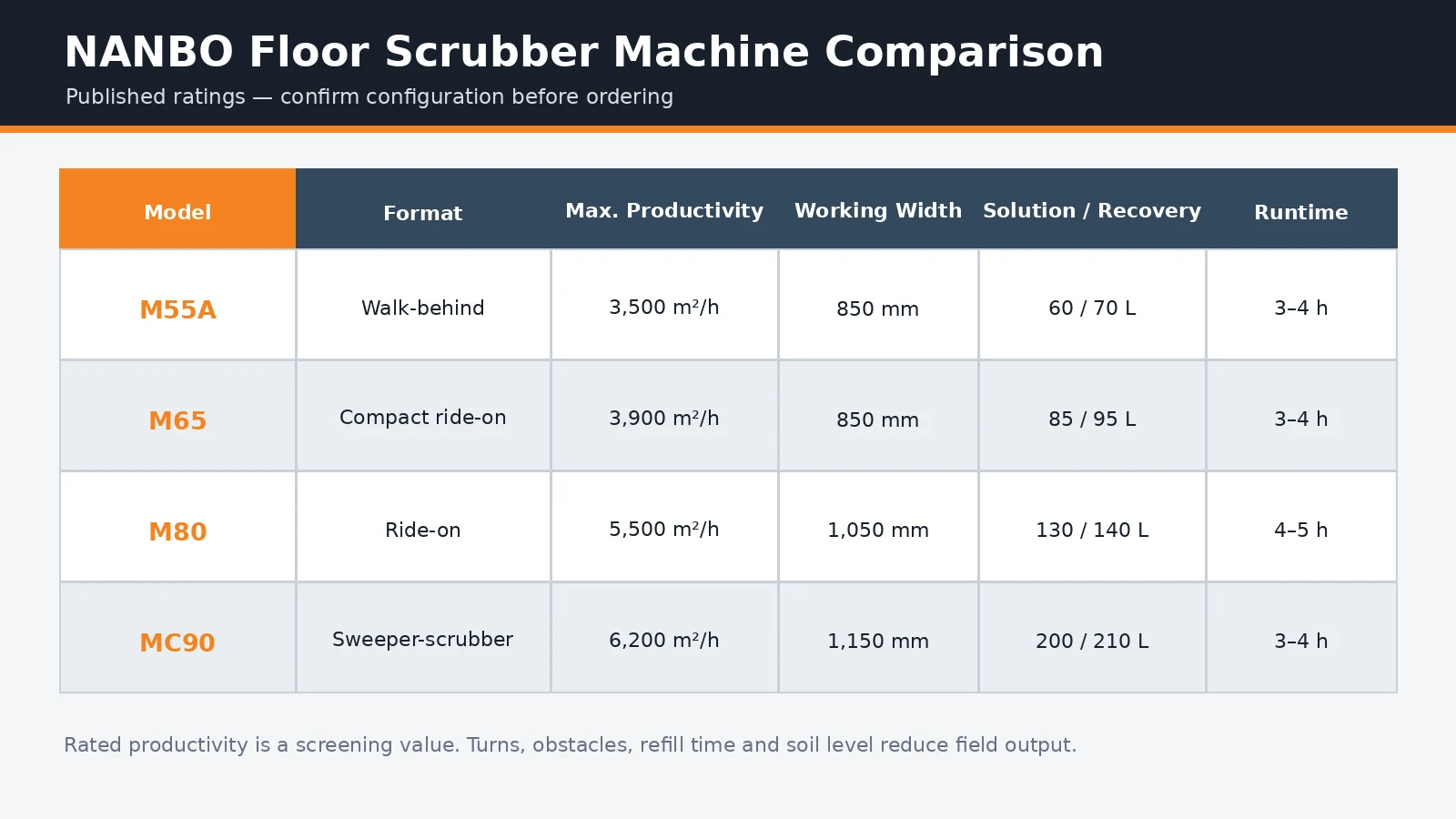
Model specifications provide a starting point; actual field output depends on the site.
Step 6: Check Drying and Water Recovery
Cleaning speed has limited value if the floor remains wet. Inspect the squeegee material, adjustment method, vacuum system and recovery-tank protection. Uneven concrete, damaged joints and tight turns can make water recovery more difficult than cleaning a smooth epoxy floor.
A properly configured floor scrubber machine must leave an acceptable result at normal operating speed, including through turns and along the edges of the planned route.
During a demonstration, check the floor immediately behind the machine. Look for water trails at turns and along edges. Confirm whether the squeegee can be removed for cleaning and whether replacement blades and vacuum components are available.
Step 7: Review Operator Safety and Daily Maintenance
The selected floor scrubber machine should be simple enough for the actual operator team. Review control layout, emergency stop, visibility, braking, low-voltage warning, recovery-tank water-level protection and automatic brush behavior where applicable.
Daily maintenance normally includes:
- Emptying and rinsing the recovery tank
- Cleaning the squeegee and checking its edges
- Removing hair, wire and debris from brushes
- Checking solution filters and hoses
- Inspecting batteries, connectors or power cables
- Leaving tanks open when appropriate for drying
- Recording damage, unusual noise or reduced suction
Accessibility matters. A machine that is difficult to inspect is more likely to miss routine maintenance, which can reduce recovery performance and shorten component life.
Application-to-Model Starting Matrix
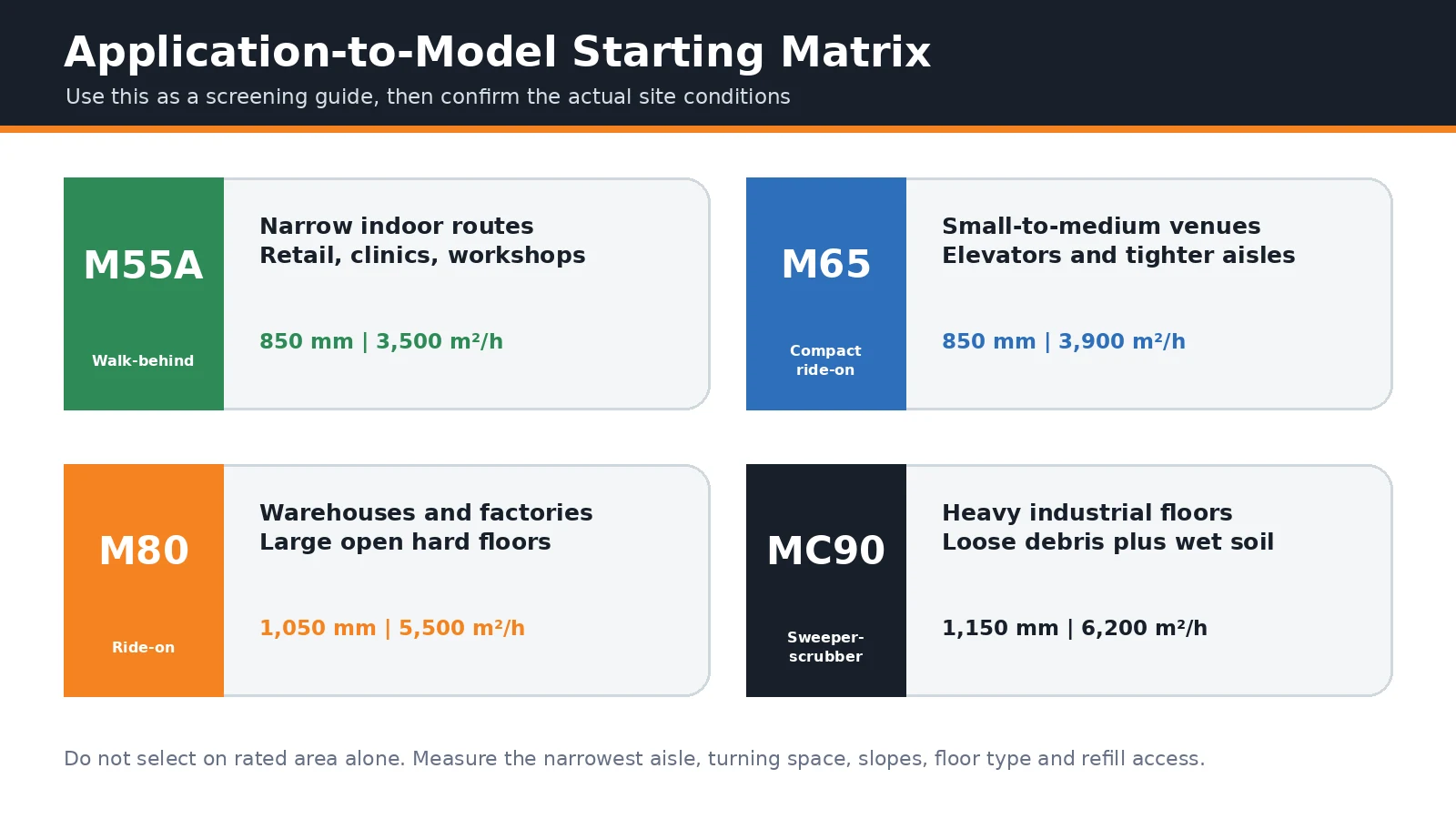
Use the matrix for initial screening, then confirm the site, configuration and cleaning trial.
The M55A is a useful starting point where a motor-driven walk-behind format fits narrow indoor routes. The M65 offers ride-on operation in a compact format and is positioned for small-to-medium venues. The M80 provides a wider path, larger tanks and longer published operating time for open warehouse and factory routes. The MC90 is intended for more demanding conditions where suitable debris must be collected as part of the cleaning process.
Common Floor Scrubber Selection Mistakes
Selecting Only by Building Area
Total building area includes spaces that the floor scrubber machine may never enter. Calculate the actual cleanable route and include obstacles, turns and access restrictions.
Using Maximum Productivity as a Guaranteed Result
Rated productivity does not include every refill, turn, inspection or heavily soiled section. Use it to compare models, then estimate field output from the real route.
Ignoring Loose Debris
Standard scrubber dryers are not replacements for every sweeping task. Large or sharp debris can interfere with brushes and squeegees. Confirm whether pre-sweeping or a dedicated sweeper-scrubber is required.
Overlooking Tank Balance
The solution and recovery tanks must support the planned route. Ask how much water the site typically requires and how quickly the recovery tank fills under the expected soil load.
Forgetting Parts and Service
Brushes, pads, squeegee blades, filters and batteries are operating items. Compare availability, replacement procedure, technical support and the recommended spare-parts package before ordering.
Information to Send Before Requesting a Quote
To receive a useful floor scrubber machine recommendation, provide:
- Country and destination port
- Facility type and cleanable area
- Floor material and condition
- Narrowest aisle, doorway and elevator dimensions
- Soil type, including oil or loose debris
- Cleaning frequency and hours available per shift
- Slopes, ramps and drainage conditions
- Preferred walk-behind or ride-on format
- Battery and charging requirements
- Quantity, OEM requirements and requested spare parts
This information allows the supplier to compare working width, tanks, runtime, drive system and cleaning functions against the project rather than recommending a model from area alone.
Frequently Asked Questions
What size floor scrubber machine do I need?
Start with the cleanable area, but also measure aisle width, doorways and turning space. A smaller model may complete a complex route faster because it turns easily, while a wider ride-on model is usually more productive on open floors. Confirm field output through a route estimate or site trial.
Is a ride-on scrubber better than a walk-behind scrubber?
Neither format is always better. Ride-on models reduce walking and suit longer routes. Walk-behind models fit tighter areas and are easier to position around obstacles. Compare total route time, operator effort, storage, charging and access rather than choosing only by machine size.
Can a floor scrubber machine collect metal chips and screws?
A standard scrubber dryer may require the floor to be swept first. A sweeper-scrubber such as the NANBO MC90 is designed to collect suitable loose debris while scrubbing and recovering water. The size, shape and quantity of metal fragments must still be confirmed before use.
How much area can a floor scrubber clean per hour?
The answer depends on working width, travel speed and route efficiency. Published maximum figures are useful for comparison, but real productivity is reduced by turns, overlap, obstacles, refilling, tank emptying and heavily soiled sections. Calculate using the actual site layout.
Which brush should I use?
Brush or pad selection depends on the floor, soil and required finish. Aggressive tools can damage sensitive surfaces, while a tool that is too soft may not remove compacted contamination. Test the proposed brush and detergent on a small area before full operation.
How do I know whether the floor will dry properly?
Check squeegee adjustment, blade condition, vacuum performance and floor flatness. During the trial, inspect straight passes, turns and edges. Water trails may indicate incorrect adjustment, worn blades, blocked airflow or an unsuitable operating speed.
Should I choose lead-acid or lithium batteries?
The choice depends on operating hours, charging windows, maintenance capability, budget and local service. Ask the supplier for the battery specification, charger, expected charging procedure and approved maintenance requirements for the ordered configuration.
What affects the price of a floor scrubber machine?
Price varies with working width, tank capacity, drive system, battery package, brush configuration, automation, accessories, spare parts and OEM requirements. Compare the delivered configuration and total operating needs rather than comparing an equipment price without its included components.
Final Recommendation
The best floor scrubber machine is the model that completes the real route safely within the available shift, not simply the machine with the largest headline specification. Measure the site, classify the soil, confirm access, compare field productivity and test water recovery before releasing the order.
For a preliminary NANBO recommendation, send the floor area, surface type, narrowest aisle, soil description and daily operating time. The selection can then be matched to a walk-behind scrubber, compact ride-on model, wide-path ride-on scrubber or combined sweeper-scrubber.
View NANBO floor scrubbers or contact NANBO for model selection.
About This Guide
This guide was prepared from the published specifications and application descriptions of the NANBO M55/M55A, M65, M80 and MC90 product pages. Maximum productivity and operating time are screening values, not guaranteed site results. Final selection should be reviewed against the ordered configuration, local conditions and an application assessment.
Content Sources
- NANBO Floor Scrubber Range
- M55 / M55A Floor Scrubber Specifications
- M65 Ride-on Floor Scrubber
- M80 Ride-on Scrubber-Dryer
- MC90 Ride-on Sweeper-Scrubber