Ride-On vs Walk-Behind Floor Scrubber: Which Is Right for Your Facility?
Release time: 2026-10-27
Ride-On vs Walk-Behind Floor Scrubber: Which Is Right for Your Facility?
Choosing a ride-on vs walk-behind floor scrubber is not simply a choice between a large machine and a small one. The right answer depends on usable floor area, aisle width, obstacle density, cleaning frequency, soil type, water access, operator hours and storage space. A ride-on machine can reduce cleaning time across long, open routes, while a walk-behind unit can deliver better control in congested zones where a larger turning circle becomes a disadvantage.
This guide compares both formats using published NANBO product specifications and a practical selection method. It also explains why nominal productivity should not be treated as guaranteed site productivity. The purpose is to help facility managers, cleaning contractors and distributors prepare a more accurate machine brief before requesting a quotation or demonstration.
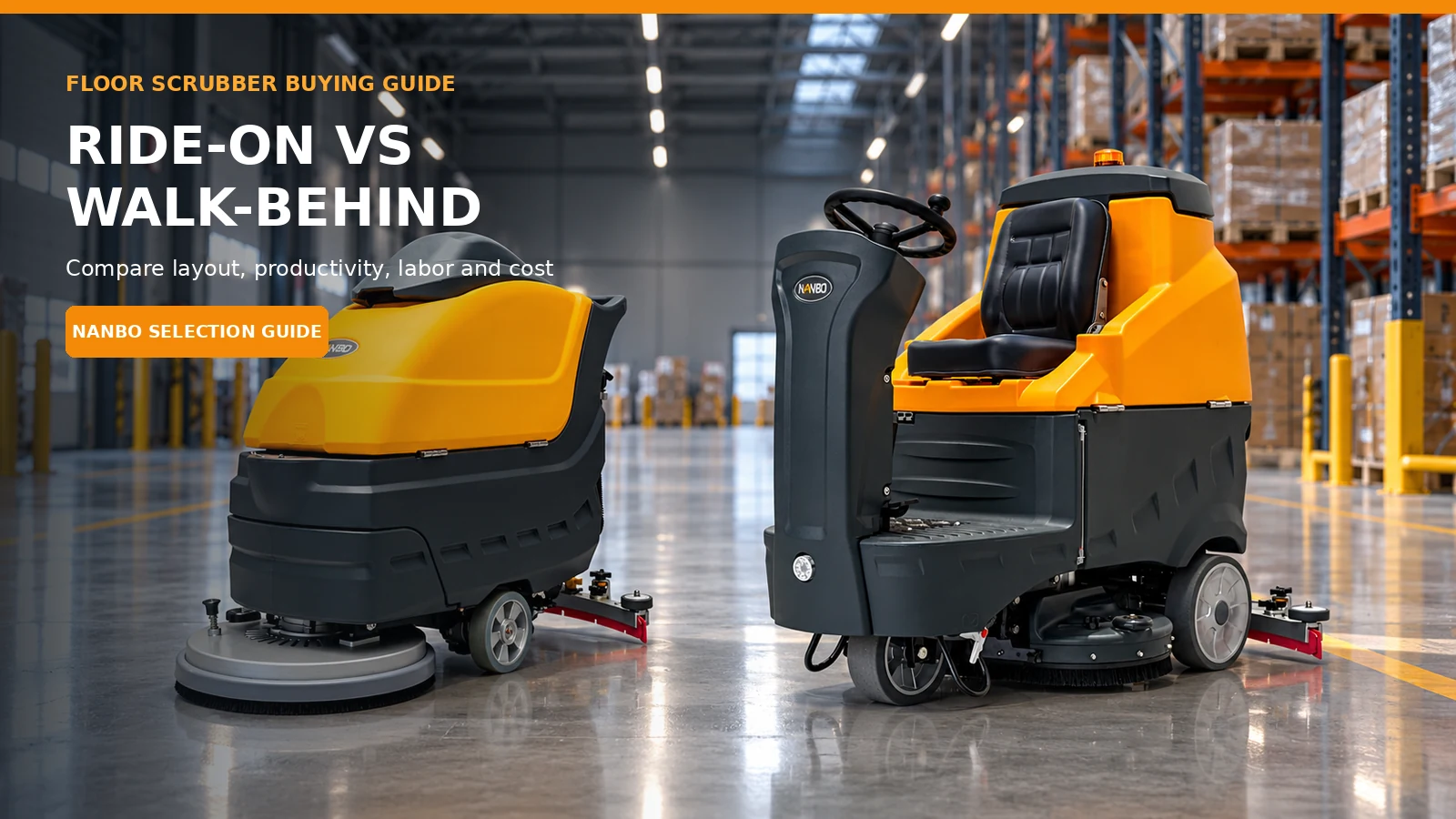
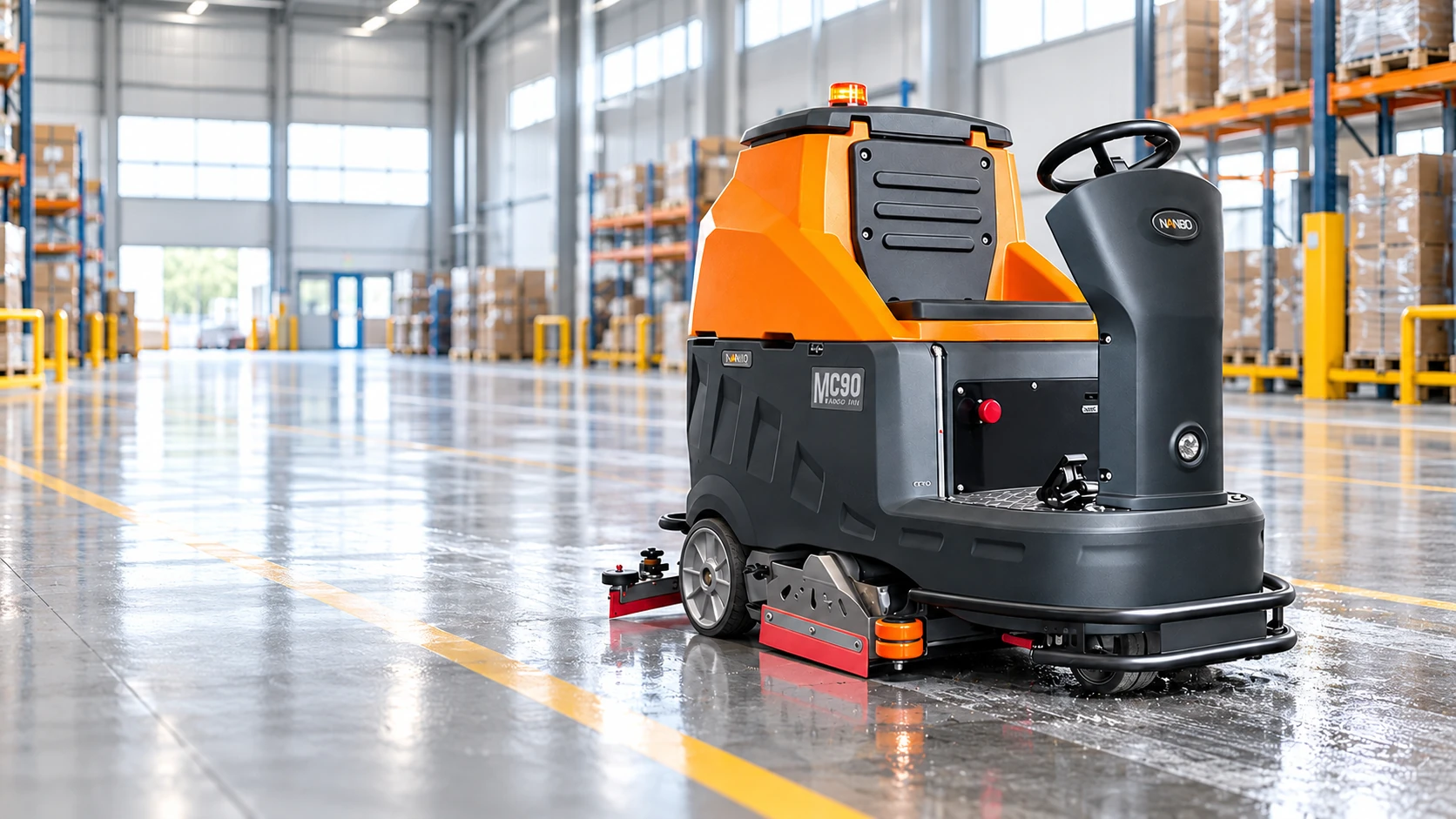
Image 1. A NANBO walk-behind scrubber and ride-on scrubber shown in the same industrial setting. Product appearance is based on NANBO website materials.
Quick answer
Choose a walk-behind floor scrubber when the route contains narrow aisles, small rooms, frequent turns, elevators or many fixed obstacles. Choose a ride-on floor scrubber when the site has large, open floor sections, long cleaning routes and enough daily labor demand to justify higher machine capacity. In a mixed facility, the best ride-on vs walk-behind floor scrubber decision may be a two-machine plan: a ride-on unit for open production or warehouse areas and a compact walk-behind unit for edges, aisles and smaller rooms.
The decision should be based on measured site conditions rather than total building size alone. A 10,000 m² building may contain only 5,500 m² of cleanable floor after racks, machinery and safety zones are excluded. Conversely, a smaller but frequently cleaned logistics area may justify a ride-on model because labor hours accumulate every day.
Ride-on vs walk-behind floor scrubber comparison
| Decision factor | Walk-behind floor scrubber | Ride-on floor scrubber |
|---|
| Best layout | Small, divided or obstacle-heavy areas | Large, open and continuous areas |
|---|---|---|
| Operator position | Walks behind and guides the machine | Sits on and drives the machine |
| Maneuverability | Better in narrow aisles and frequent turns | Better on long routes with adequate turning space |
| Cleaning productivity | Usually lower, but efficient in confined zones | Usually higher on open floors |
| Tank capacity | Smaller; may require more refill and drain stops | Larger; supports longer cleaning cycles |
| Operator fatigue | More walking and physical involvement | Less walking during long cleaning shifts |
| Storage and transport | Easier to store and move between floors | Requires more storage, access and transport planning |
| Initial investment | Usually lower | Usually higher |
| Best evaluation method | Access, obstacles and detailed cleaning | Labor savings, route length and daily coverage |
This ride-on vs walk-behind floor scrubber table is a starting point, not a purchase rule. Actual results depend on machine configuration, operator training, brush or pad choice, floor condition, chemical use and the number of non-cleaning stops during a shift.
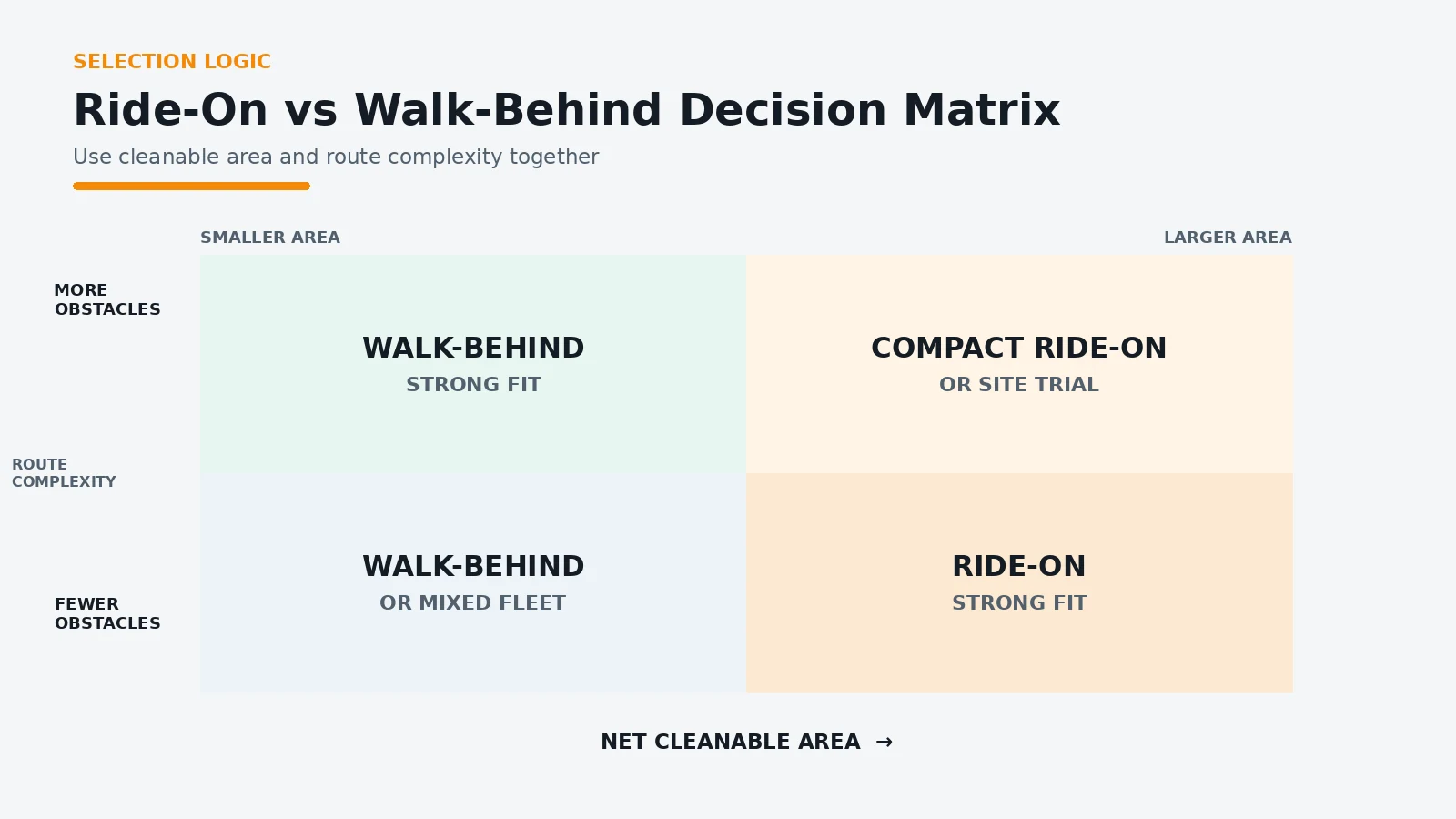
Image 2. Use layout complexity and cleanable area together; neither factor should be evaluated alone.
What is a walk-behind floor scrubber?
A walk-behind floor scrubber applies cleaning solution, agitates the floor with a brush or pad, and recovers dirty water through a squeegee and vacuum system. The operator walks behind the unit and controls its direction. Some machines are brush-assisted, while self-propelled models use a separate drive motor to reduce pushing effort.
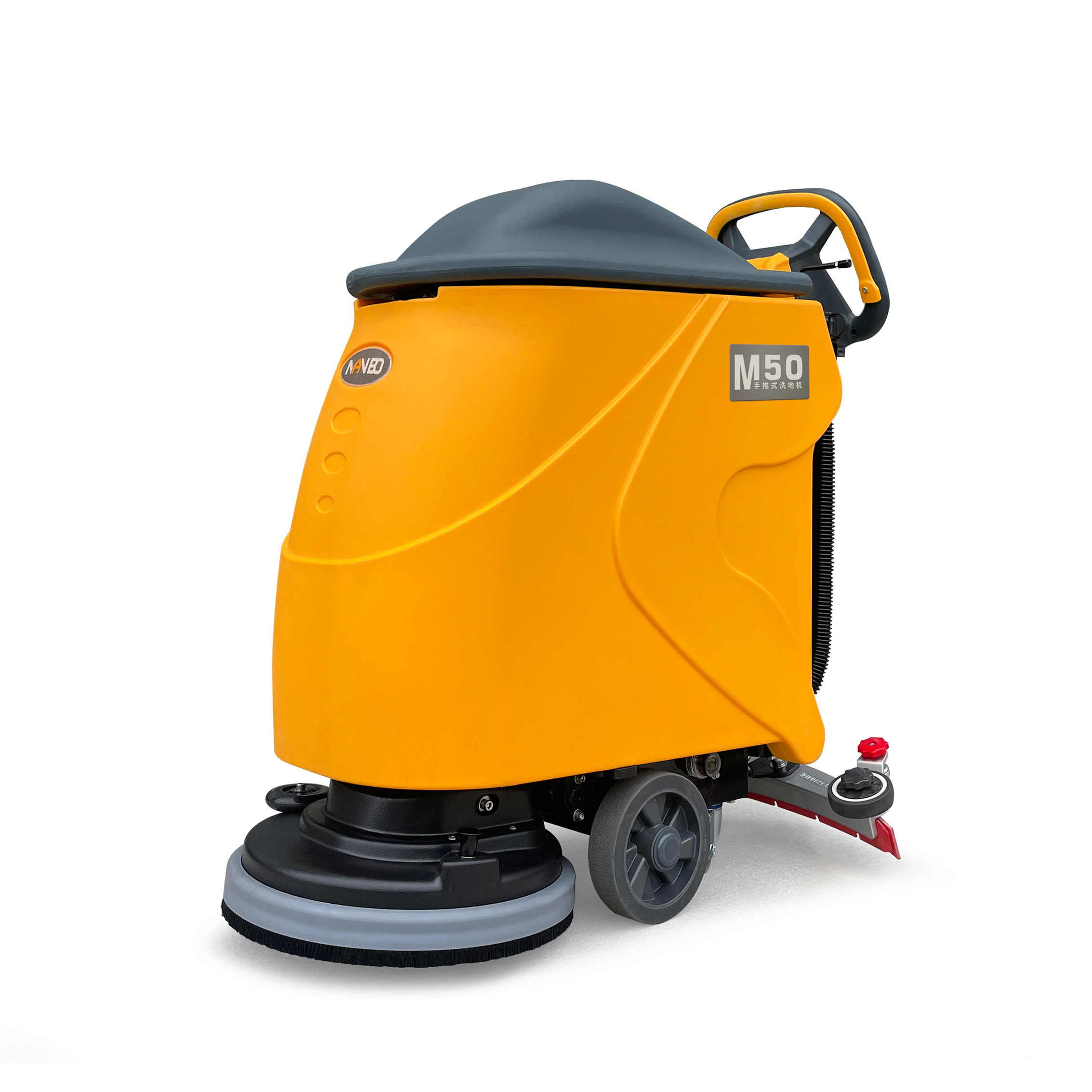
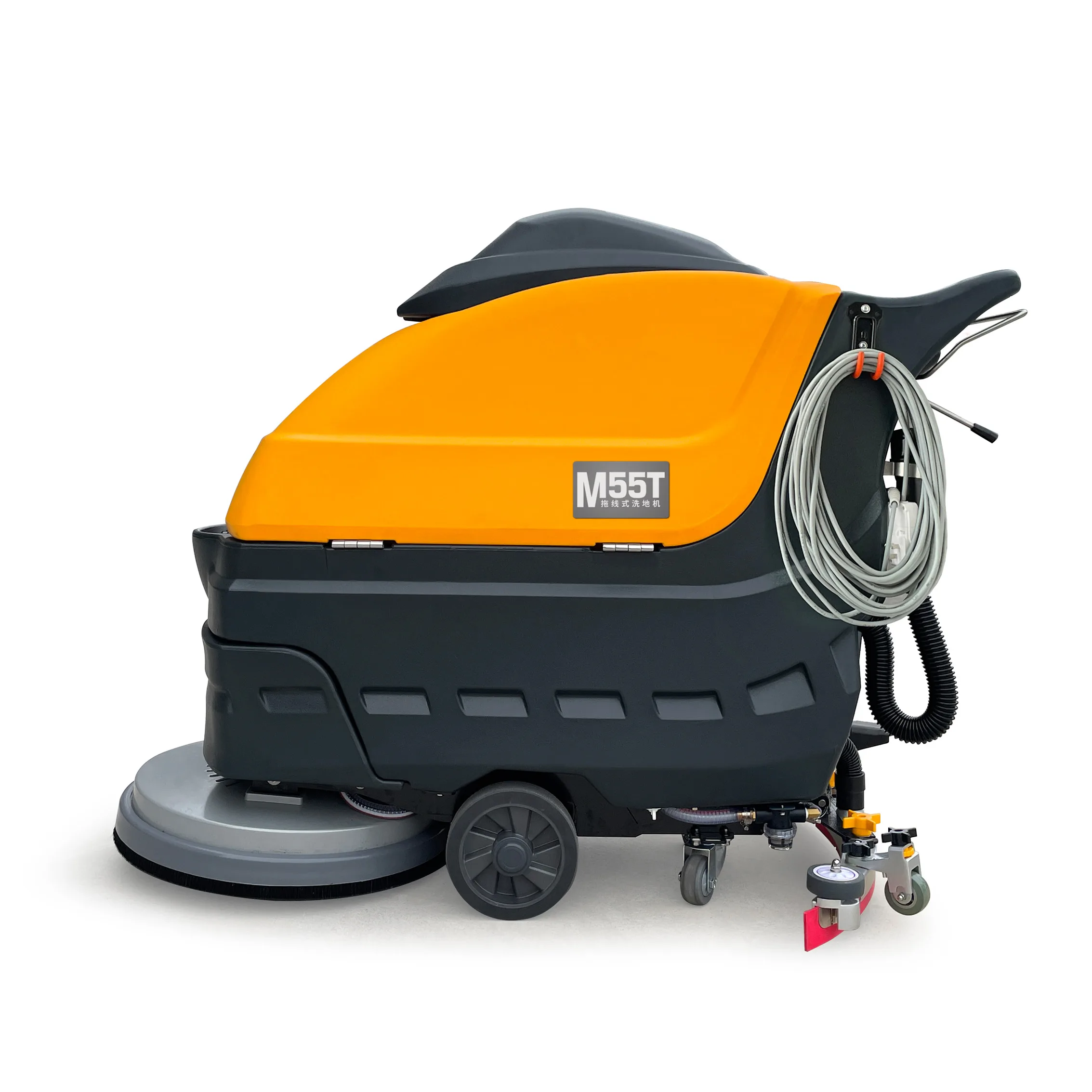
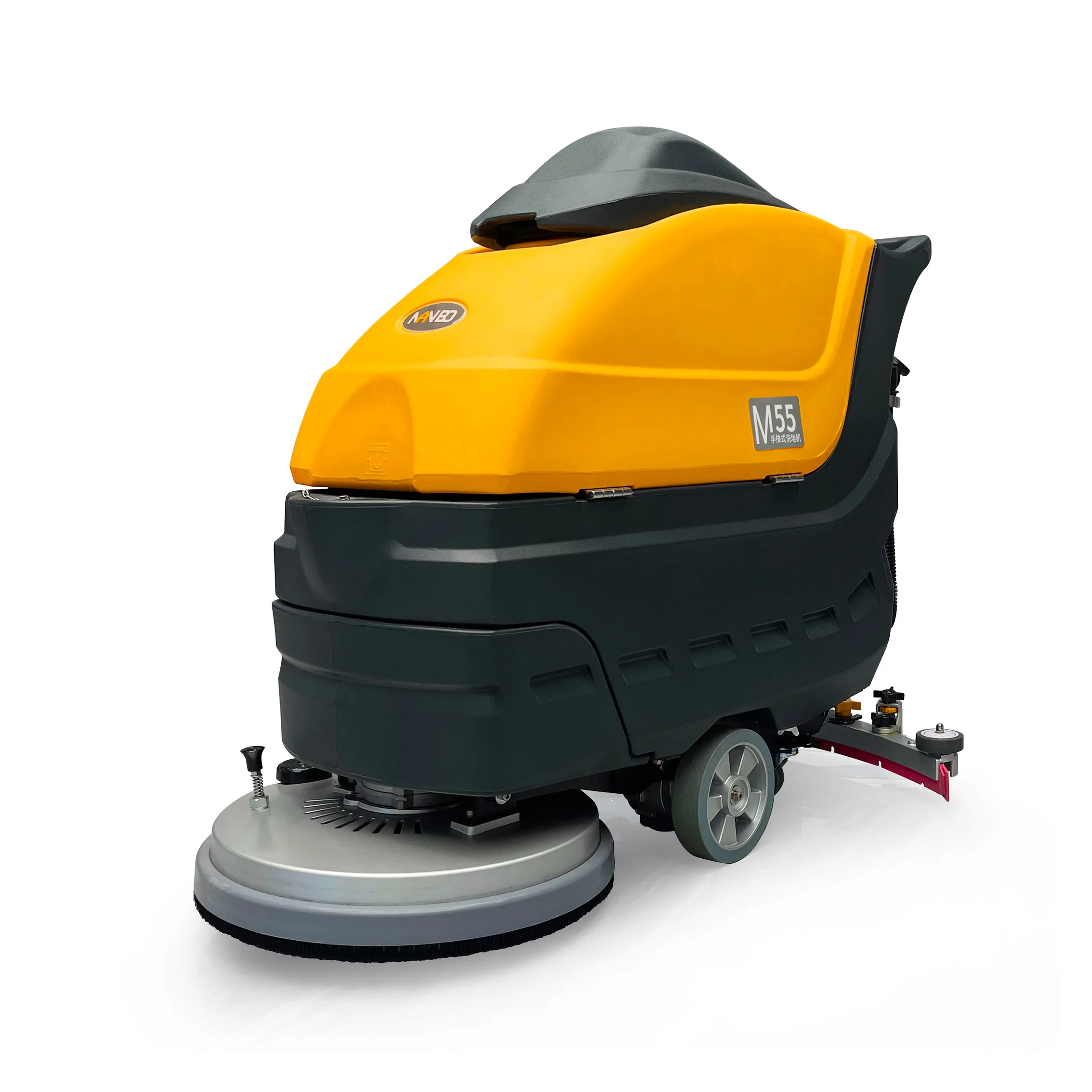
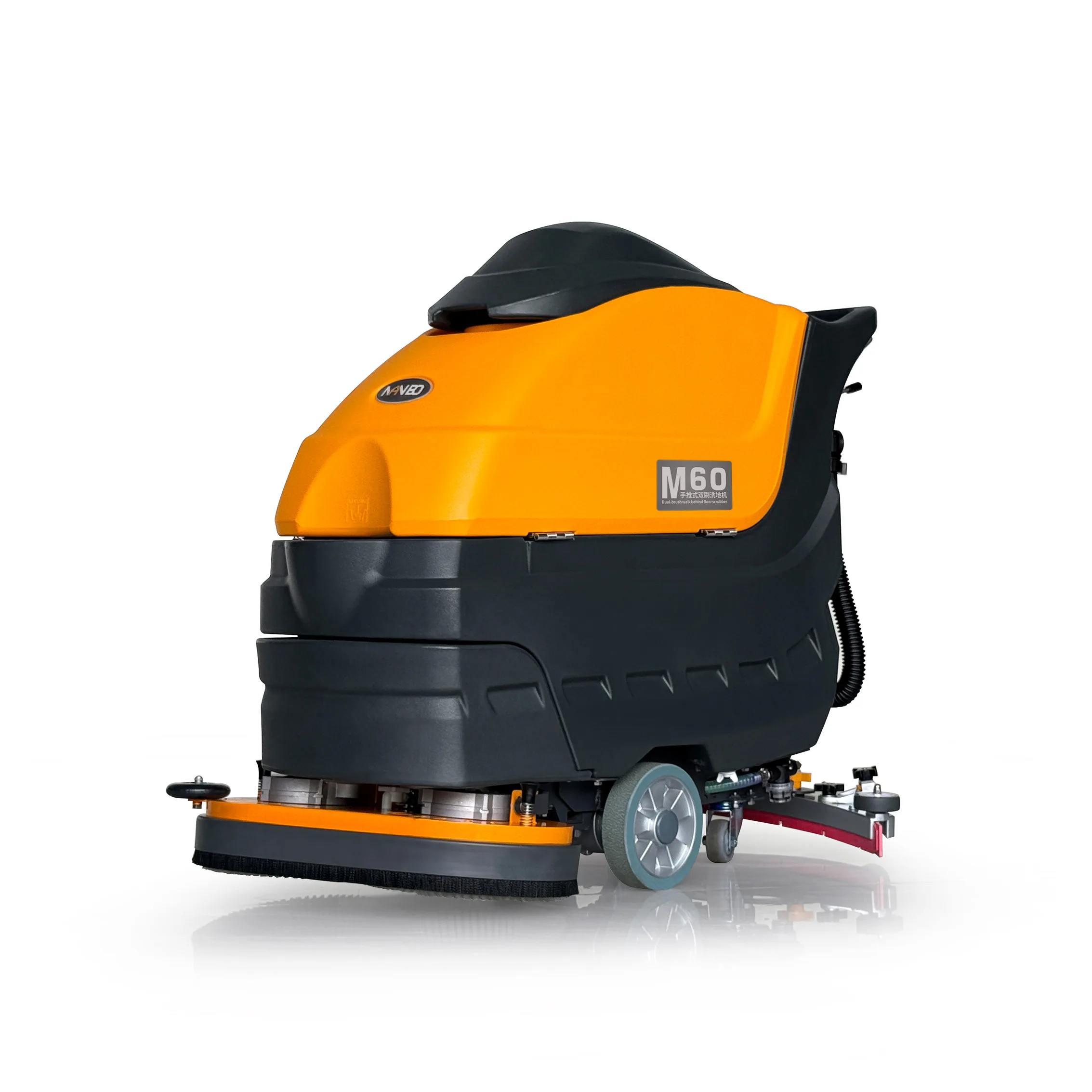
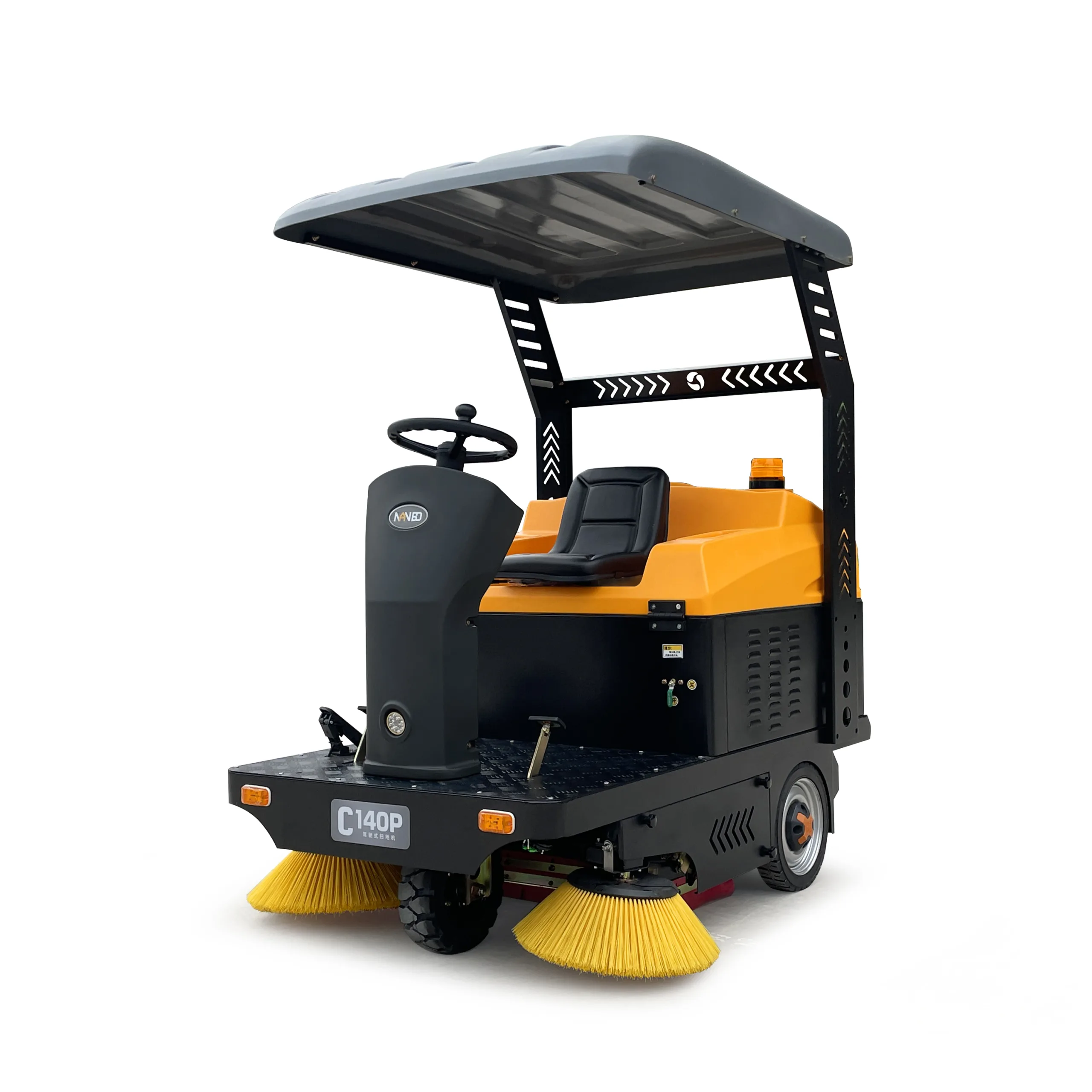
For example, NANBO lists the M55 and M55A with an 850 mm maximum working width, 60 L solution tank and 70 L recovery tank. The M55 is brush-assisted, while the M55A is motor-driven. Published maximum cleaning productivity is 3,000 m²/h for the M55 and 3,500 m²/h for the M55A, with a stated operating time of 3–4 hours. These characteristics place the machine in the walk-behind side of a ride-on vs walk-behind floor scrubber evaluation.
Walk-behind units are useful where the operator must closely control the cleaning path around shelving, doorways, display fixtures, beds, work cells or other obstacles. Their compact footprint can also make elevator access and storage easier. However, a route that requires long periods of continuous walking may increase operator fatigue and labor time.
What is a ride-on floor scrubber?
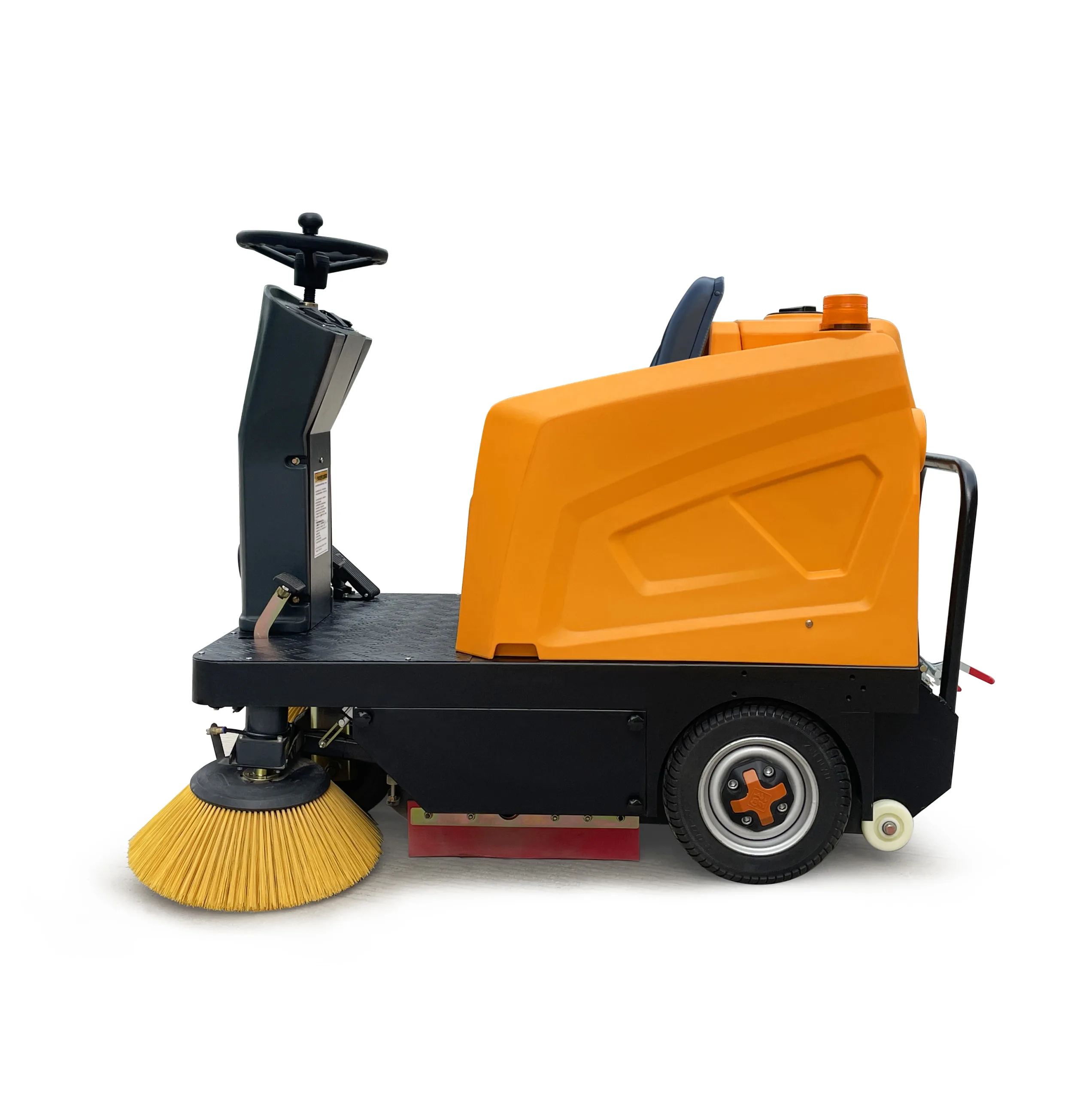
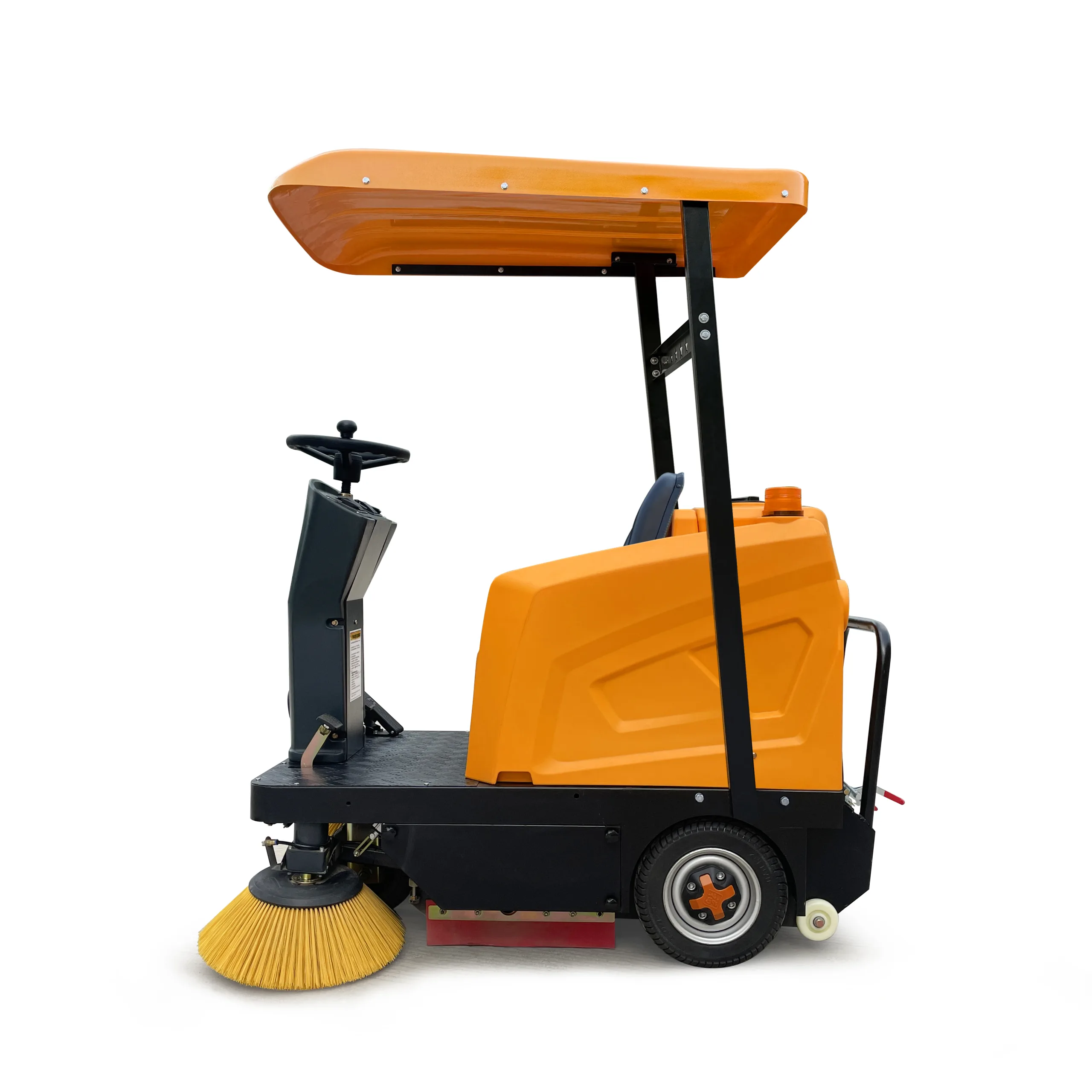
A ride-on floor scrubber places the operator on the machine and uses powered travel controls. The basic cleaning process remains similar—solution application, brush agitation and wastewater recovery—but the chassis, tanks and drive system are designed for longer routes and higher output.
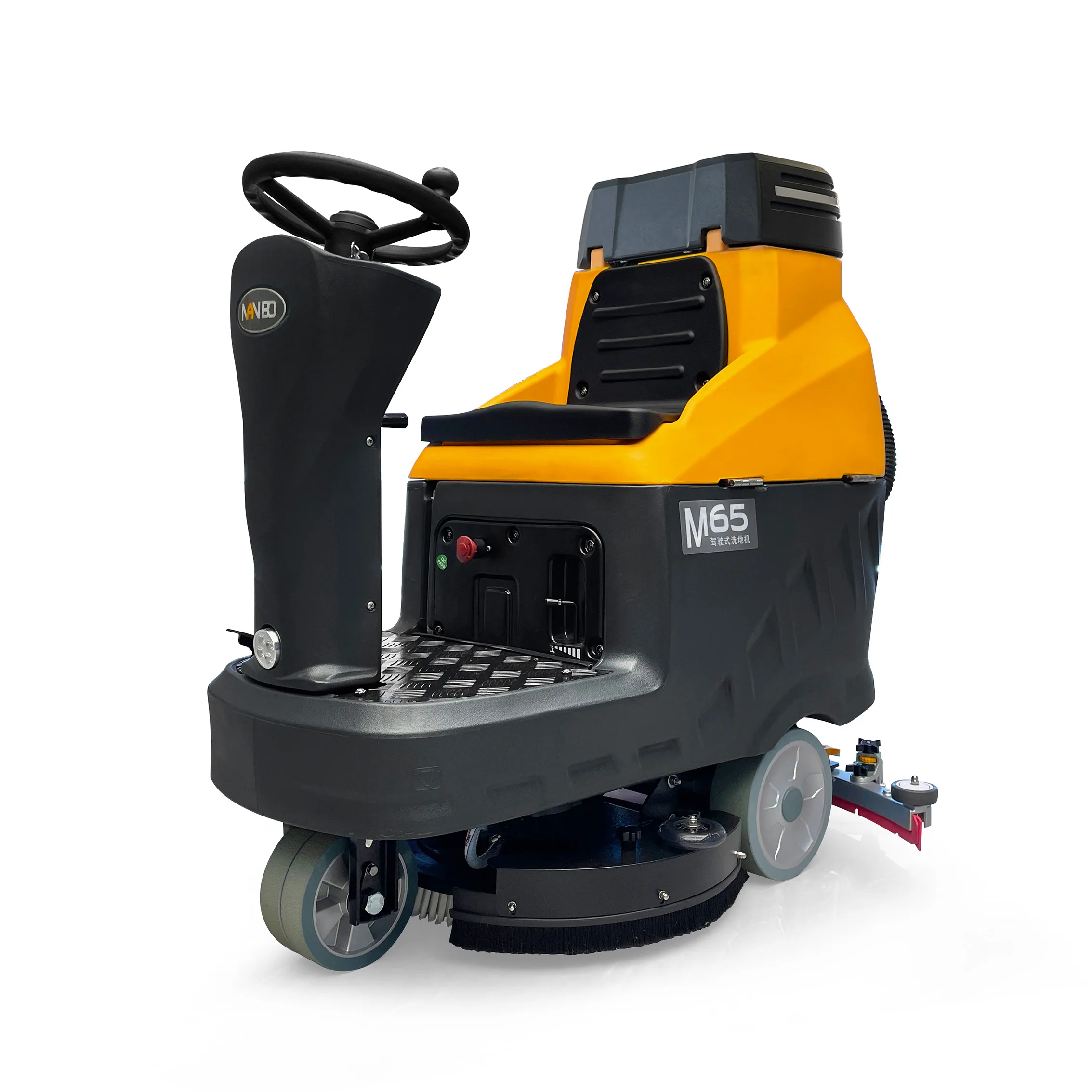
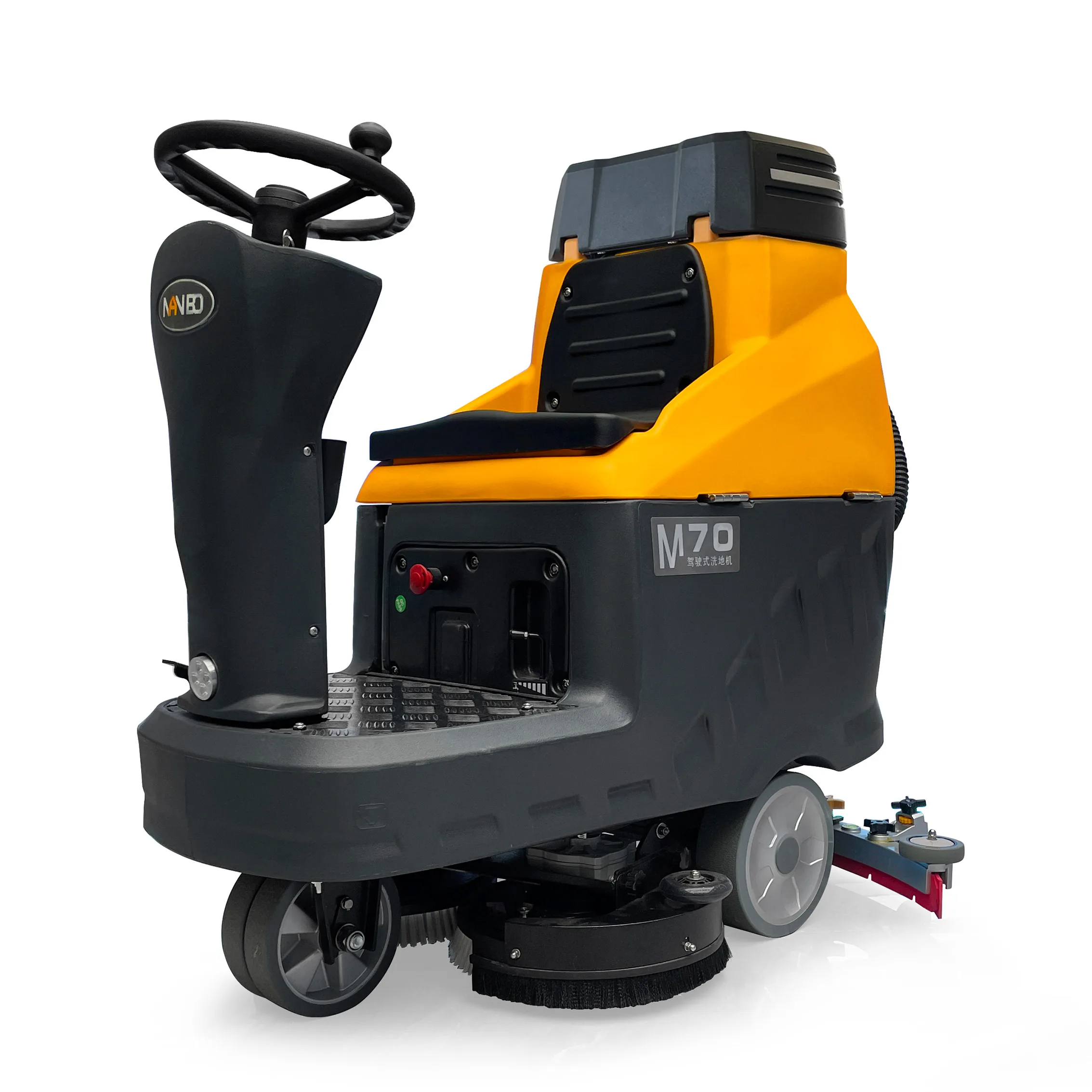
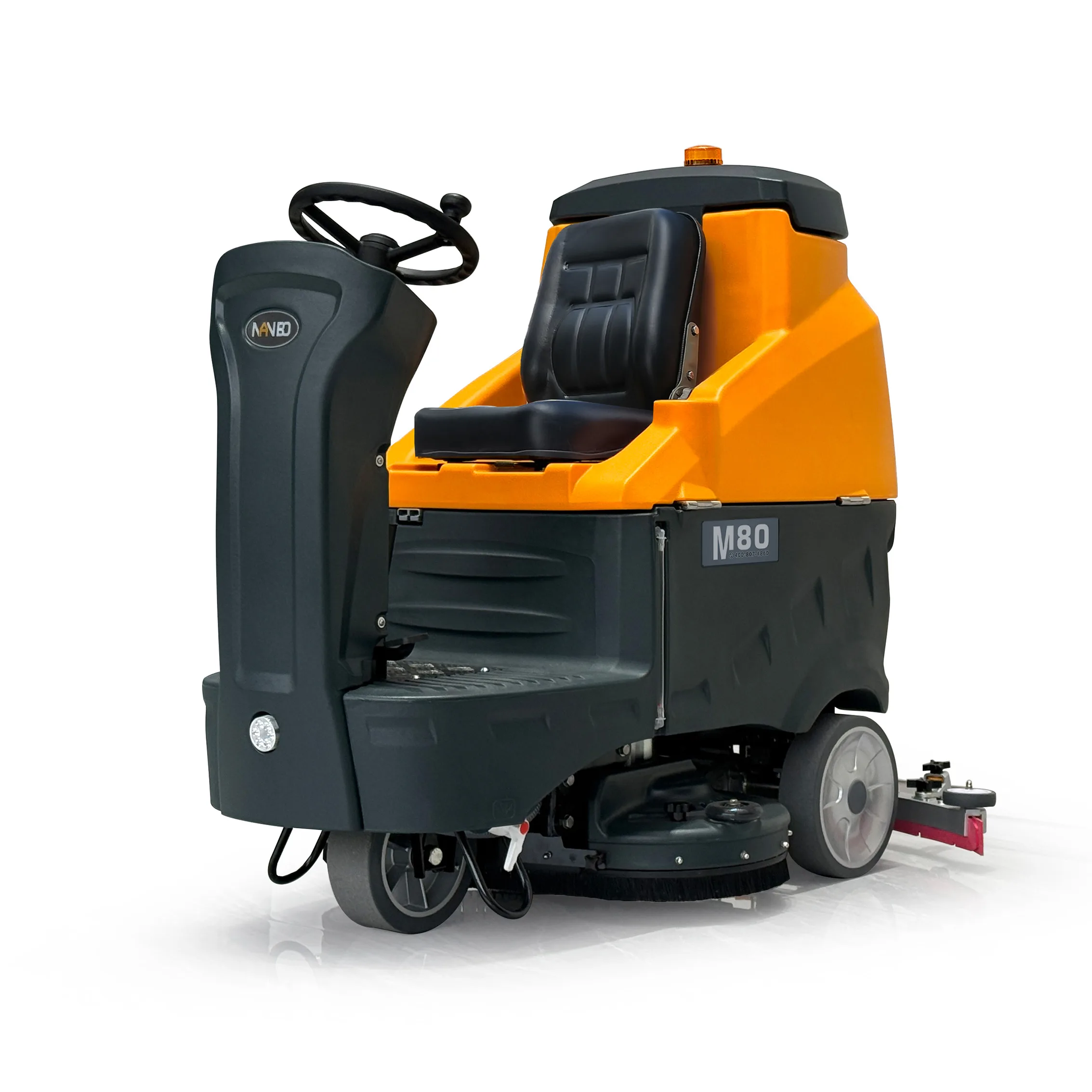
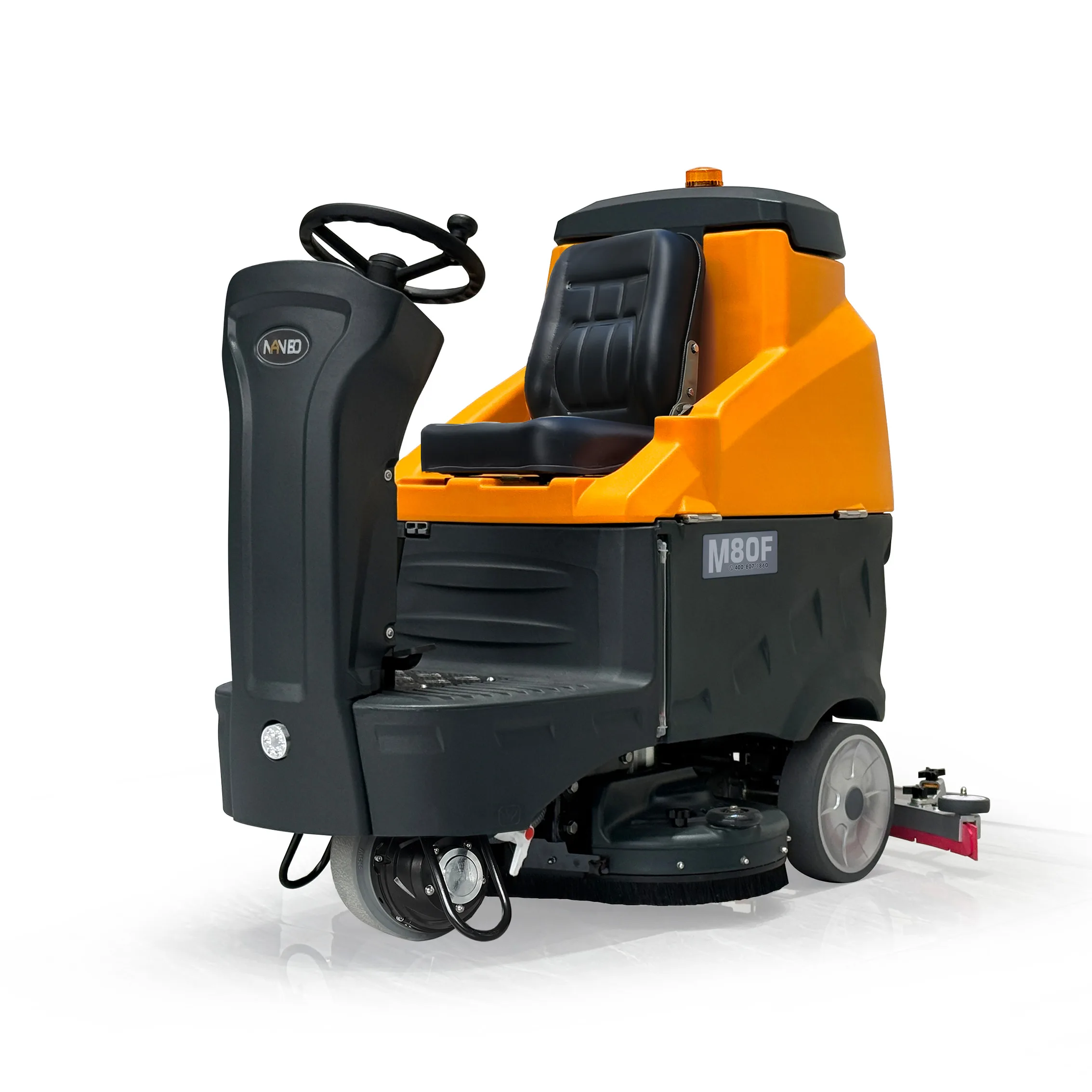
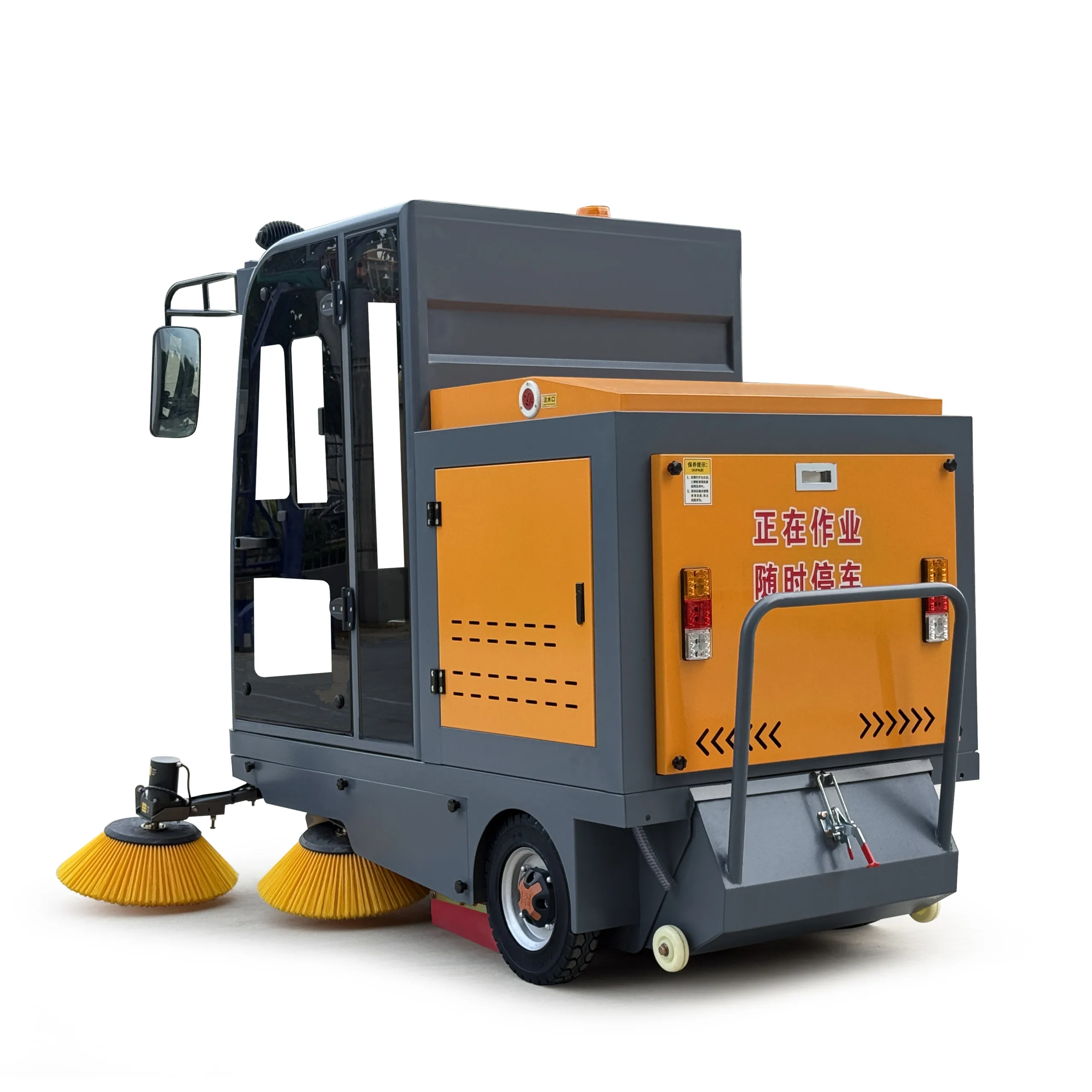
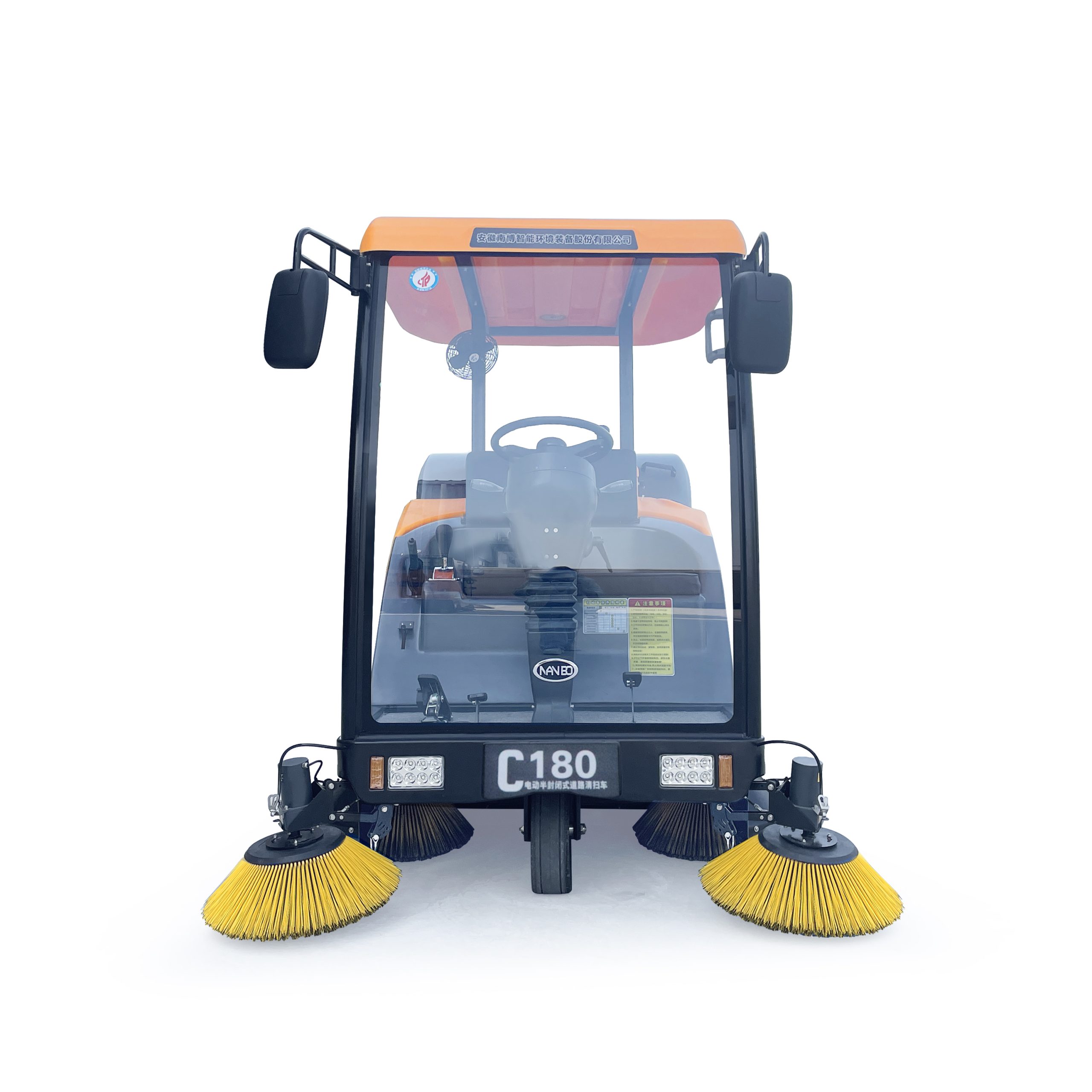
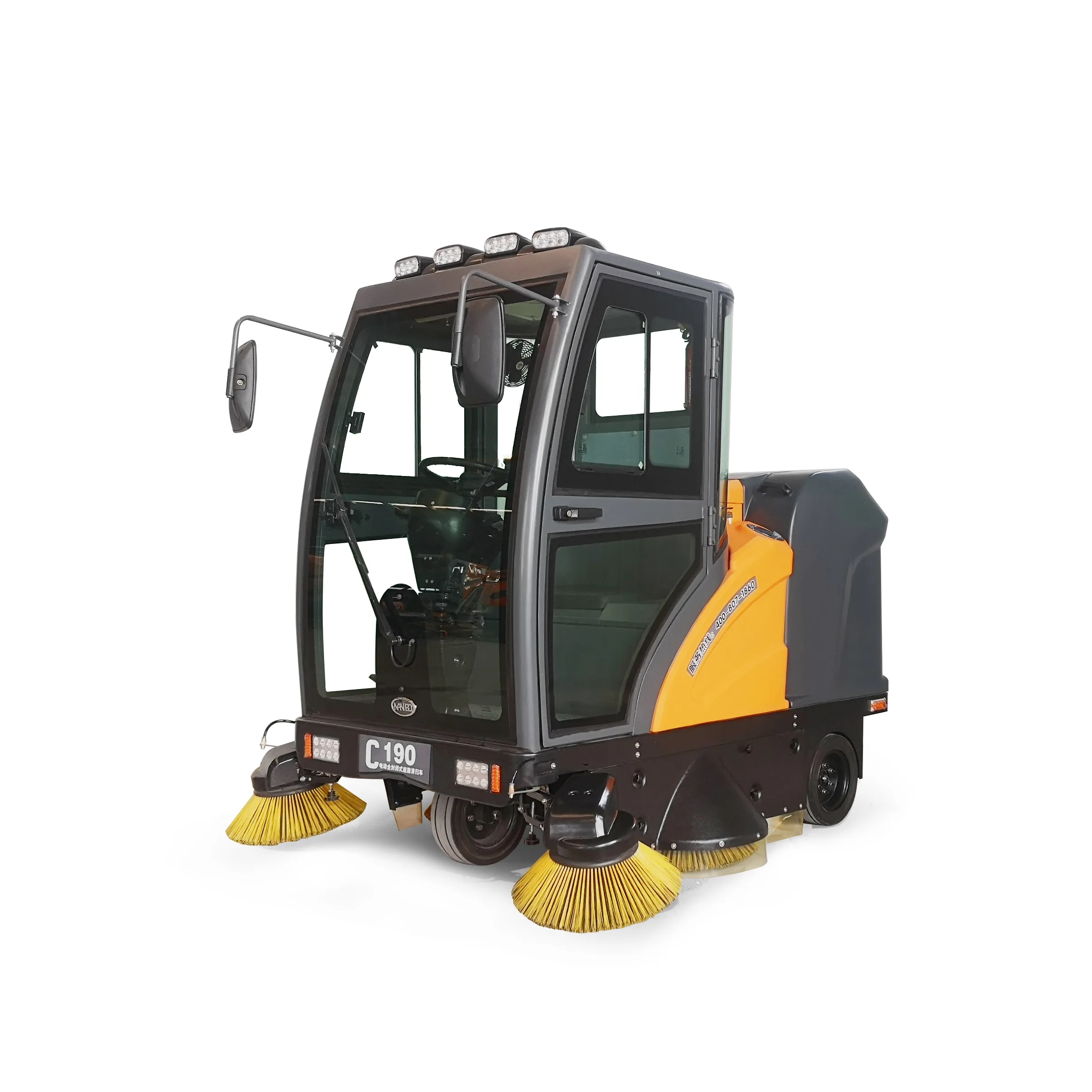
NANBO lists the compact M65 ride-on model at up to 3,900 m²/h with an 850 mm maximum working width, 85 L solution tank, 95 L recovery tank and 3–4 hours of operating time. The M80 increases published maximum productivity to 5,500 m²/h, with a 1,050 mm maximum working width, 130/140 L solution and recovery tanks, and 4–5 hours of operating time. These figures show why a ride-on vs walk-behind floor scrubber comparison must consider more than working width: tank size, route continuity and operating time also influence how much useful work can be completed between stops.
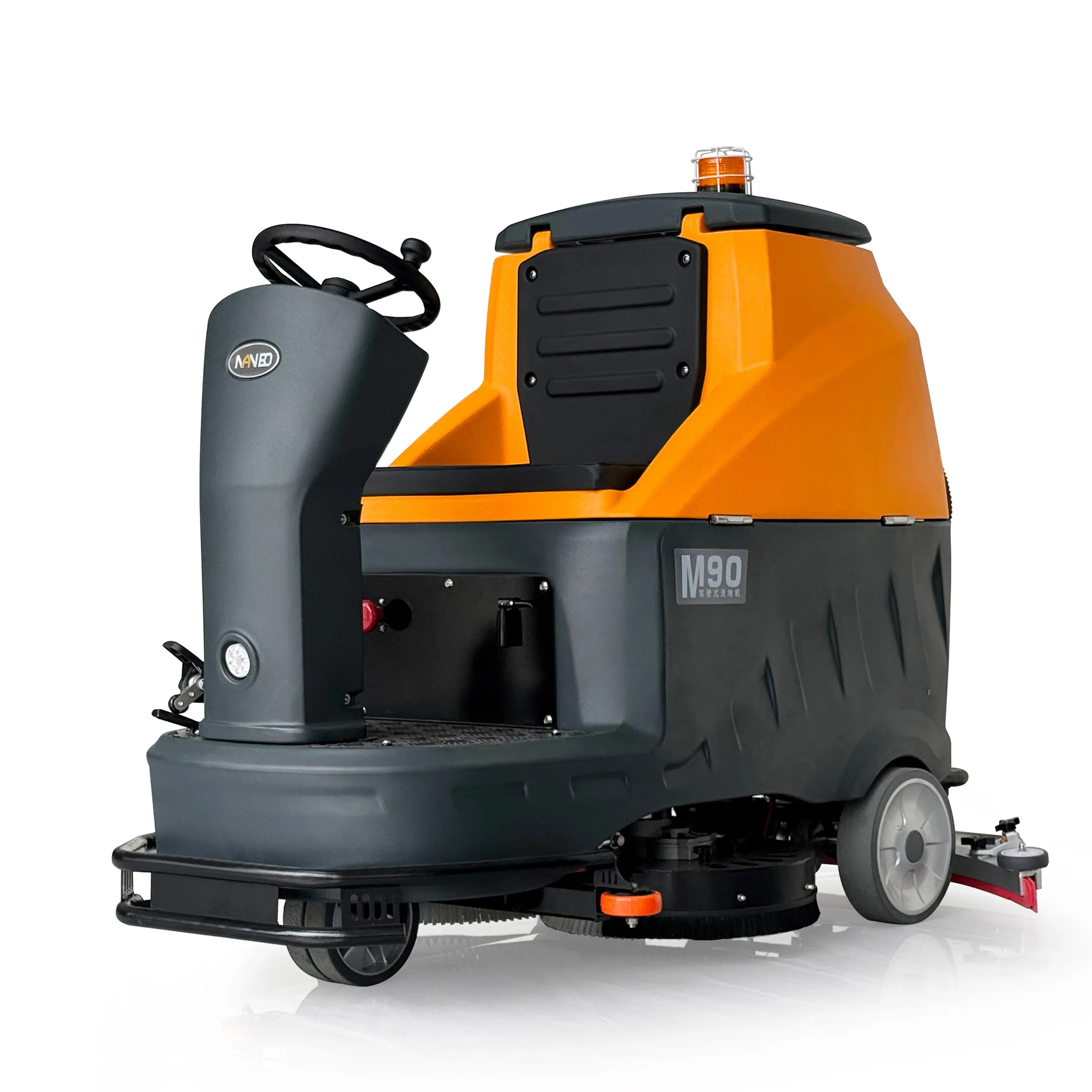
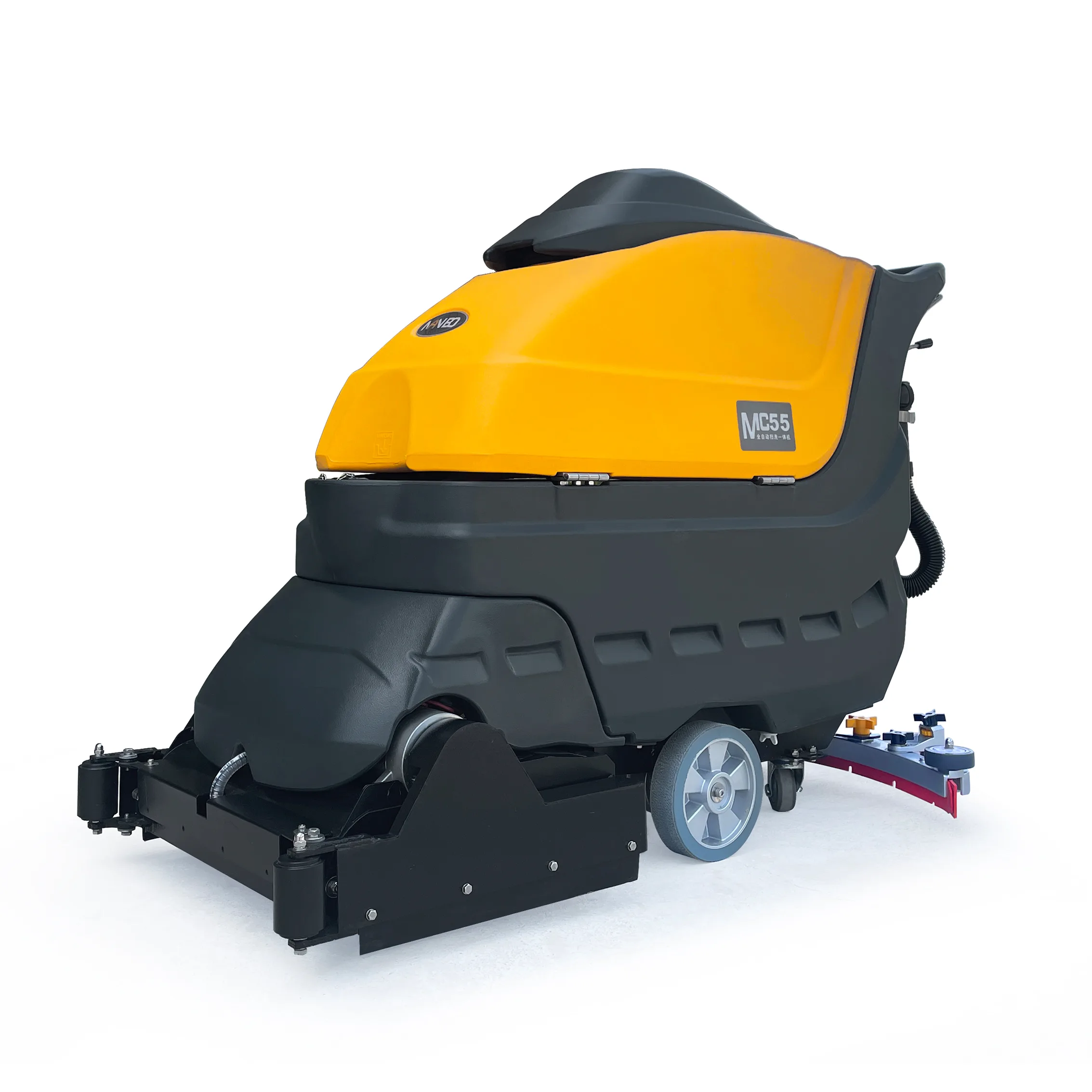
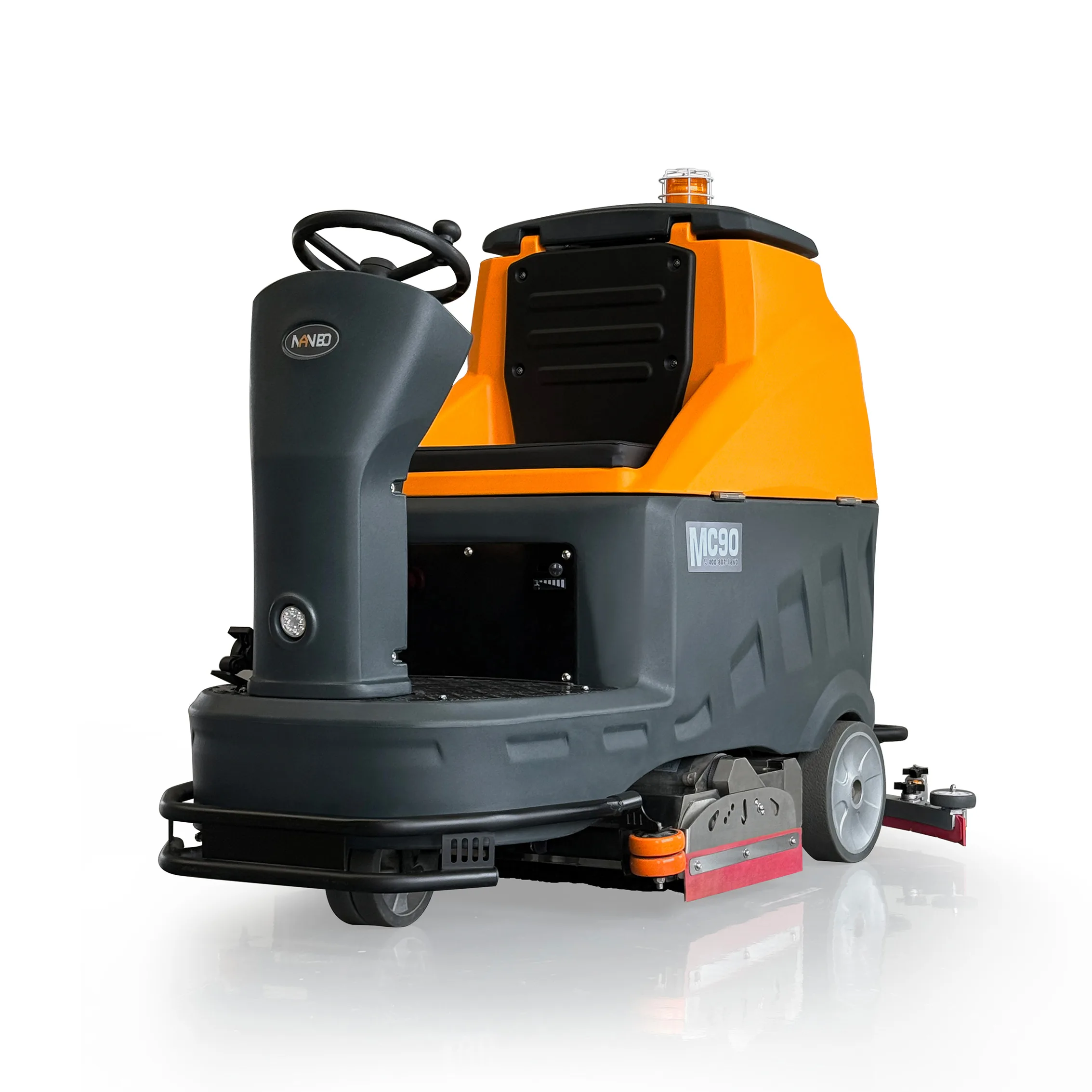
For heavy industrial floors that contain both loose debris and wet soil, a combination machine may be more suitable. The NANBO MC90 is a ride-on sweeper-scrubber that uses dual cylindrical brushes and a 25 L debris hopper to sweep, scrub and recover water in one process. Its published maximum productivity is 6,200 m²/h, with a 1,150 mm maximum working width, 200 L solution tank and 210 L recovery tank.
Seven factors that decide the right machine
1. Measure cleanable area, not building area
Start with the net floor area that the machine can actually reach. Remove rack footprints, machinery, offices, loading structures and permanent safety zones from the total. Then divide the remaining area by cleaning zones and frequency. This makes the ride-on vs walk-behind floor scrubber estimate traceable.
For a defensible ride-on vs walk-behind floor scrubber plan, record three figures:
- net cleanable area per cycle;
- number of cycles per day or week;
- maximum time available for each cycle.
A facility with 4,000 m² of cleanable floor may need only weekly cleaning, or it may need two cleaning cycles every day. The second case creates much higher labor demand and can justify greater productivity even though the physical area is unchanged.
2. Measure the narrowest access point
The machine must pass through the narrowest doorway, aisle, ramp or elevator on its route. Compare that measurement with the complete machine dimensions, not only the brush width. Allow safe clearance for steering and avoid selecting a machine that technically fits but leaves no practical margin.
The same rule applies to turning space. Draw the route and identify dead ends, 90-degree corners and U-turns. This step often changes the ride-on vs walk-behind floor scrubber recommendation because an open central floor may still be surrounded by access restrictions. Record the limiting measurement on the ride-on vs walk-behind floor scrubber worksheet used for supplier review.
3. Convert rated productivity into planning productivity
Manufacturer productivity is useful for comparing models under defined conditions, but real facilities include turns, overlapping passes, refilling, draining, debris removal and traffic delays. Therefore, use a site efficiency factor when planning labor.
Planning productivity = published maximum productivity × site efficiency factor
For early planning, a facility may test several scenarios rather than assume one universal percentage. For example, use 70% for a relatively open route, 55% for a mixed route and 40% for a congested route. These are planning assumptions, not NANBO performance guarantees. Confirm the factor through an on-site trial whenever possible, then update the ride-on vs walk-behind floor scrubber calculation.
Example: if a machine is rated at 3,900 m²/h and the route is modeled at 55% efficiency, planning productivity is approximately 2,145 m²/h. A 6,000 m² cleaning cycle would then require about 2.8 productive machine hours before adding setup and end-of-shift maintenance. This calculation makes a ride-on vs walk-behind floor scrubber comparison more realistic than comparing headline figures alone.
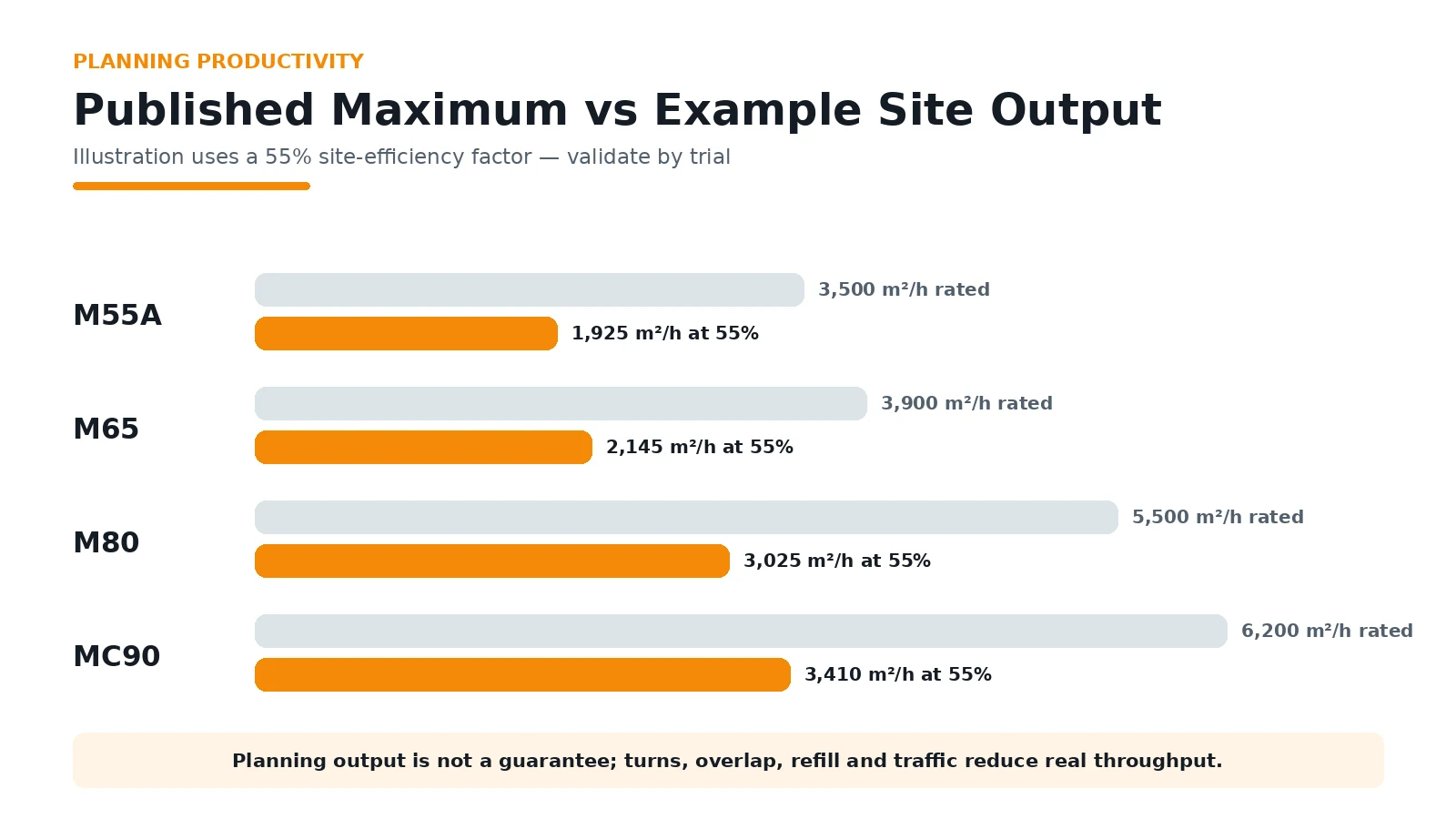
Image 3. Published maximum productivity compared with example planning output at 55% route efficiency. The 55% factor is an illustration and must be replaced with site trial data.
4. Calculate refill, drain and charging interruptions
Tank capacity affects how long the machine can remain on the cleaning route. Estimate water consumption, distance to the filling point, drain access and the time required to rinse the recovery tank. A larger tank can reduce interruptions, but it also increases machine size and weight. Include every refill and drain stop in the ride-on vs walk-behind floor scrubber time model.
Battery planning should follow the same logic. Compare the required shift duration with the stated operating time, charging schedule and battery option. Do not assume that a four-hour rating equals four hours of uninterrupted floor contact; travel, inspection and operator breaks may be included in the shift but not in productive cleaning time.
In a ride-on vs walk-behind floor scrubber review, ask the supplier to confirm battery type, charger specification, expected charging conditions and the assumptions behind the operating-time figure for the proposed configuration.
5. Identify the dominant soil
Disc scrubbers are commonly selected for wet soil, films and routine hard-floor maintenance. Cylindrical brush systems can add debris collection capability where small loose material is present. However, no scrubber should be expected to safely collect every object. Large debris, cables and hazardous sharp items should be removed according to site procedures.
The MC90 illustrates a different route through the ride-on vs walk-behind floor scrubber decision: when an industrial site repeatedly contains grit, wood chips, screws or metal fragments together with wet contamination, an integrated sweeper-scrubber may reduce the need for two separate passes. The actual suitability still depends on debris size, floor condition and site safety rules. Ask for a debris trial before finalizing the ride-on vs walk-behind floor scrubber recommendation.
6. Evaluate labor cost and operator exposure
Upfront machine price is only one part of total cost. Estimate annual cleaning hours, loaded labor cost, training time, consumables, planned maintenance, battery replacement and downtime. Then compare alternatives over the same service period.
Annual labor cost = cleaning hours per cycle × cycles per year × loaded hourly labor cost
Simple payback period = additional machine investment ÷ annual labor savings
Suppose Option A requires 3.0 labor hours per cycle and Option B requires 1.8 hours. At 300 cycles per year, the difference is 360 labor hours. Multiply that by the facility’s real loaded hourly labor cost. The result is an estimate, not a promise, but it gives the ride-on vs walk-behind floor scrubber discussion a transparent financial basis.
7. Check maintenance access and local support
Daily care usually includes rinsing tanks, cleaning the squeegee, checking brushes or pads, inspecting hoses and confirming battery condition. Before purchase, ask how quickly operators can access these components and which consumables should be stocked locally.
Also confirm parts availability, warranty terms, technical documentation, remote support and dealer service capability in the destination country. A machine that is slightly faster on paper may be the weaker choice if common wear parts are difficult to obtain. Service response therefore belongs inside the ride-on vs walk-behind floor scrubber scorecard.
NANBO model comparison using published specifications
| Model | Format | Max. productivity | Max. working width | Solution / recovery tank | Operating time | Best-fit role |
|---|
| M55 | Walk-behind, brush-assisted | 3,000 m²/h | 850 mm | 60 / 70 L | 3–4 h | Confined routes and routine cleaning |
|---|---|---|---|---|---|---|
| M55A | Walk-behind, motor-driven | 3,500 m²/h | 850 mm | 60 / 70 L | 3–4 h | Similar access needs with reduced pushing effort |
| M65 | Compact ride-on | 3,900 m²/h | 850 mm | 85 / 95 L | 3–4 h | Small-to-medium venues needing ride-on operation |
| M80 / M80F | Medium-to-large ride-on | 5,500 m²/h | 1,050 mm | 130 / 140 L | 4–5 h | Large open commercial or industrial areas |
| MC90 | Ride-on sweeper-scrubber | 6,200 m²/h | 1,150 mm | 200 / 210 L; 25 L hopper | 3–4 h | Heavy industrial floors with wet soil and loose debris |
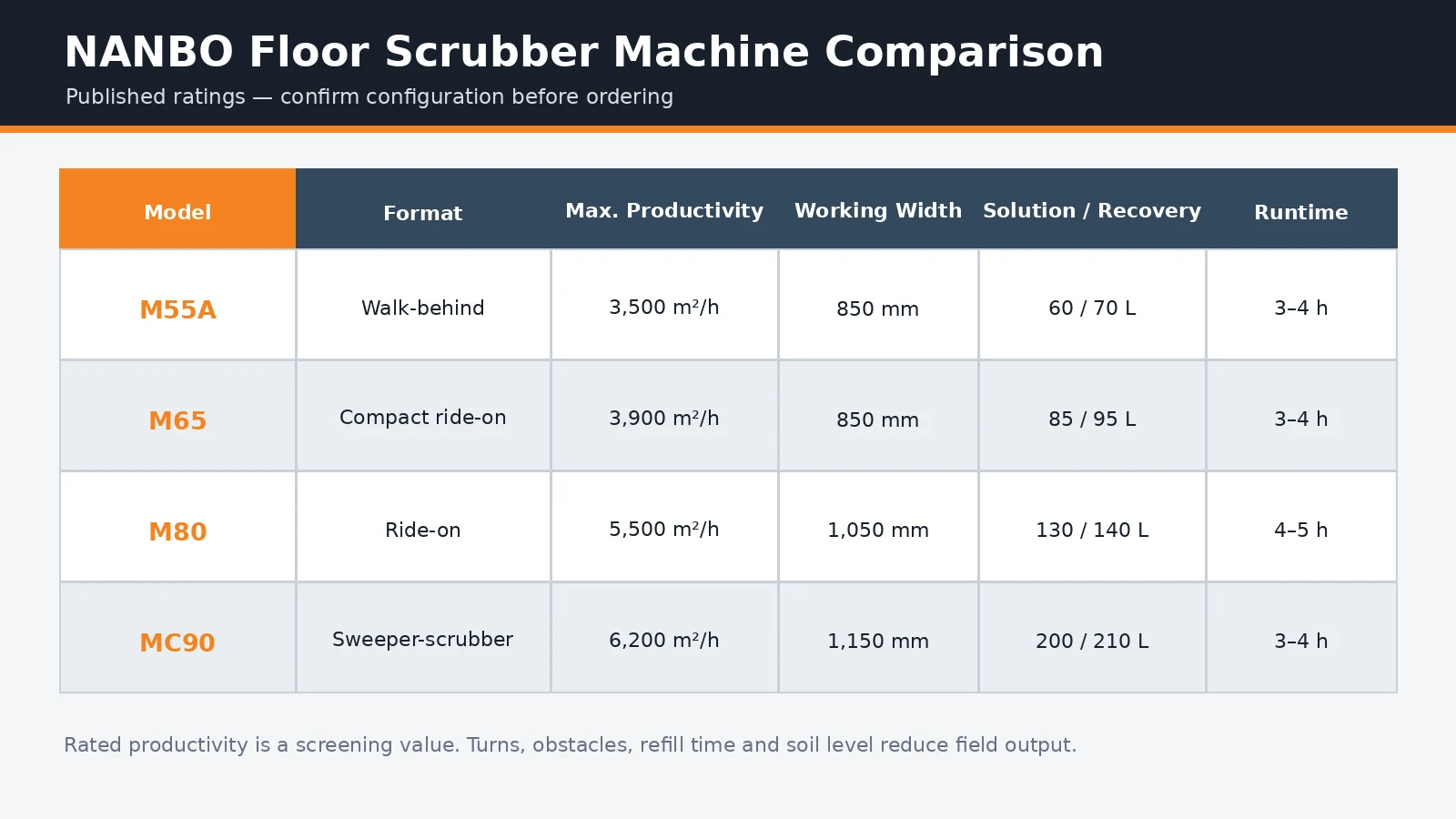
Image 4. Comparison uses NANBO website product images and published specifications. Verify the final configuration before ordering.
The table does not mean that the largest model is automatically the best. M55A and M65 share an 850 mm published maximum working width, yet their operating formats, tank capacities, dimensions and operator experience differ. The M65 may reduce walking on longer routes, while the M55A may be easier to position in divided spaces. This is precisely why a ride-on vs walk-behind floor scrubber evaluation must connect specifications to the actual route.
Recommendations by facility type
Warehouse and logistics center
Use a ride-on model for long, open aisles and loading zones when aisle width, turning space and traffic controls permit. Consider a compact walk-behind unit for rack ends, staging corners and congested areas. If loose debris is persistent, evaluate whether pre-sweeping or a sweeper-scrubber is required. Validate the ride-on vs walk-behind floor scrubber choice during both quiet and normal traffic conditions.
Factory and workshop
Map soil types by zone. Routine film and tire marks may suit a disc scrubber, while machining debris can require dry collection or an integrated cylindrical system. Keep metal offcuts, cables and hazardous fragments outside the machine’s path. The best ride-on vs walk-behind floor scrubber choice may differ between the assembly area and the production cell area.
Hospital, school and public building
Prioritize maneuverability, controlled operation, drying performance, noise management and access between rooms or floors. A self-propelled walk-behind unit can be practical for divided interiors; a compact ride-on unit can serve long corridors and larger halls if safe pedestrian separation is possible. The ride-on vs walk-behind floor scrubber review should include infection-control and pedestrian procedures defined by the facility.
Shopping mall and supermarket
Cleaning windows may be short, so productivity matters, but displays, customers and frequent turns can reduce real output. Test visibility, stopping control and squeegee recovery on the actual floor. Use the ride-on vs walk-behind floor scrubber framework separately for public opening hours and closed-hour deep cleaning.
Parking facility
Check ramps, drainage, tire soil, ventilation, column spacing and turning areas. Confirm gradeability and braking requirements with the supplier for the specific route. Published maximum gradeability should never replace a site safety assessment, and the ride-on vs walk-behind floor scrubber decision should document every ramp.
A practical five-step selection process
- Create a route map. Mark cleanable area, minimum aisle width, doors, elevators, ramps, drains, refill points and high-traffic zones for the ride-on vs walk-behind floor scrubber comparison.
- Define the cleaning task. Record floor type, dominant soil, required frequency, acceptable residual moisture and cleaning window.
- Shortlist by access first. Remove any machine that cannot safely pass, turn, store or reach the cleaning zone; this prevents an unrealistic ride-on vs walk-behind floor scrubber shortlist.
- Model productivity and cost. Apply a realistic efficiency factor and calculate labor hours, refill stops and annual operating cost.
- Run a site trial. Test cleaning result, water recovery, operator comfort, noise, maneuverability and post-cleaning maintenance.
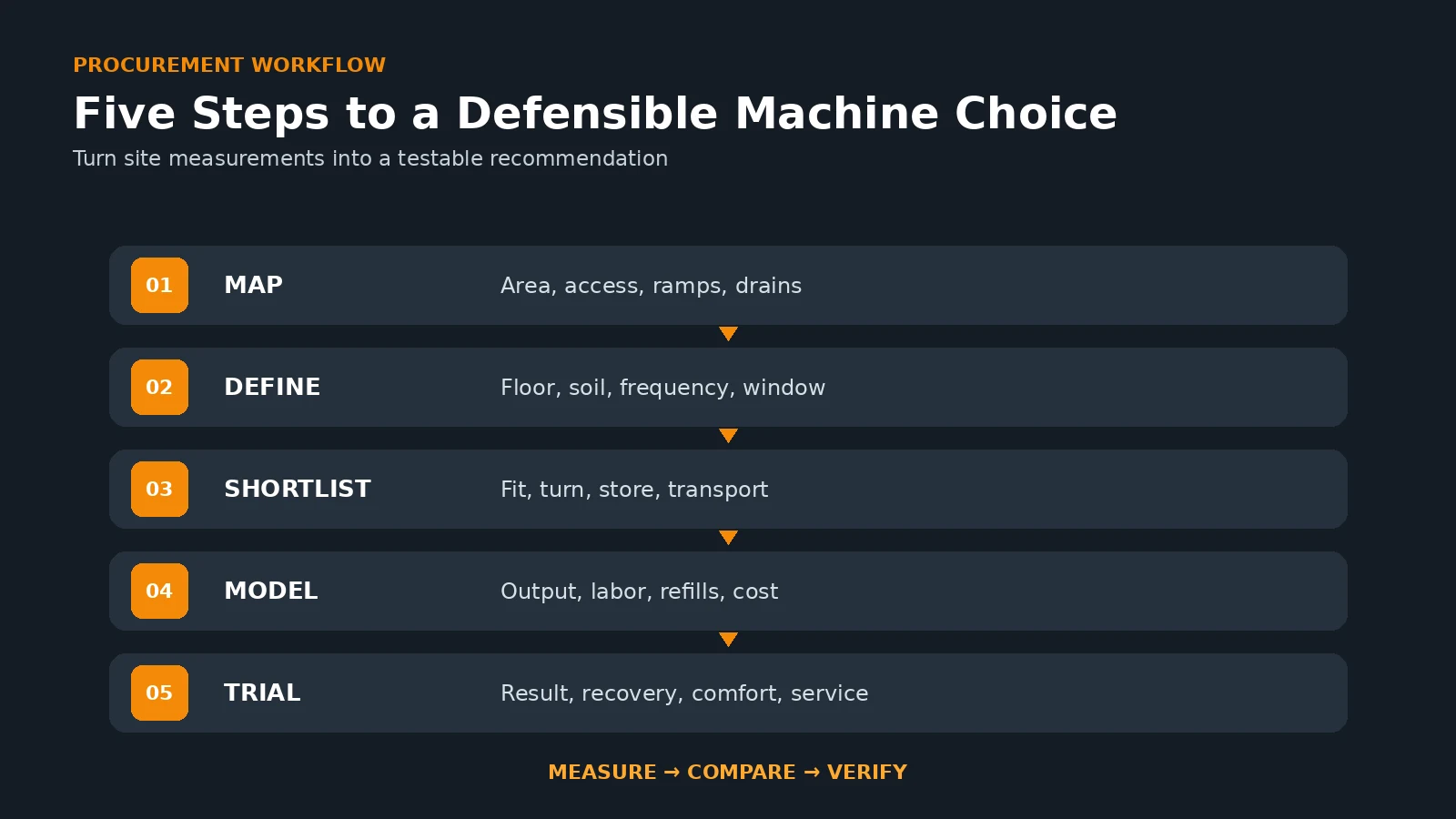
Image 5. A repeatable procurement process improves the quality of the final machine recommendation.
This workflow turns a broad ride-on vs walk-behind floor scrubber question into a documented purchasing decision. It also gives the manufacturer enough information to recommend brush type, battery configuration and optional features more accurately.
Questions to send with your inquiry
To receive a useful recommendation, include:
- country and project location;
- net cleanable area and cleaning frequency;
- floor material and current floor condition;
- main contaminants and debris size;
- minimum aisle, doorway and elevator dimensions;
- ramps or slopes on the route;
- hours available per cleaning cycle;
- preferred battery type and local power supply;
- requested quantity, delivery timing and OEM/ODM needs;
- photos, video or a marked facility plan.
Providing these details reduces guesswork in the ride-on vs walk-behind floor scrubber selection and helps the supplier prepare a more relevant quotation.
Frequently asked questions
Is a ride-on floor scrubber always faster?
It normally has an advantage on large, open routes, but not necessarily in tight or interrupted spaces. Frequent turns, narrow access and obstacle avoidance can reduce effective productivity. Compare planning productivity on the actual route rather than relying only on the rated maximum.
What size facility needs a ride-on floor scrubber?
There is no universal area threshold. Cleaning frequency, route continuity and labor cost can matter as much as floor area. NANBO’s website notes that hand-push scrubbers are typically used below 3,000 m² and ride-on versions at 5,000 m² and above, but the 3,000–5,000 m² range and mixed-layout facilities should be assessed case by case.
Can one machine clean both narrow aisles and large open floors?
A compact ride-on machine may cover both when access and turning space are adequate. However, a mixed fleet can be more efficient when the site contains both very open and highly congested zones. A route trial is the best way to validate a ride-on vs walk-behind floor scrubber shortlist.
How should I compare floor scrubber productivity?
Use the same definition for every model: working width, maximum stated productivity, realistic site efficiency, refill and drain time, battery schedule and operator time. Ask the supplier what conditions were used for the published figure and keep those definitions consistent throughout the ride-on vs walk-behind floor scrubber comparison.
Which NANBO model suits a smaller, divided facility?
The M55/M55A walk-behind range is a logical starting point because it combines an 850 mm maximum working width with a compact operating format. The final choice should still be checked against exact machine dimensions, doors, elevators and cleaning requirements.
Which NANBO model suits a large warehouse?
The M80 may suit large open areas that require a 1,050 mm maximum working width and larger tanks. Where loose industrial debris and wet contamination occur together, the MC90 sweeper-scrubber may be more appropriate. Request a recommendation based on route and soil samples rather than facility name alone.
What should be tested during a demonstration?
Test cleaning result, water pickup, turning clearance, stopping control, slope handling where permitted, noise, operator visibility, refill time, tank cleaning and brush or squeegee access. Record actual area and elapsed time so the ride-on vs walk-behind floor scrubber comparison is measurable and the final ride-on vs walk-behind floor scrubber choice can be audited later.
Final recommendation
The best machine is the one that completes the required cleaning standard within the available time while fitting the route, operator and maintenance system. A walk-behind scrubber offers control and access; a ride-on scrubber offers higher potential productivity and reduced walking on long routes. The most reliable ride-on vs walk-behind floor scrubber decision uses measured site data, published machine specifications, transparent cost assumptions and a practical demonstration.
For a model recommendation, send NANBO your cleanable area, layout dimensions, floor type, soil description, cleaning schedule and destination country. The team can then compare the M55/M55A, M65, M80 and MC90 against the application. Contact NANBO to request a quotation or discuss distributor and OEM/ODM requirements.
About this guide
Recommended author line: NANBO Cleaning Equipment Team
Company: Anhui Nanbo Intelligent Environmental Equipment Co., Ltd.
Founded: 2015
Editorial review date: October 27, 2026
Sources and verification links
- NANBO Floor Scrubber Category
- NANBO M55 / M55A Specifications
- NANBO M65 Ride-on Floor Scrubber
- NANBO M80 Ride-on Scrubber-Dryer
- NANBO MC90 Ride-on Sweeper-Scrubber
- Google: Creating Helpful, Reliable, People-First Content
- Google: Optimizing for Generative AI Features