Floor Scrubber vs Floor Sweeper: Which Machine Does Your Facility Need?
Release time: 2026-10-28
Floor Scrubber vs Floor Sweeper: Which Machine Does Your Facility Need?
The floor scrubber vs floor sweeper decision begins with one practical question: what must be removed from the floor? A floor sweeper collects dry, loose debris such as dust, sand, leaves, paper scraps and small production waste. A floor scrubber applies cleaning solution, agitates attached soil with brushes or pads, and recovers dirty water through a squeegee and vacuum system. When dry debris and wet or oily contamination occur together, a facility may need both machines or a purpose-built sweeper-scrubber.
Choosing by building size alone often leads to the wrong equipment. A large warehouse dominated by cardboard fragments and tracked-in grit may need a sweeper first. A smaller food-processing area with films and spills may need a scrubber despite its limited floor area. This guide compares functions, contamination types, floor conditions, productivity and operating requirements using published NANBO product specifications.
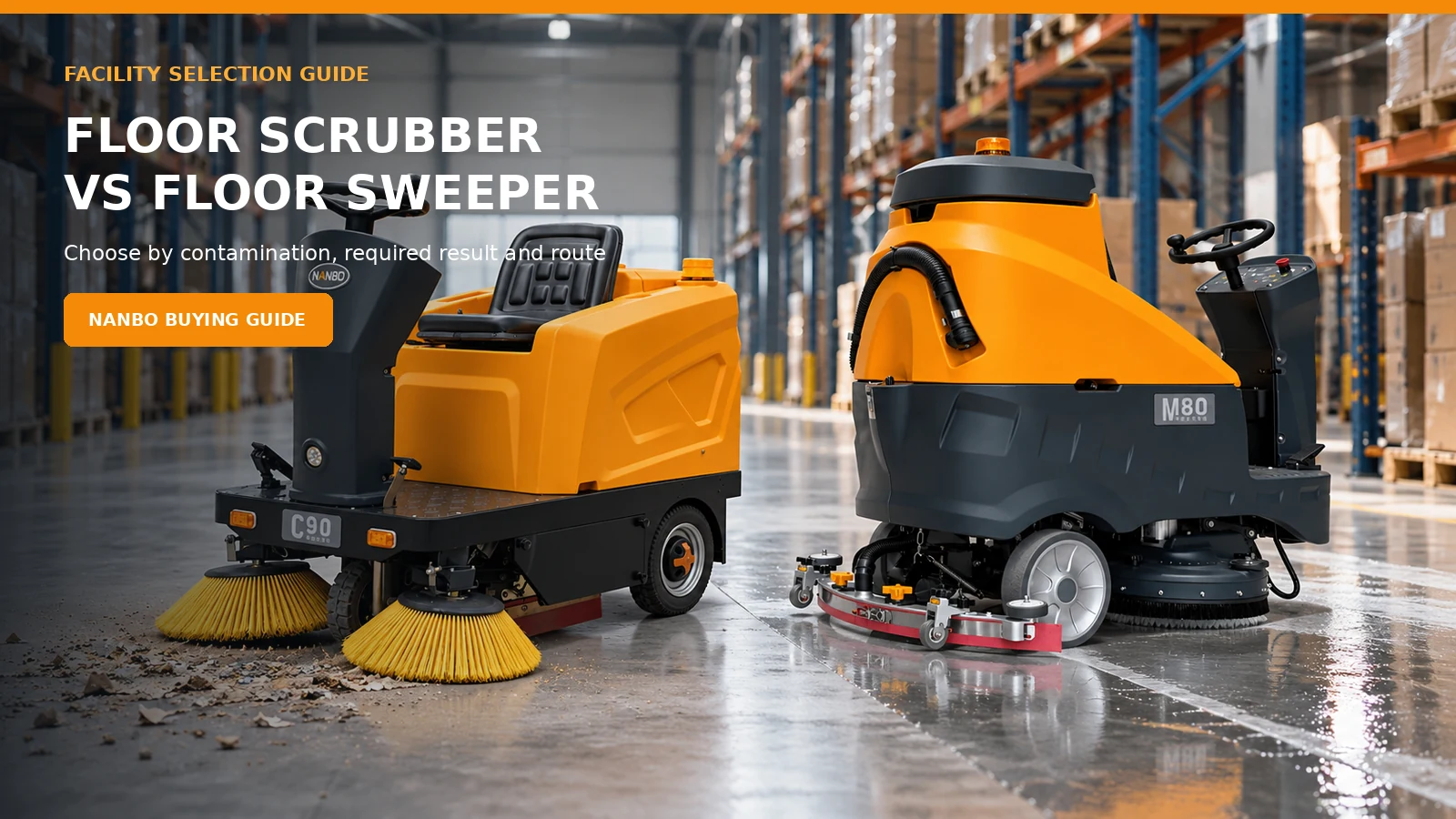
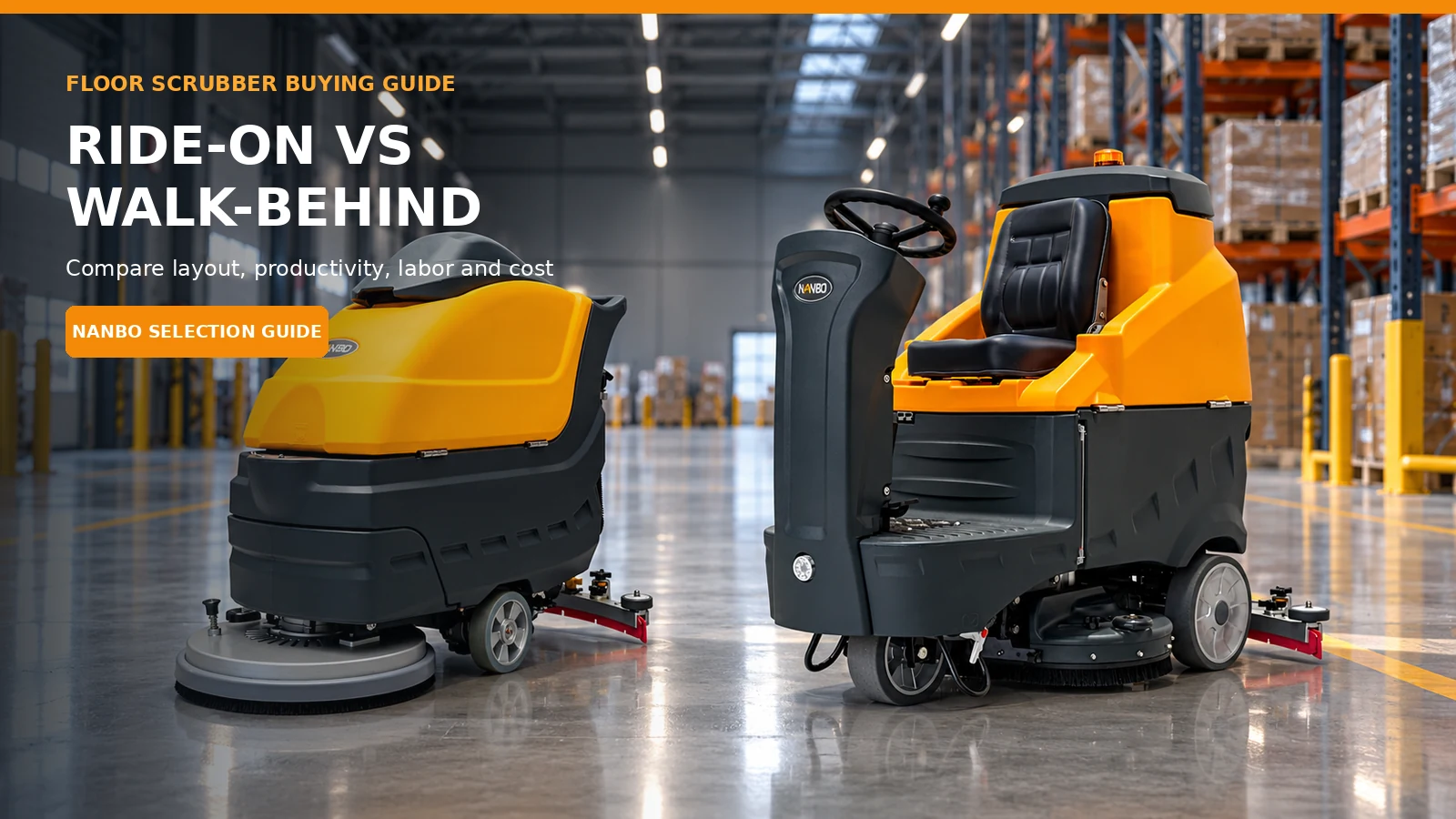
Image 1. NANBO C90 and M80 shown in a comparison scene based on NANBO website product materials.
Quick answer
Choose a floor sweeper when the recurring problem is dry, collectable debris. Choose a floor scrubber when the floor needs wet agitation and dirty-water recovery. Choose a sweeper-scrubber, or use separate sweeping and scrubbing passes, when both conditions occur regularly.
The simplest floor scrubber vs floor sweeper rule is based on the material found on the floor. Record that material before completing the floor scrubber vs floor sweeper worksheet:
- Dry dust, sand, leaves, paper or chips: start with a sweeper.
- Mud, oil film, tire marks, sticky residue or washable stains: start with a scrubber.
- Loose debris plus wet or attached soil: sweep first and scrub second, or evaluate a combination machine.
- Oversized, hazardous or stringy material: remove it according to site procedures before using either machine.
This rule narrows the category, but the final model still depends on aisle width, turning space, floor type, slope, cleaning frequency, dust sensitivity and the time available for each cleaning cycle.
Floor scrubber vs floor sweeper comparison table
| Decision factor | Floor sweeper | Floor scrubber | Sweeper-scrubber |
|---|---|---|---|
| Primary job | Collect loose dry debris | Remove attached soil with solution and brushes | Collect selected debris and wet-clean in one process |
| Main collection system | Hopper or debris bin | Recovery tank for dirty water | Debris hopper plus recovery tank |
| Typical tools | Main brush, side brushes, vacuum and filter | Disc/cylindrical brushes, solution system, squeegee and vacuum | Cylindrical brushes, hopper, solution and recovery systems |
| Best contamination | Dust, sand, paper, leaves, grit and small chips | Mud, films, spills, tire marks and washable stains | Mixed dry debris and wet contamination within machine limits |
| Floor result | Debris removed; floor is not washed | Floor is scrubbed and dirty water is recovered | Debris collection plus washing and recovery |
| Water use | May use water for dust suppression; not floor washing | Uses solution for wet cleaning | Uses solution for wet cleaning and may collect debris |
| Common limitation | Does not remove oily film or sticky residue | Standard disc scrubbers are not designed for large volumes of loose debris | Larger, more complex and still subject to debris-size limits |
The floor scrubber vs floor sweeper comparison should not be reduced to “wet machine versus dry machine.” Filter design, brush type, hopper capacity, tank capacity, working width and route efficiency all determine whether a machine can complete the real task.
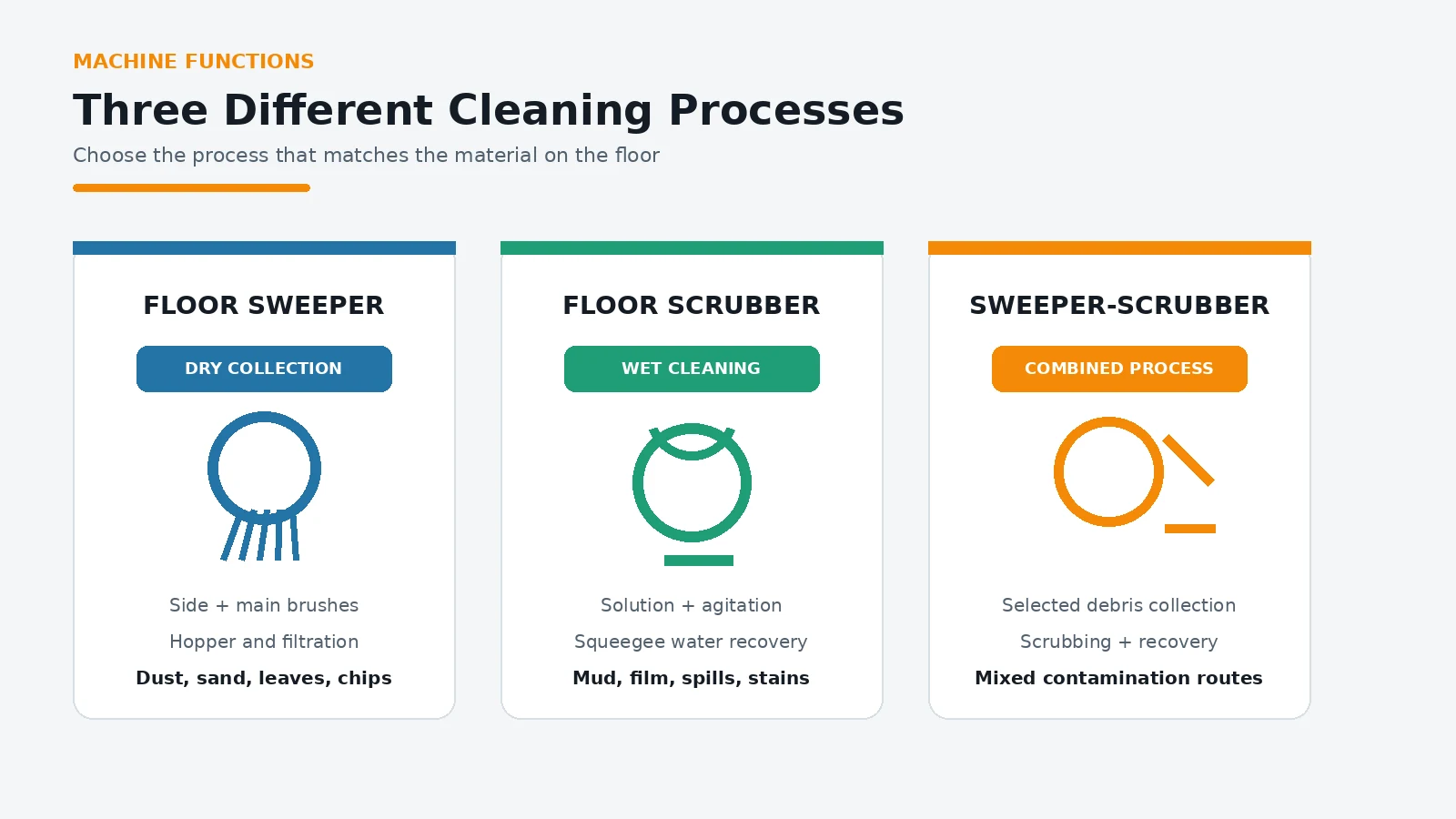
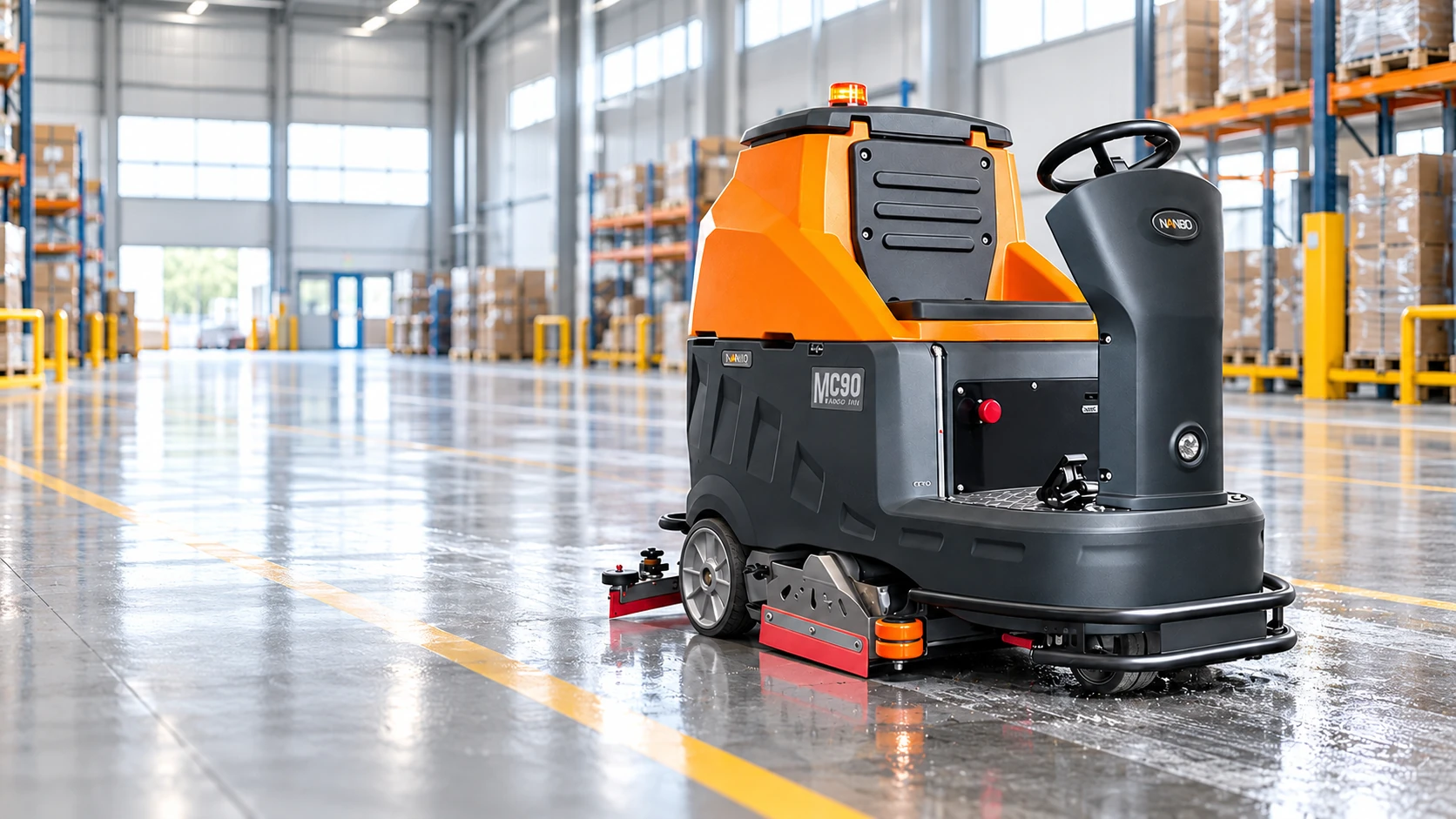
Image 2. The machine category should follow the dominant contamination and required floor result.
What does a floor sweeper do?
A floor sweeper uses rotating brushes to move loose material toward a collection path and into a hopper. Side brushes extend the working path and bring debris away from edges. Depending on the design, suction and filtration help control fine dust rather than simply pushing it into the air. This collection process defines the sweeper side of the floor scrubber vs floor sweeper comparison.
In a floor scrubber vs floor sweeper evaluation, the sweeper is normally the first choice for:
- warehouse dust and pallet fragments;
- leaves and sand tracked through loading doors;
- paper scraps and packaging remnants;
- wood chips and selected production debris;
- small stones, gravel and dry outdoor contamination;
- routine cleaning of parking areas, campuses and factory roads.
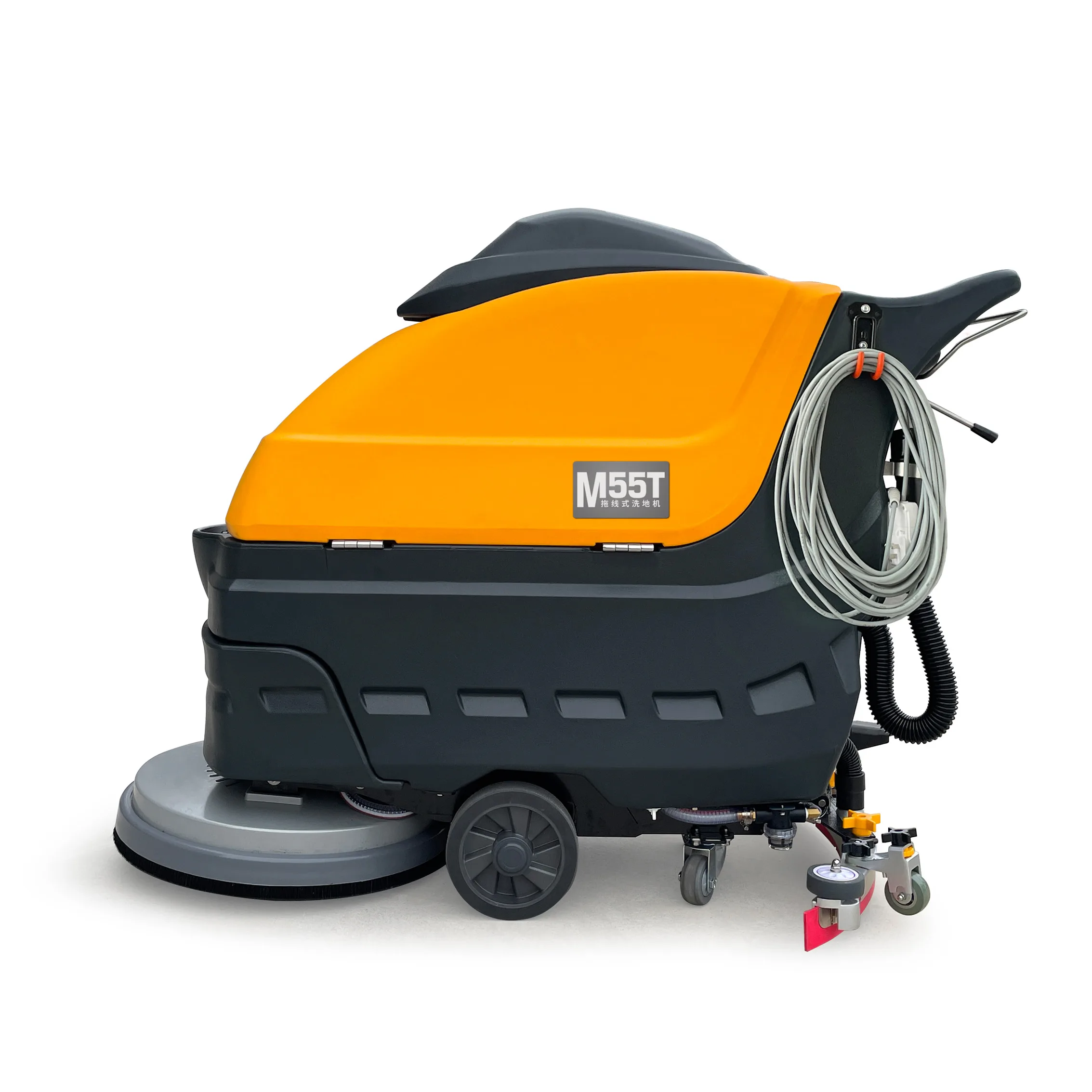
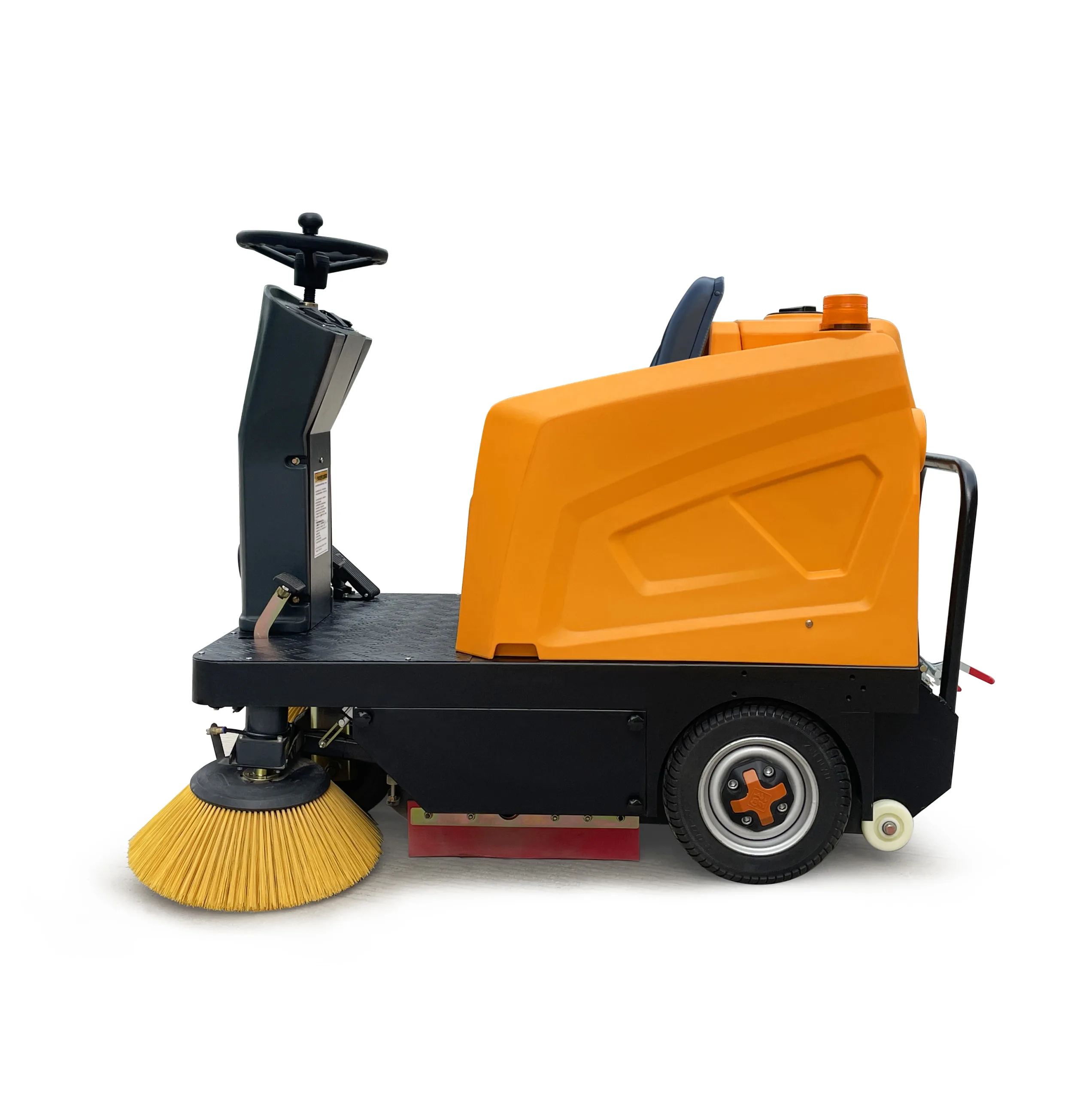
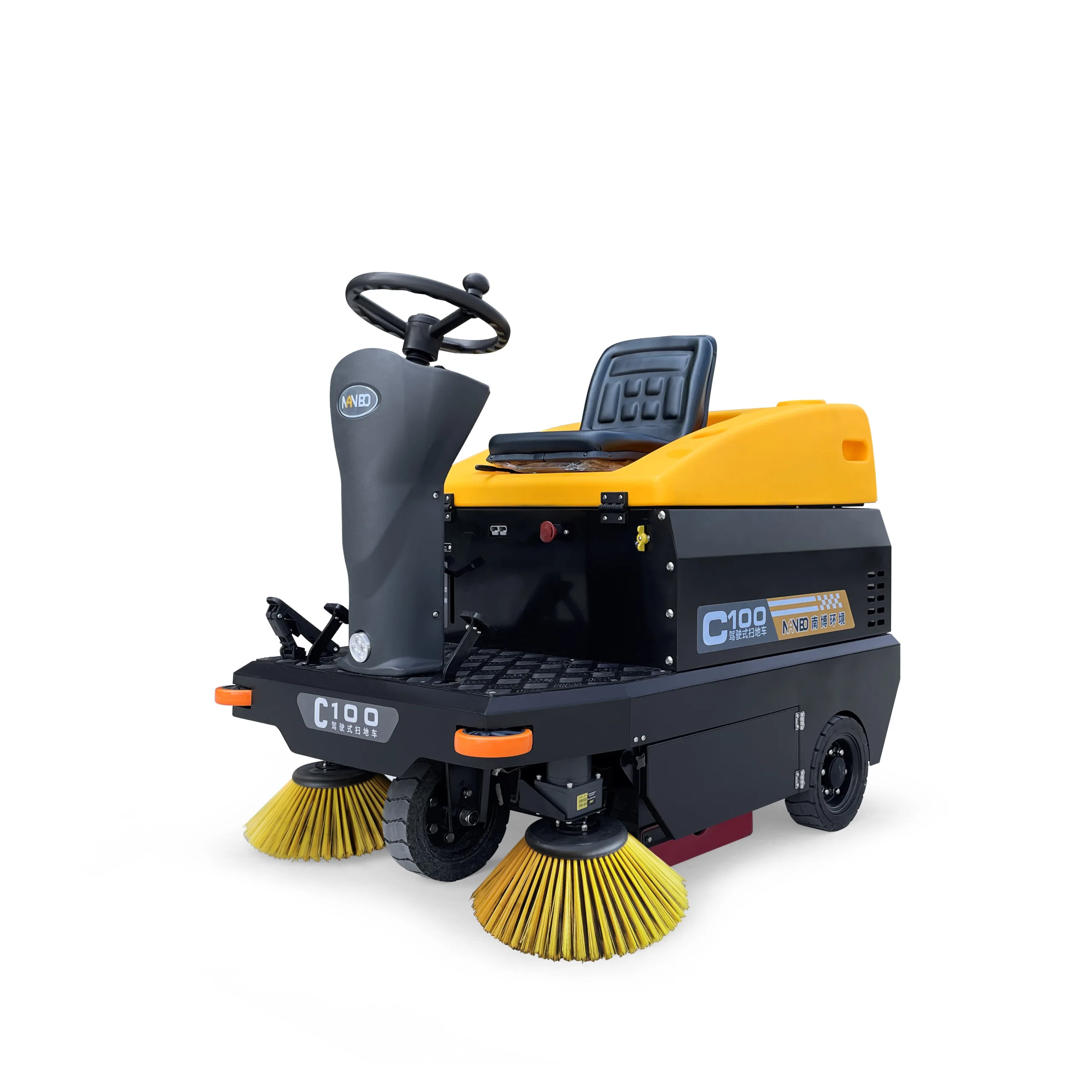
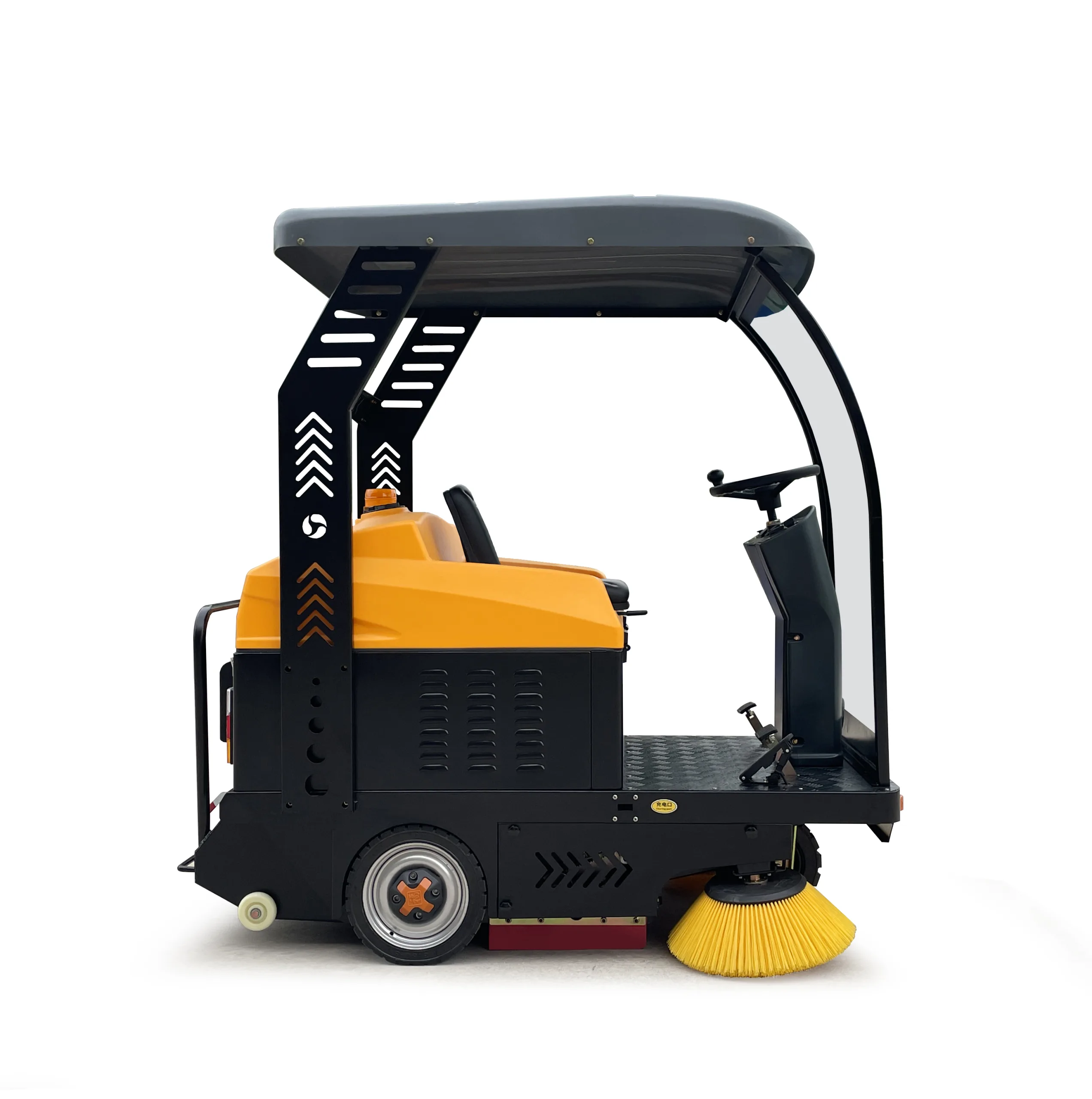
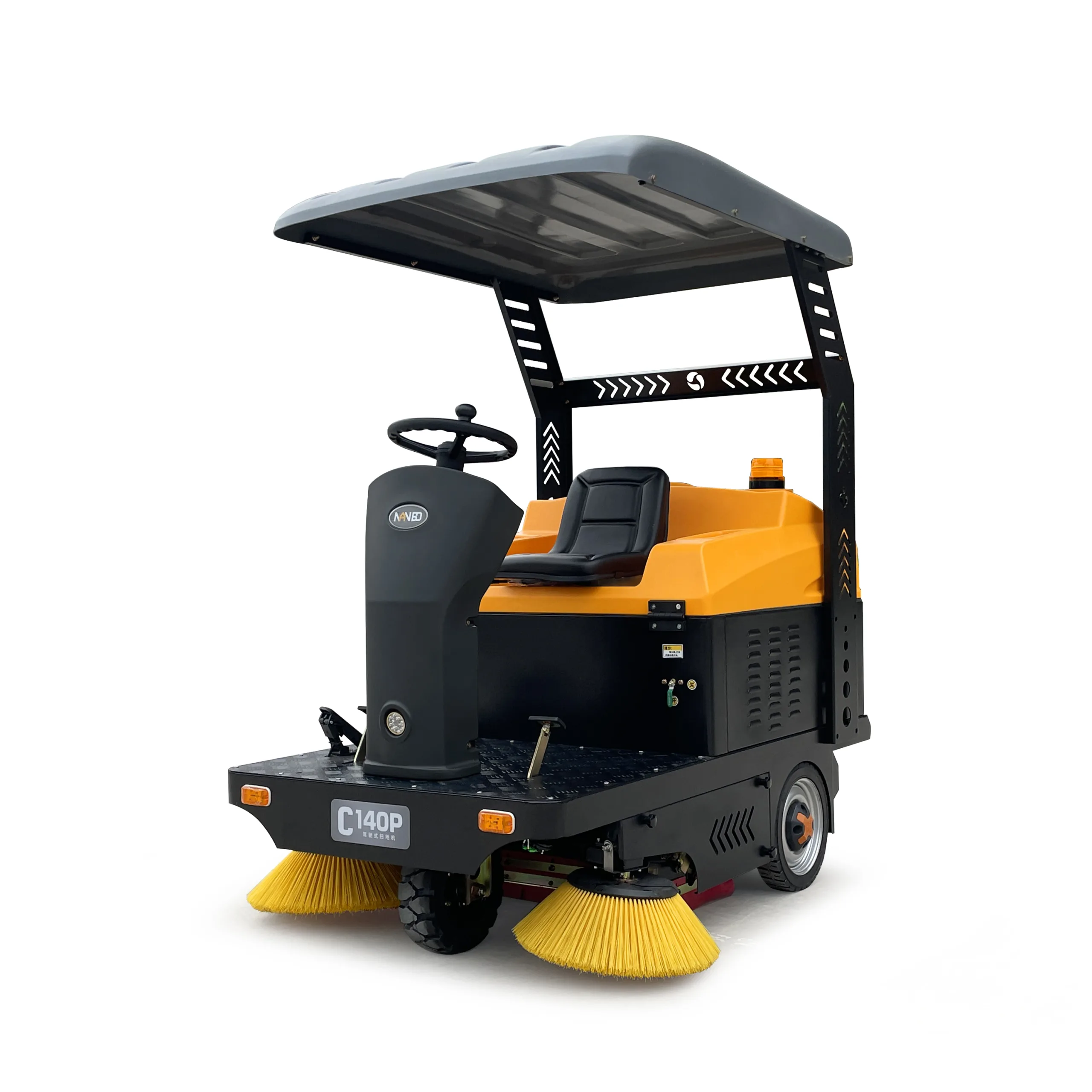
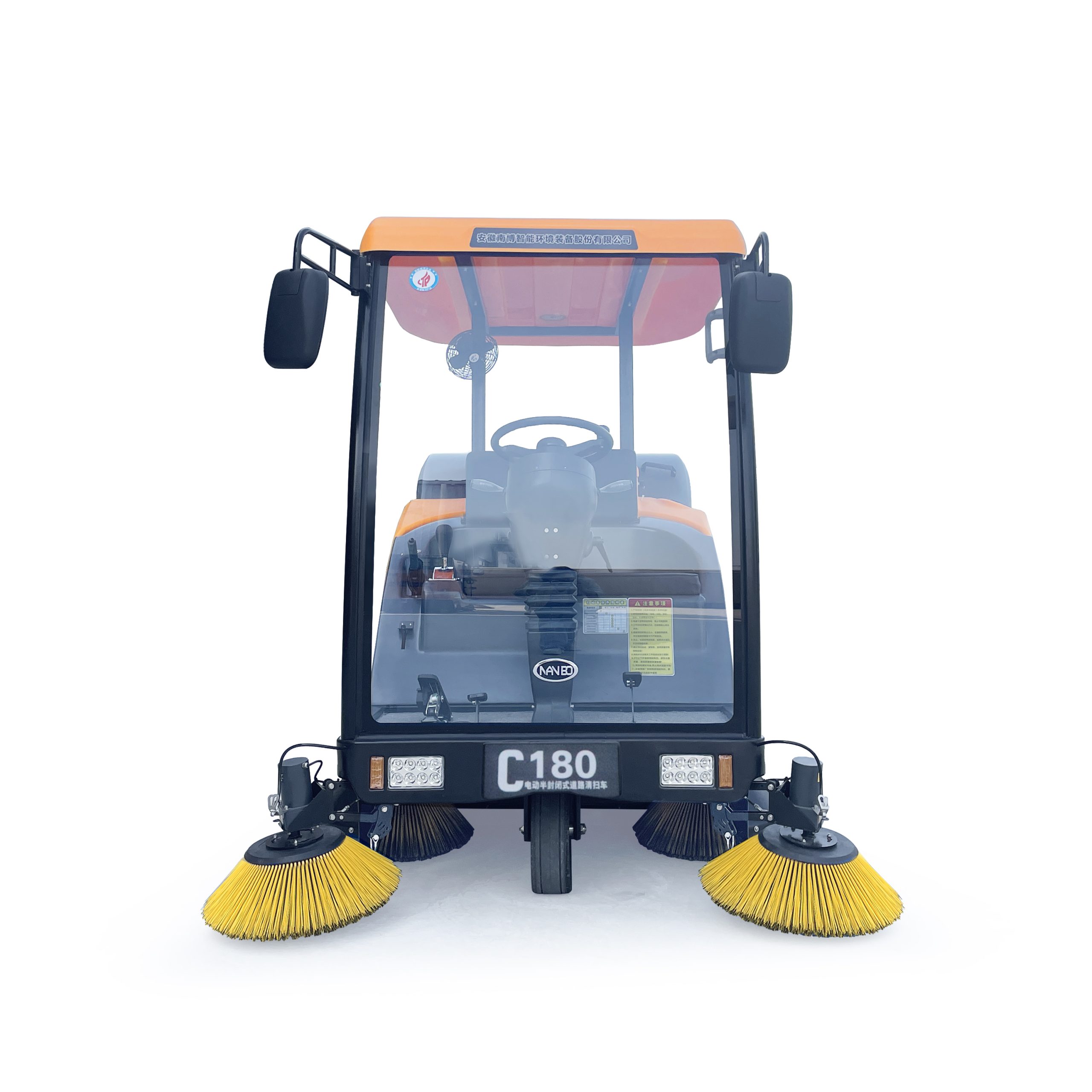
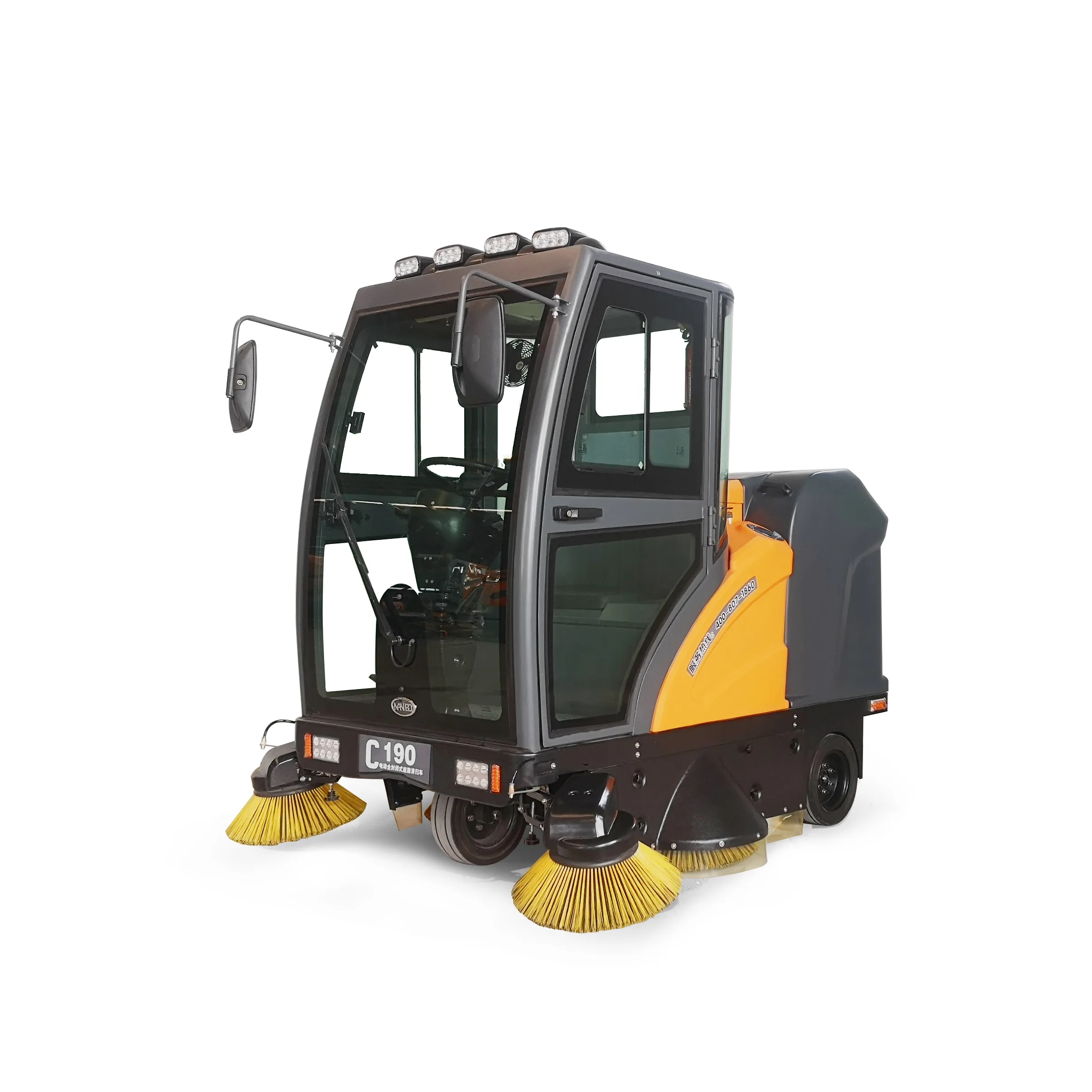
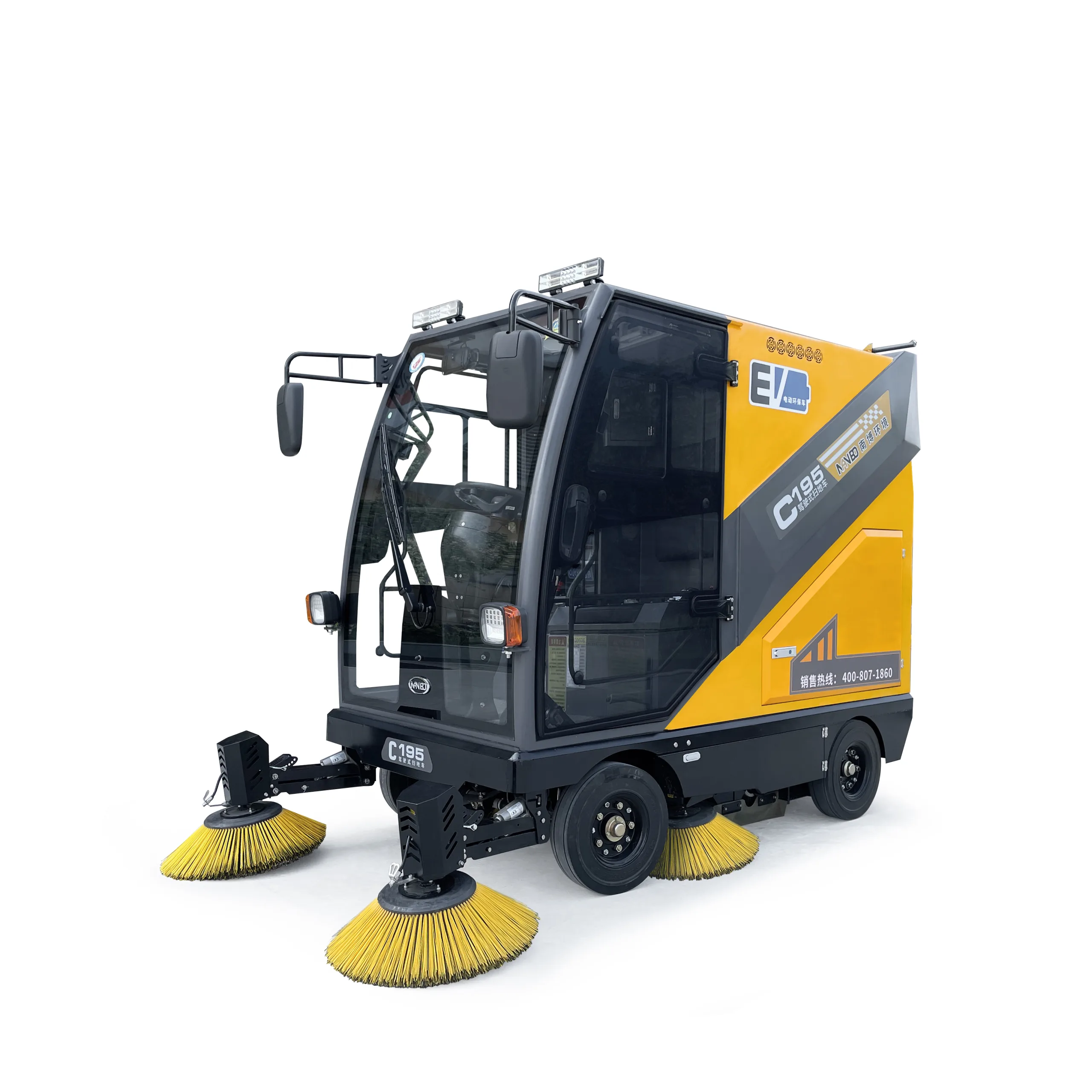
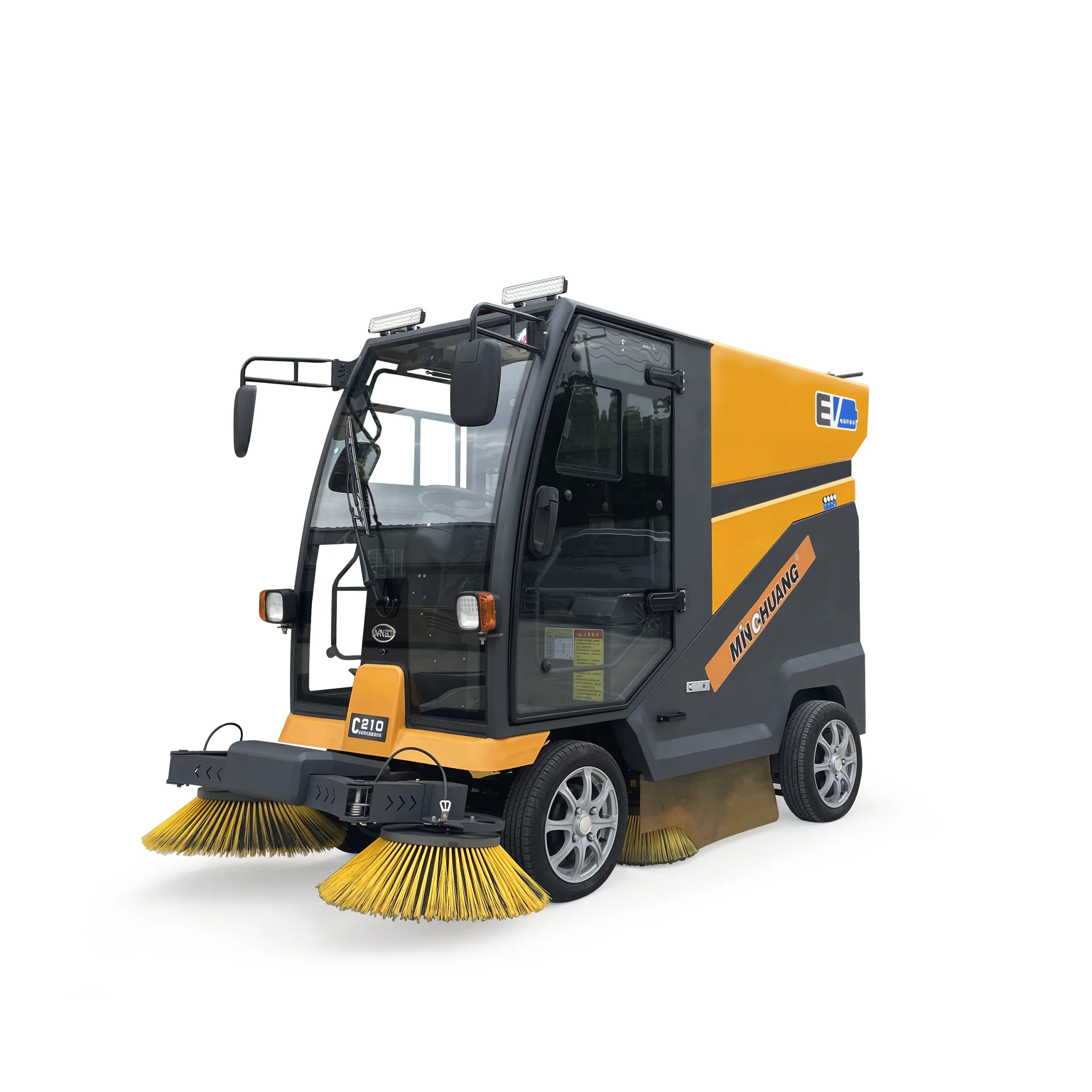
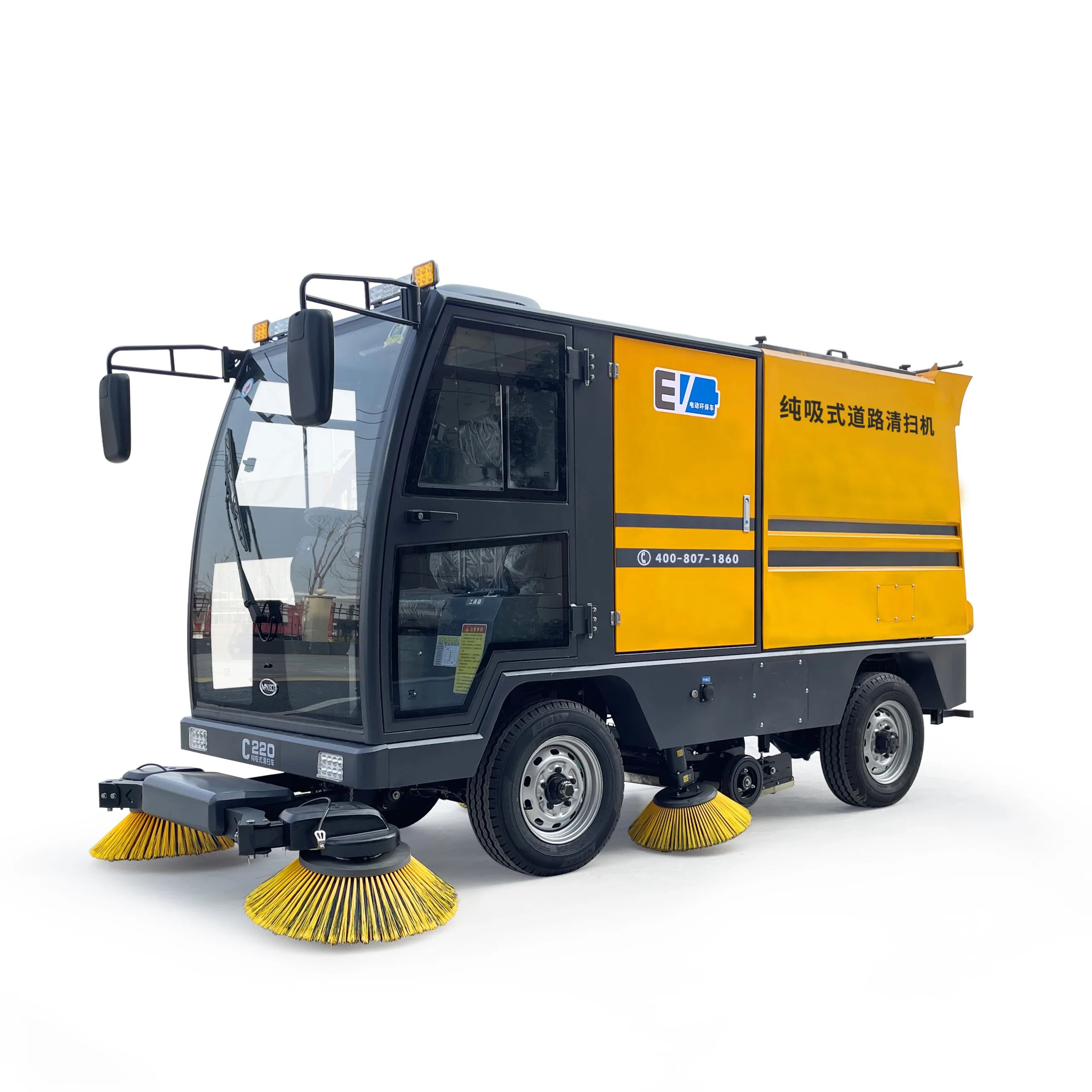
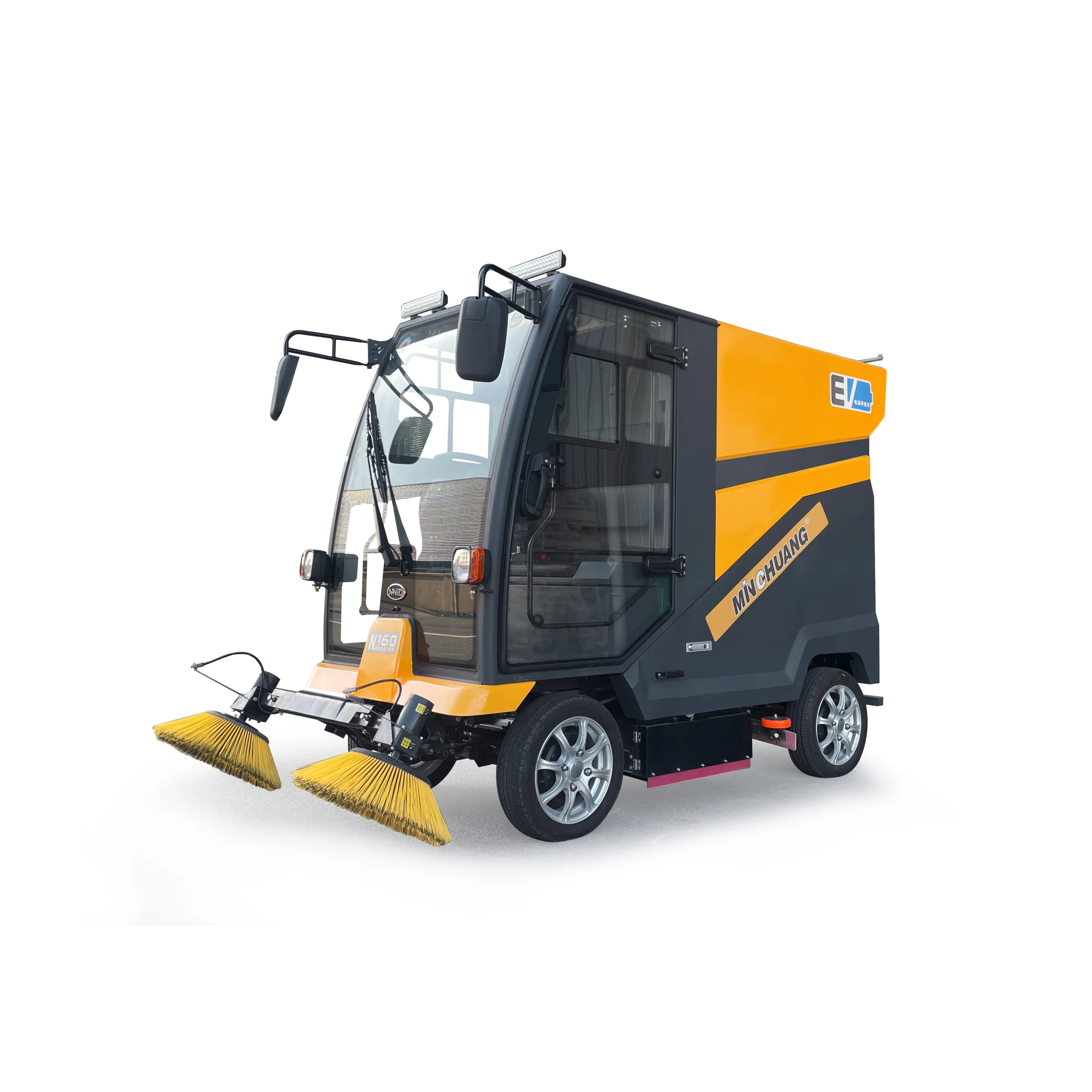
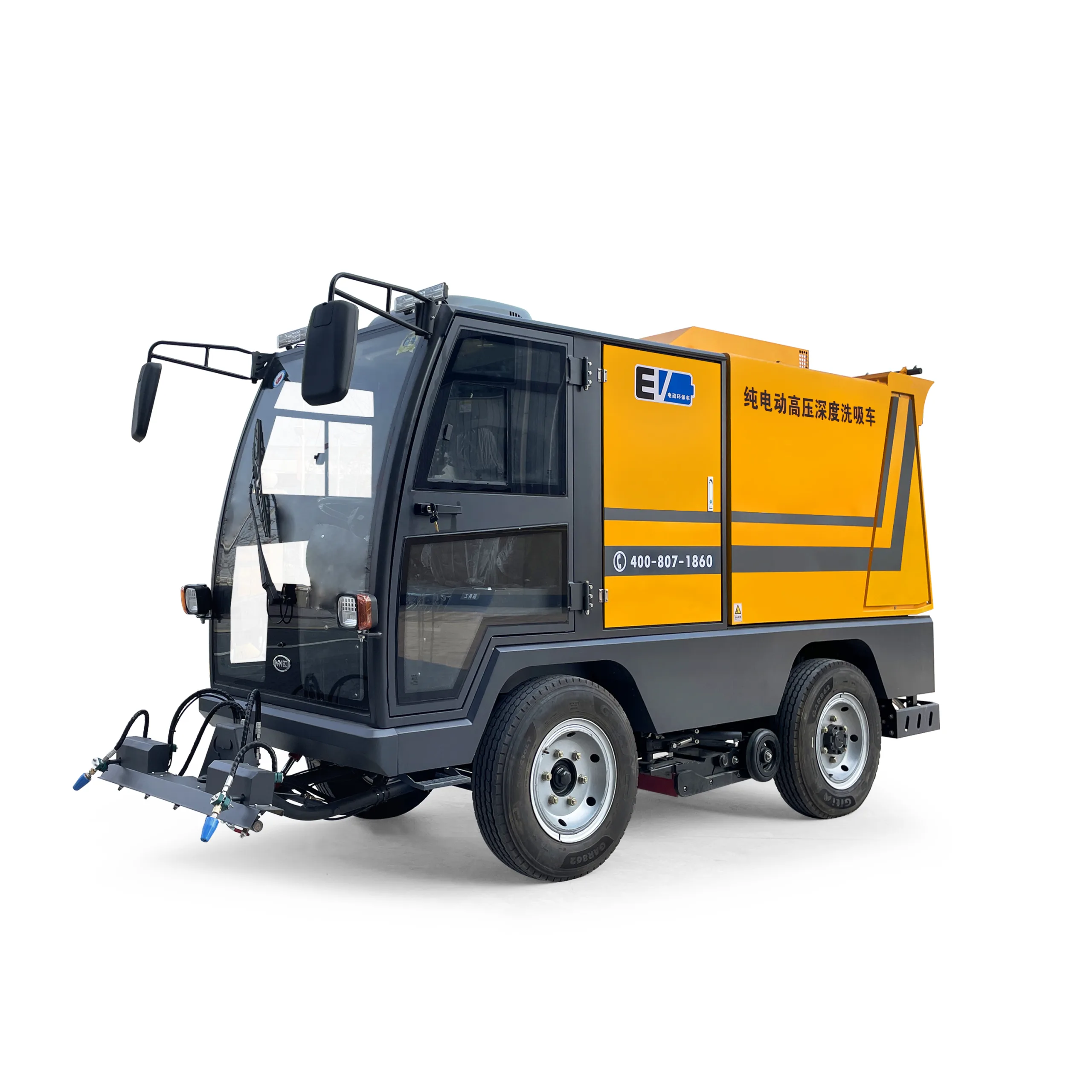
The NANBO C90 is a compact ride-on sweeper that combines sweeping and vacuuming. NANBO publishes maximum sweeping productivity of 10,000 m²/h, a 1,250 mm maximum sweeping width, an 85 L debris hopper and 3–4 hours of operating time. Its 65 L water tank supports dust-suppression functions; it should not be described as a scrubber solution tank.
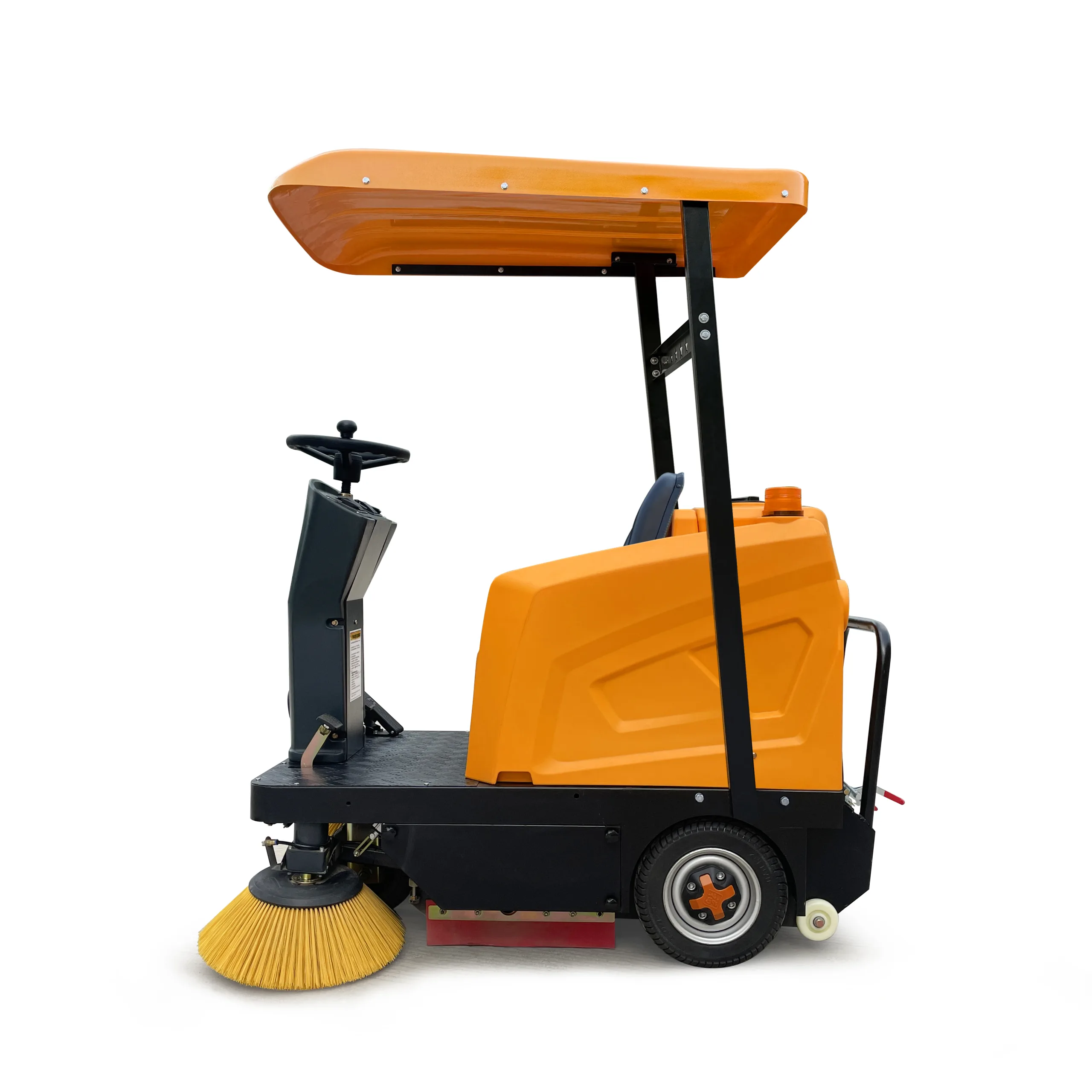
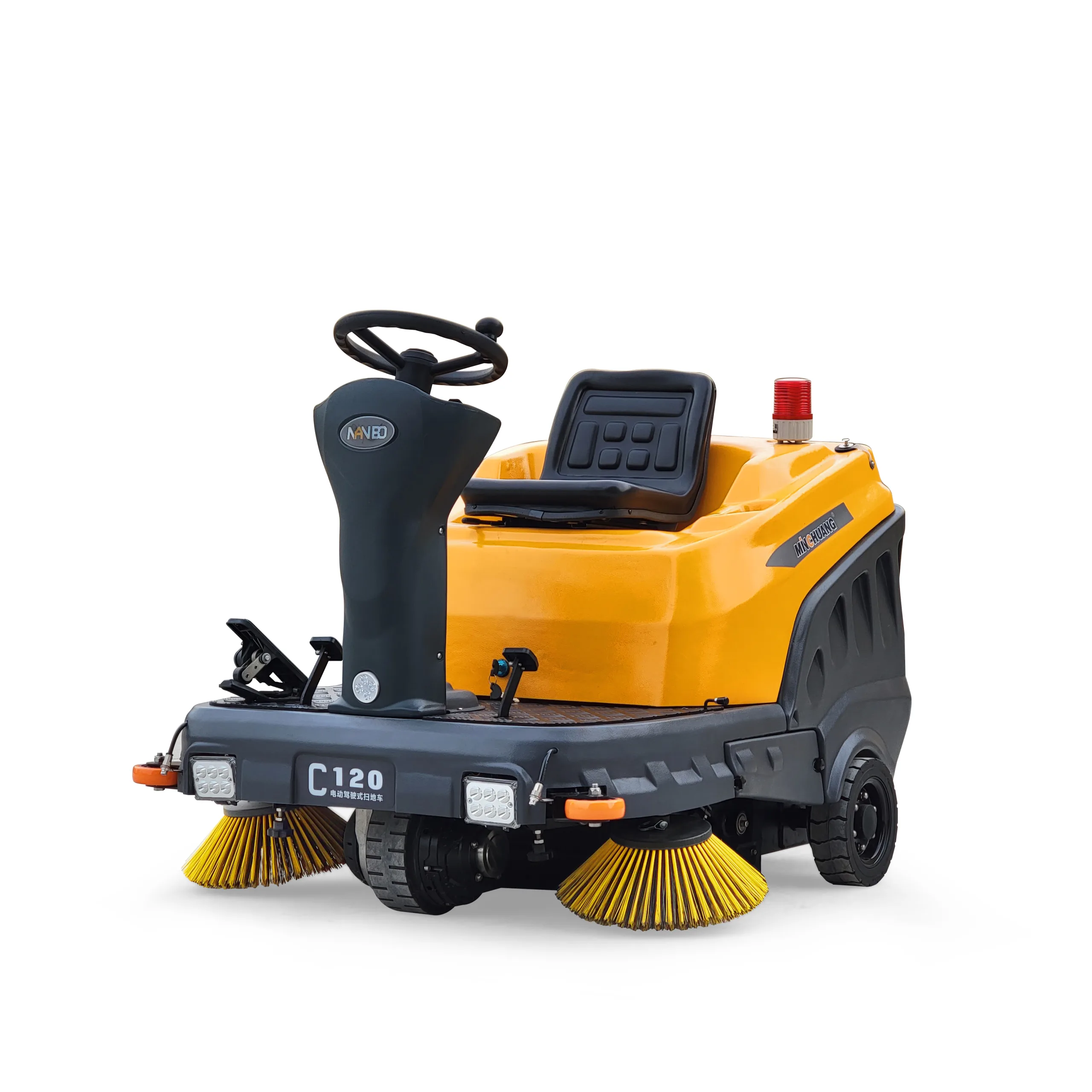
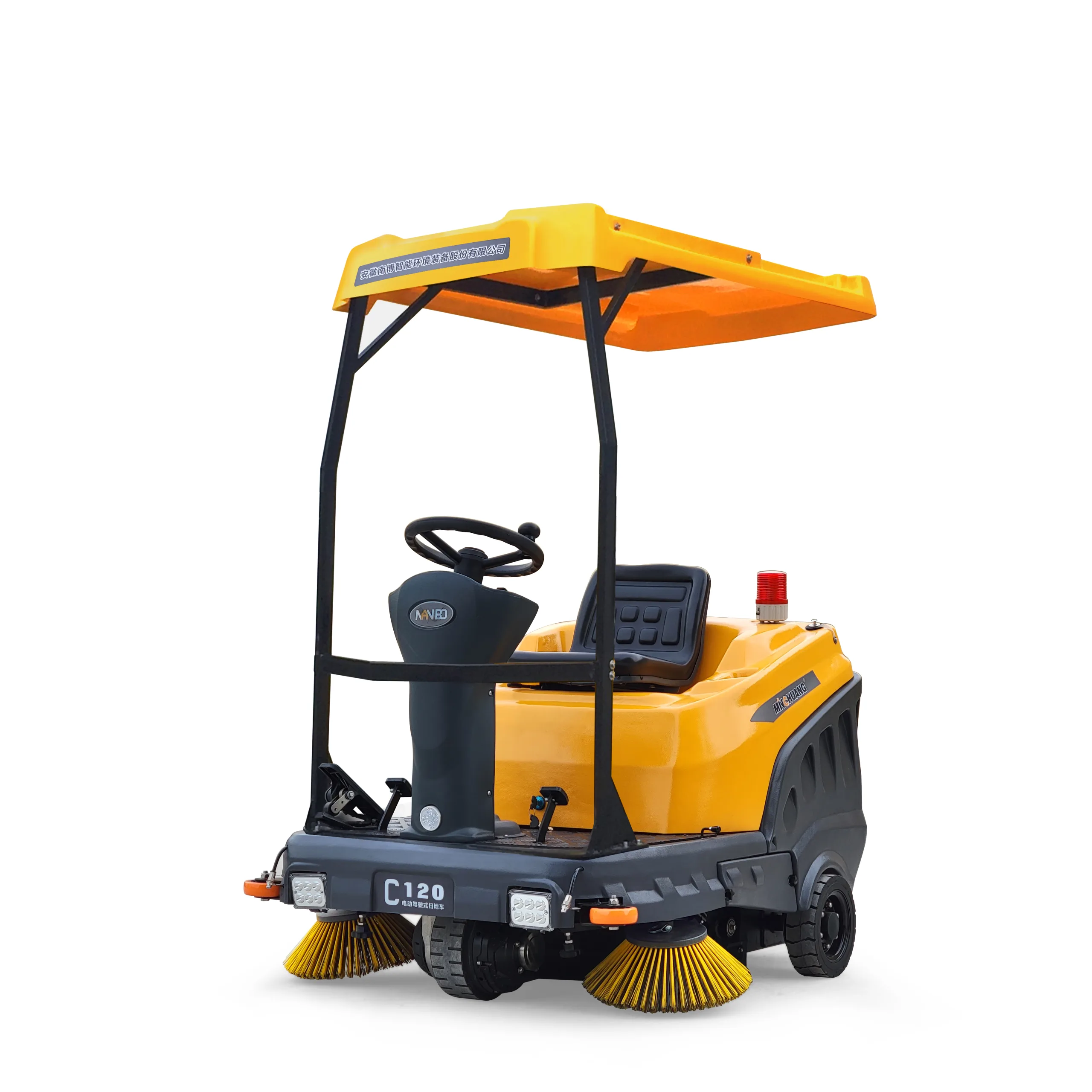
The NANBO C120/C120P is another ride-on sweeper option. Published specifications include maximum sweeping productivity of 7,000 m²/h, a 1,300 mm maximum sweeping width, a 90 L hopper, a 50 L water tank and 4–5 hours of operating time. The published maximum figure is a model specification rather than guaranteed site output, so the floor scrubber vs floor sweeper estimate should use a site-efficiency factor.
What a floor sweeper does not do
A sweeper does not use wet agitation and dirty-water recovery to remove grease, liquid residue or attached films. Dust suppression water can help control airborne dust, but it does not turn a sweeper into a scrubber. This distinction is essential in any floor scrubber vs floor sweeper specification or quotation.
String, cable, stretch wrap and oversized pallet fragments can wrap around brushes or obstruct the collection system. Sharp or hazardous material also requires a site-specific removal procedure. Confirm acceptable debris type and size with the supplier before operating the machine.
What does a floor scrubber do?
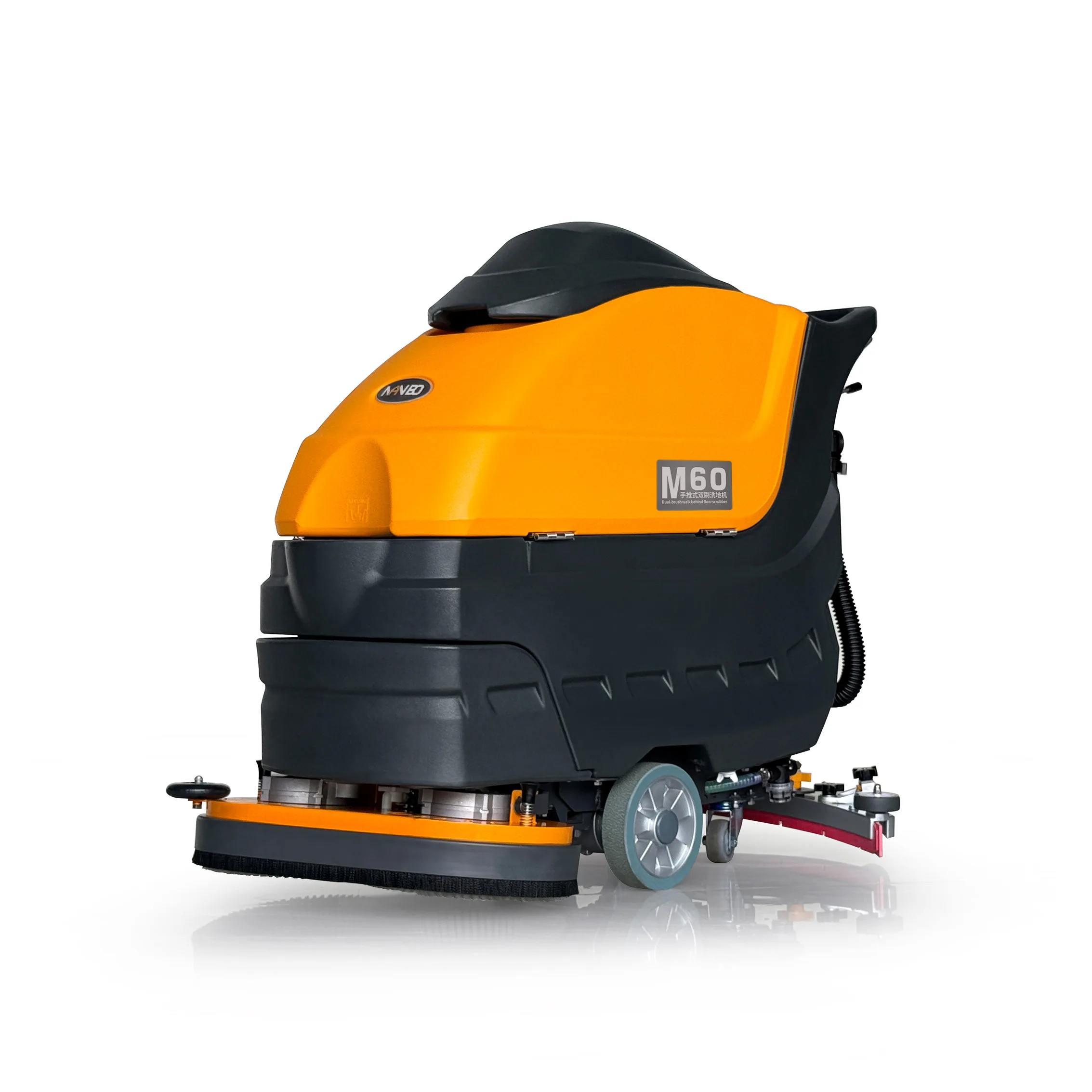
A floor scrubber dispenses water or cleaning solution, agitates the floor with a disc brush, cylindrical brush or pad, and recovers wastewater using a rear squeegee and vacuum system. The goal is not only to remove loose material but to break the bond between the floor and attached soil, then leave the surface ready for controlled traffic. This wet-recovery process defines the scrubber side of the floor scrubber vs floor sweeper comparison.
In a floor scrubber vs floor sweeper comparison, the scrubber is normally selected for:
- oil or coolant film within approved cleaning procedures;
- dried mud and tracked-in soil;
- tire marks and forklift traffic lanes;
- sticky beverage or food residue;
- routine hard-floor washing;
- recovery of dirty cleaning solution.
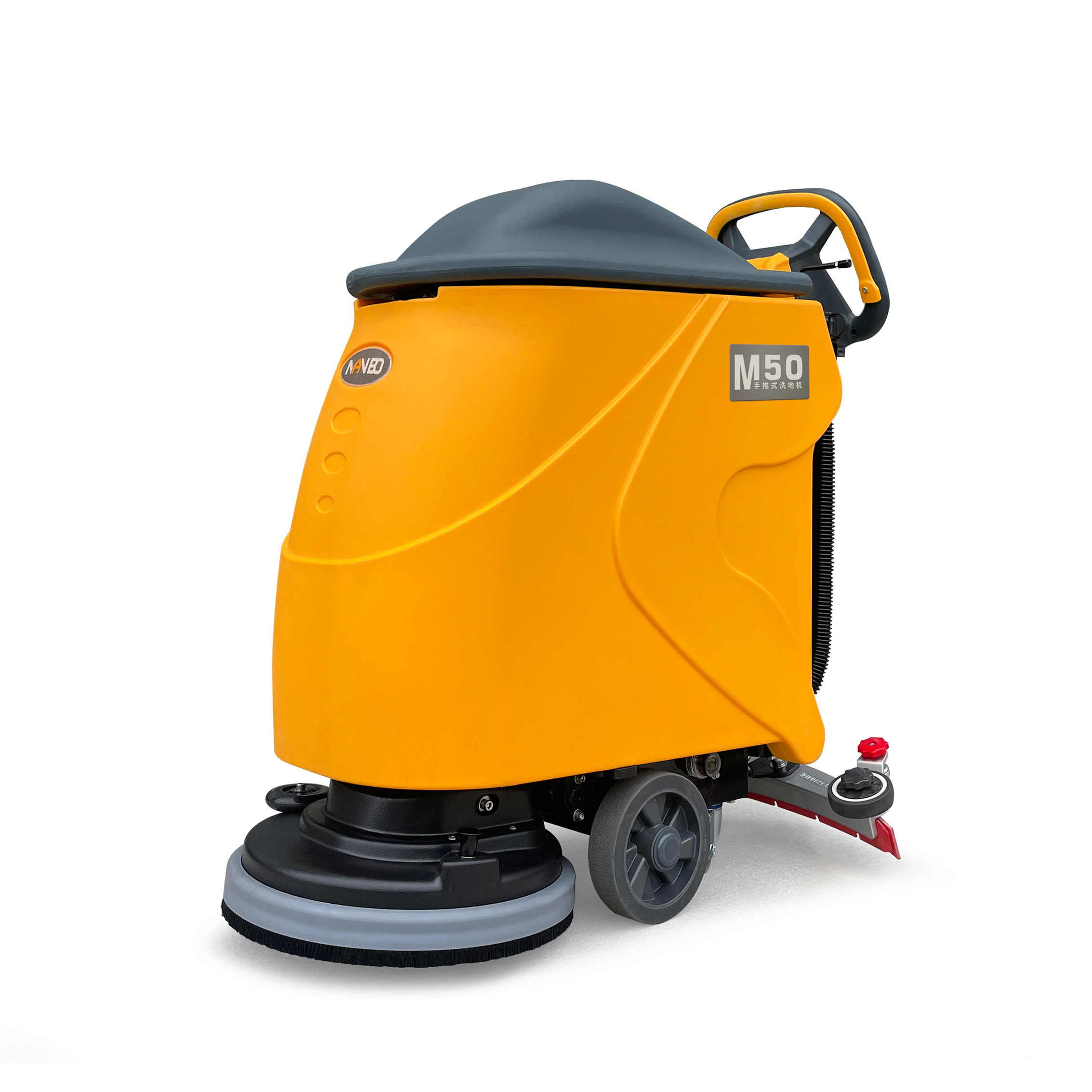
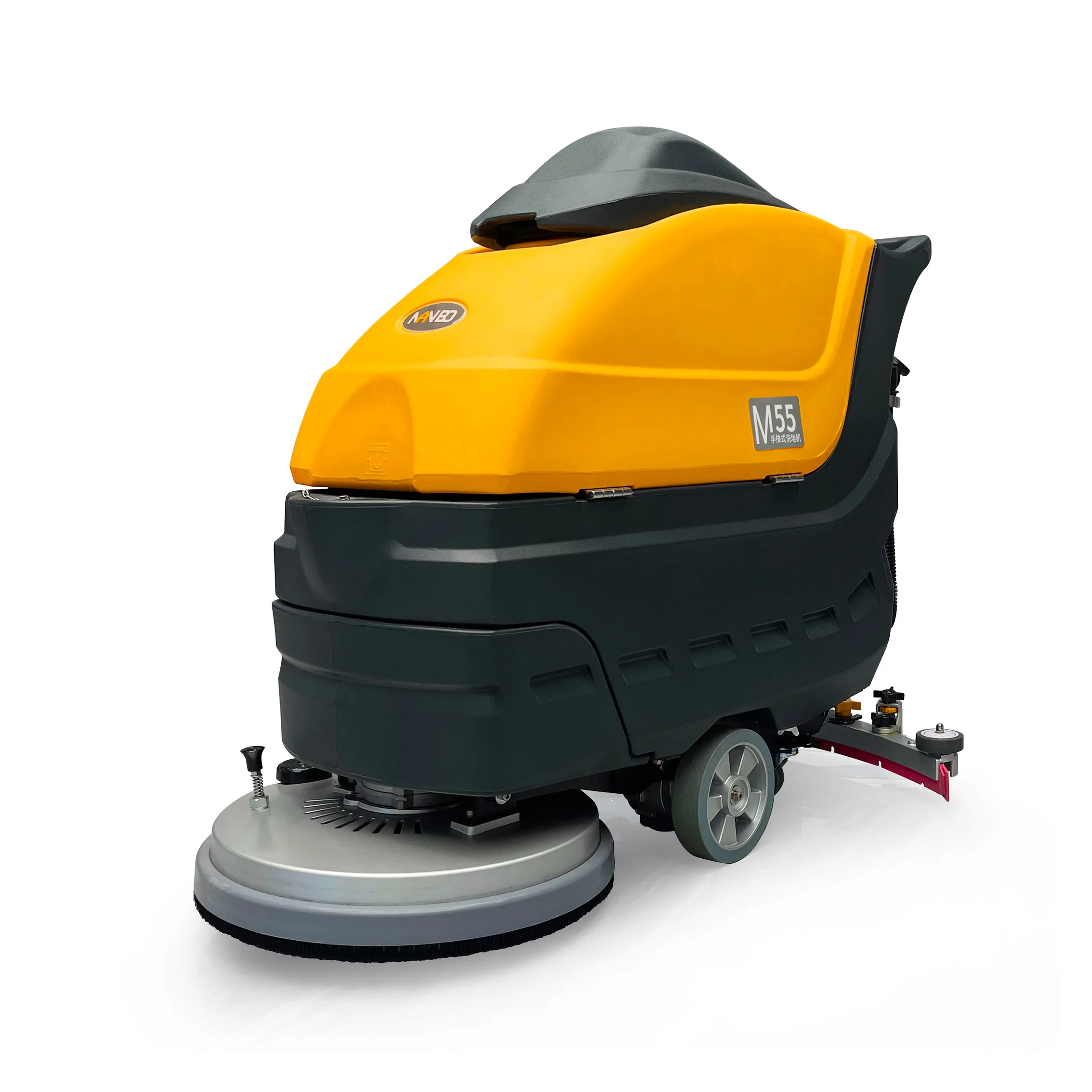
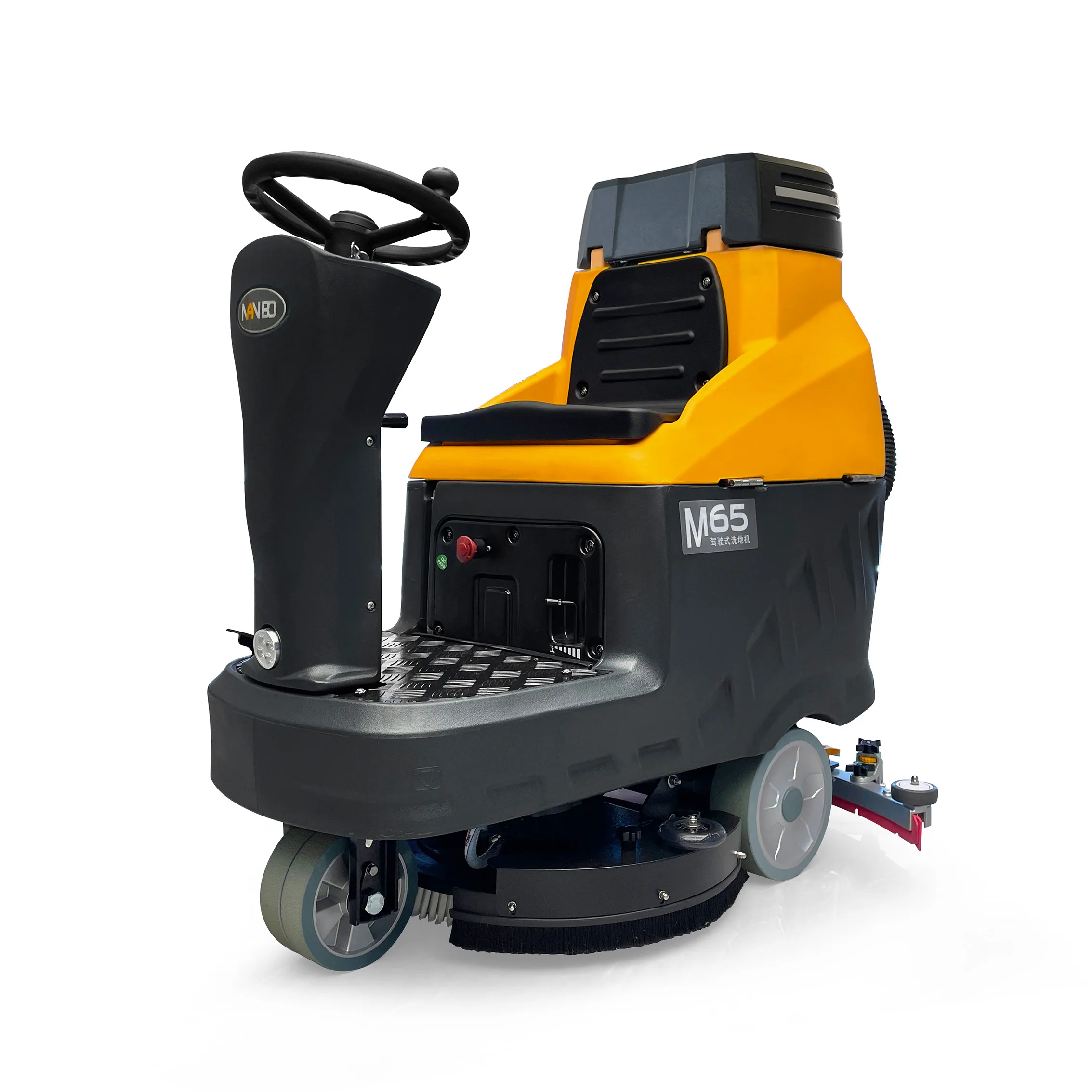
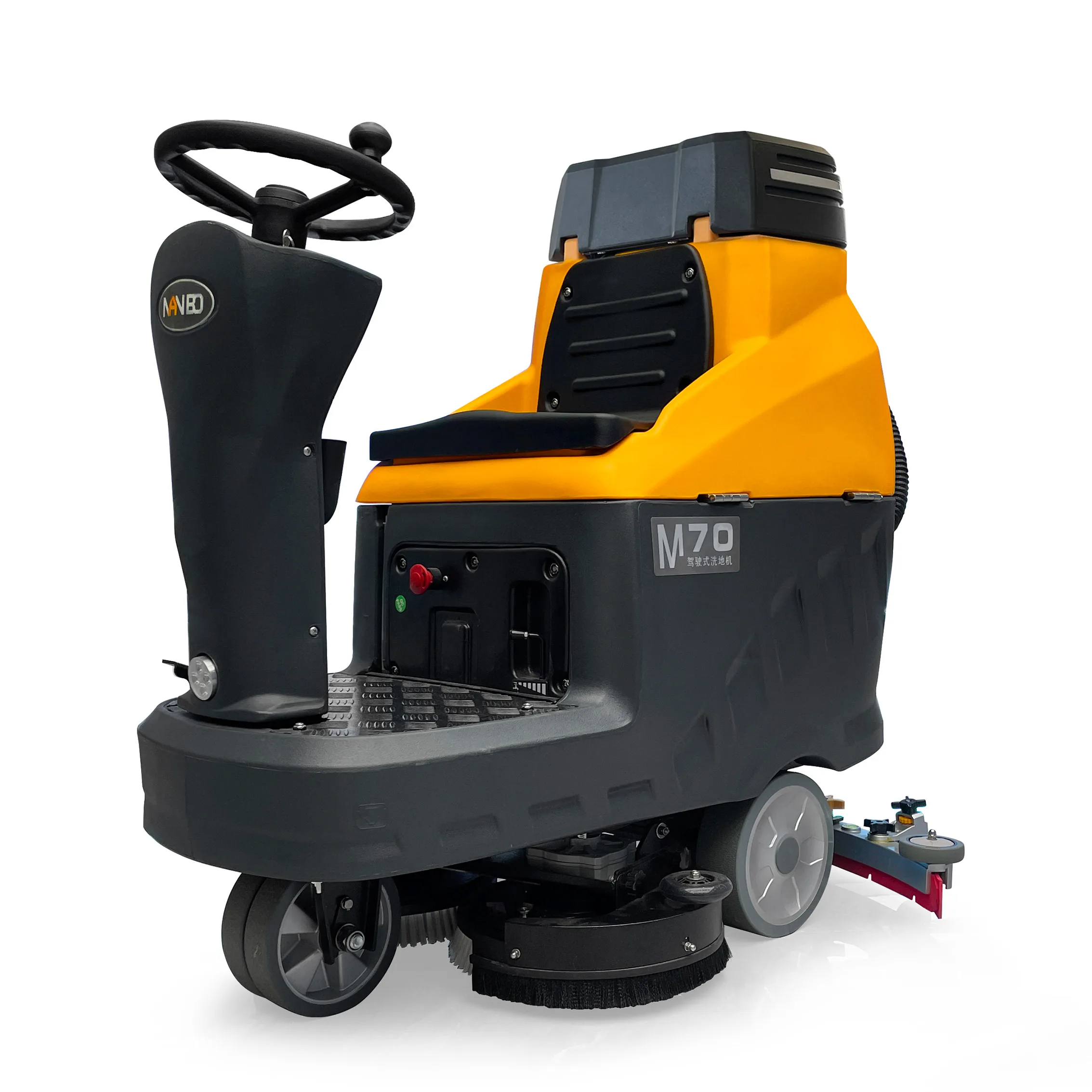
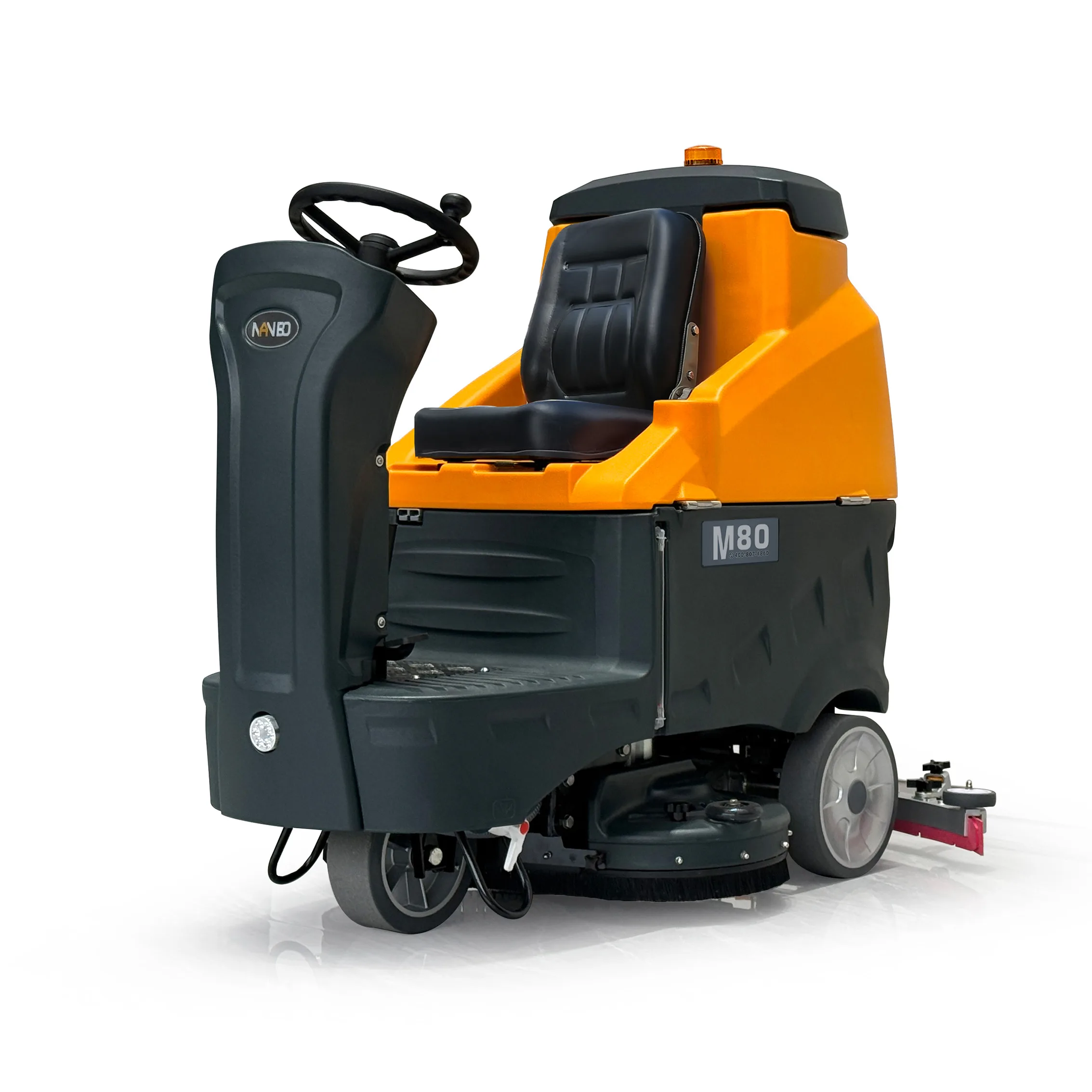
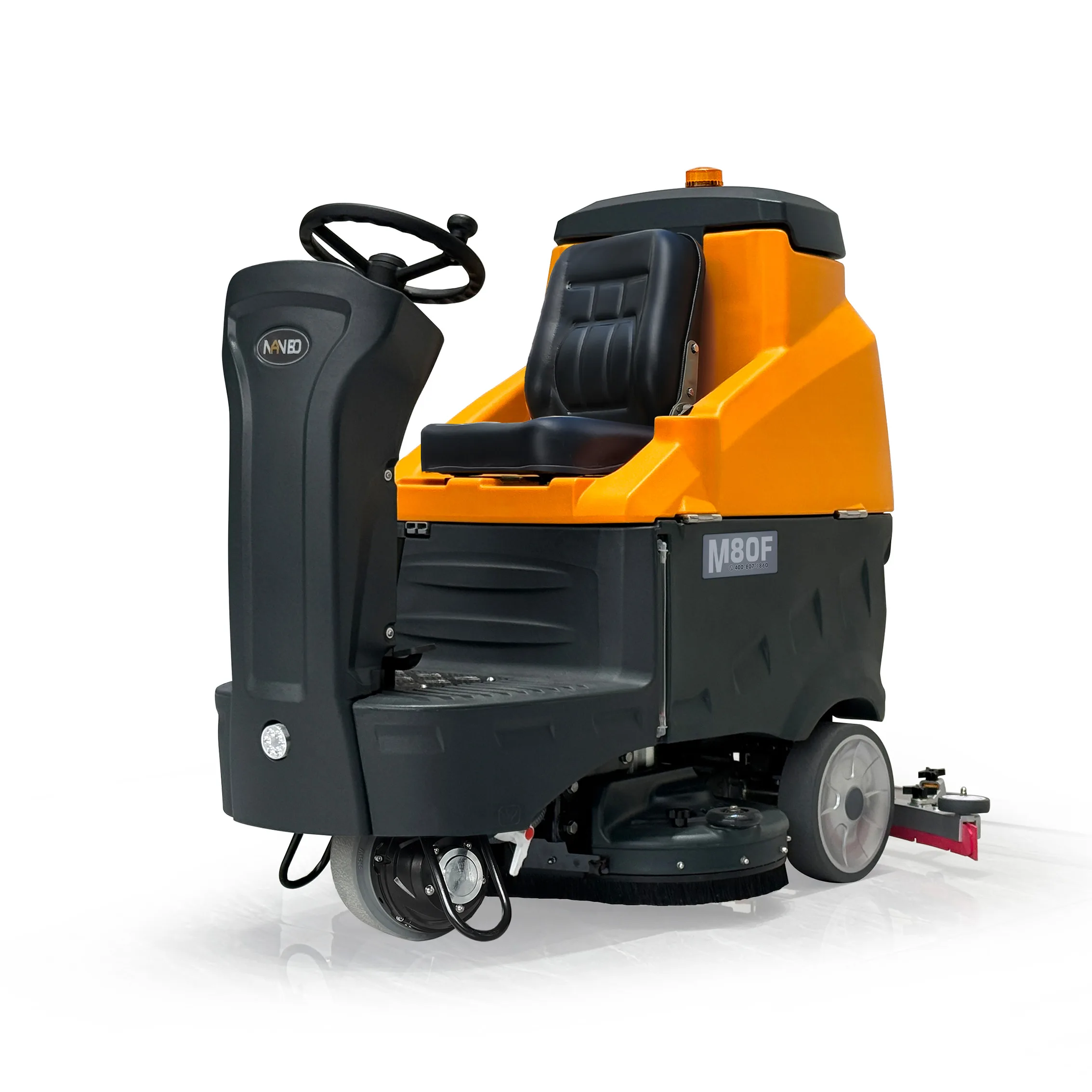
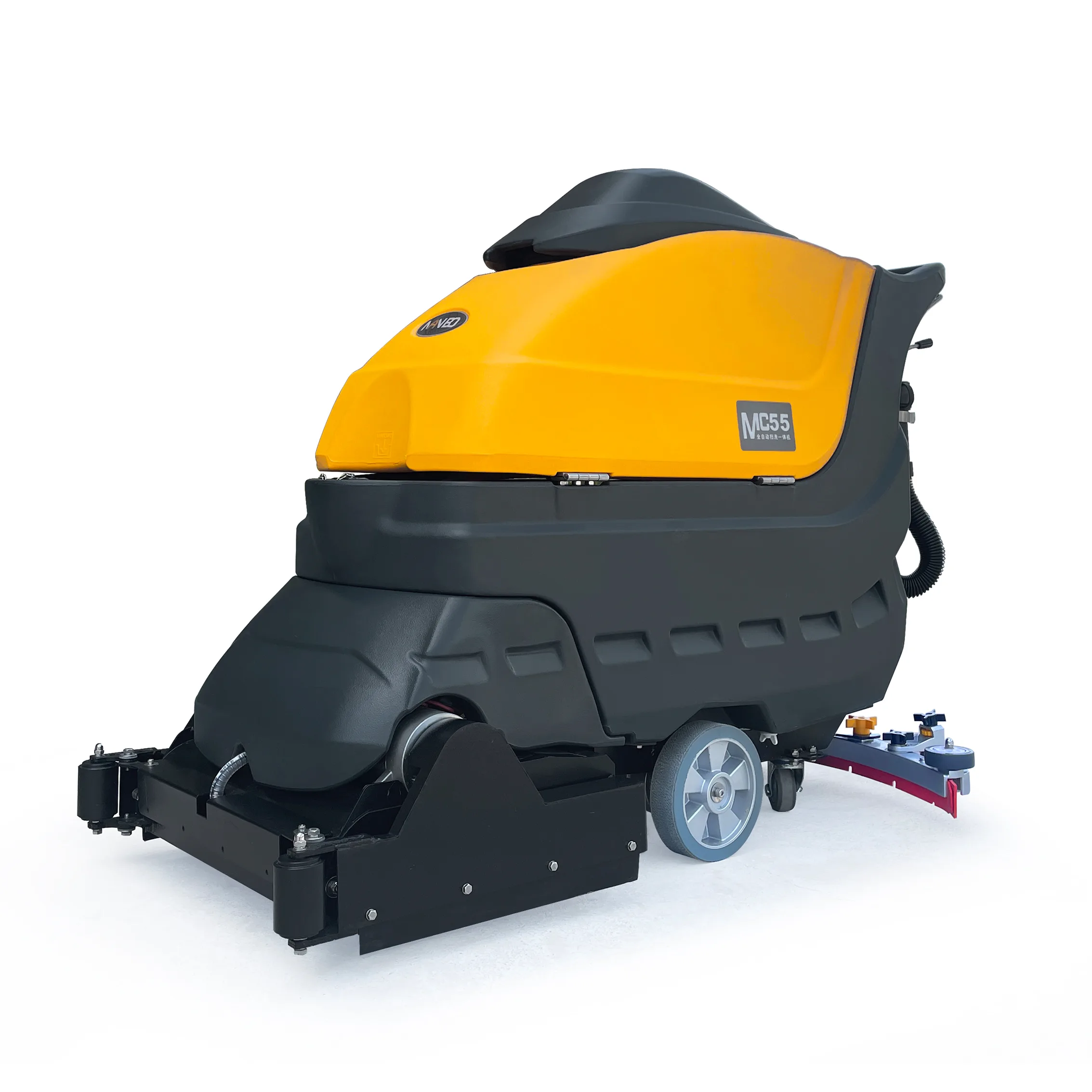
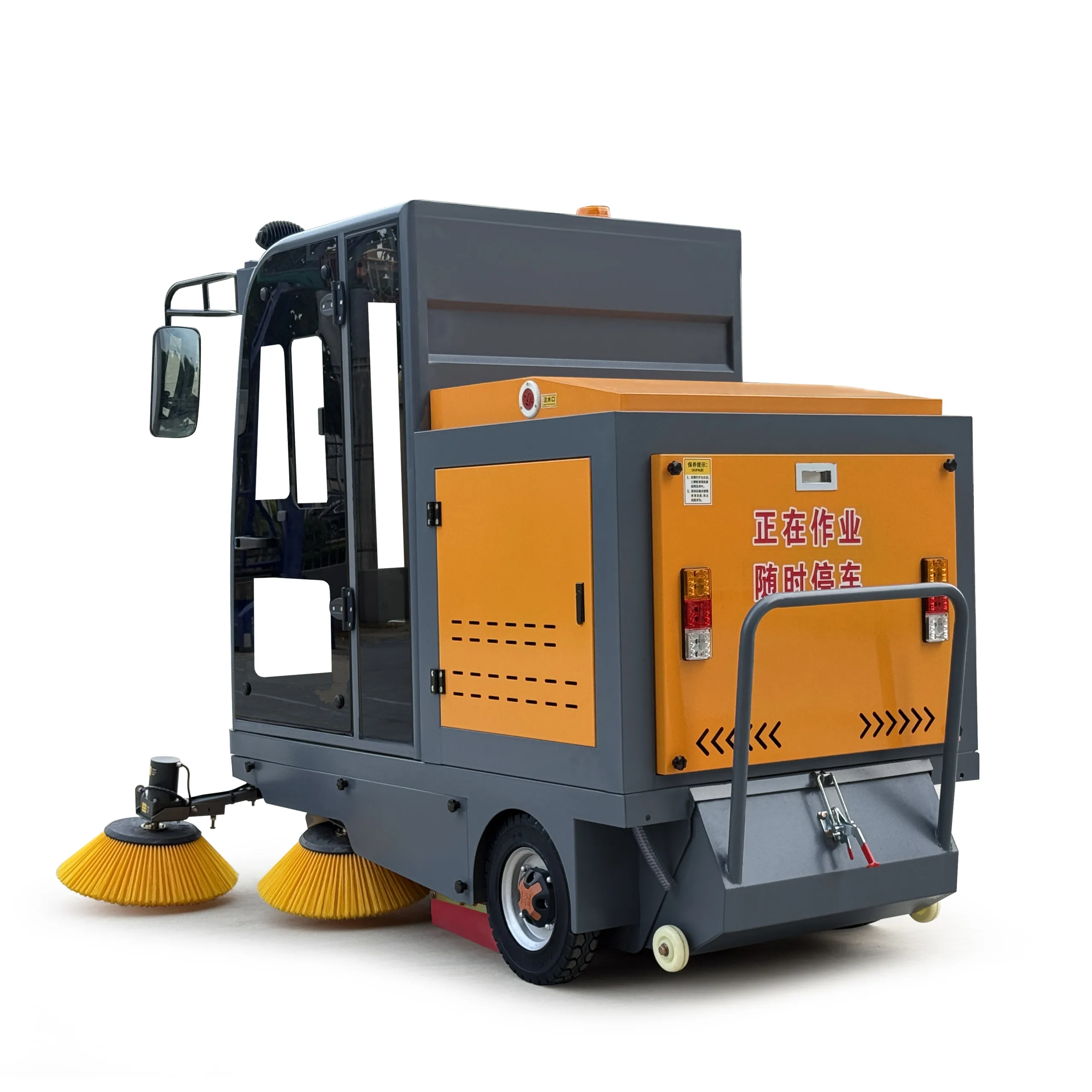
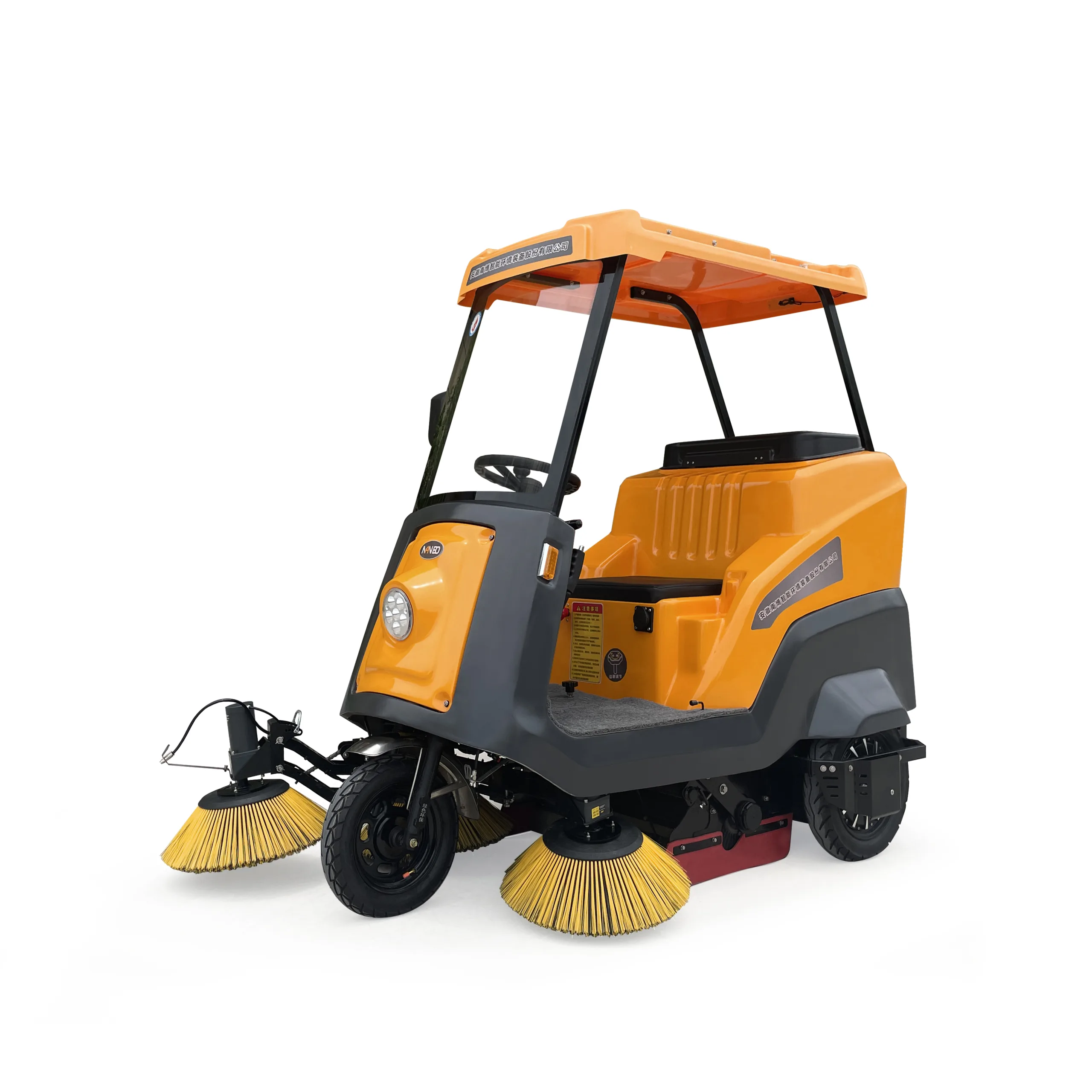
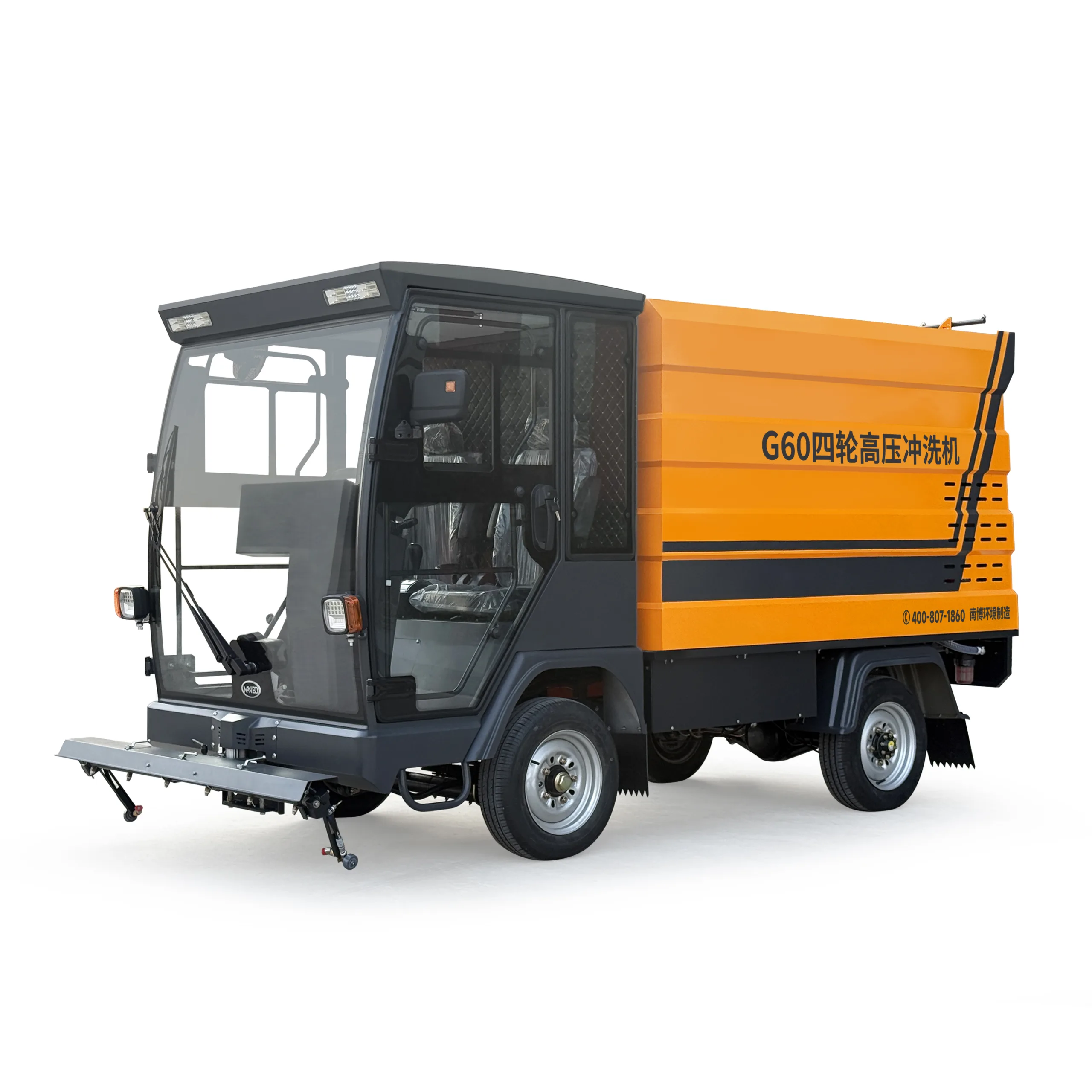
The NANBO M80/M80F is a medium-to-large ride-on scrubber-dryer with two 16-inch disc brushes. Published specifications include maximum cleaning productivity of 5,500 m²/h, a 1,050 mm maximum working width, a 130 L solution tank, a 140 L recovery tank and 4–5 hours of operating time. It uses a squeegee and vacuum system to recover dirty water after scrubbing, which makes it a wet-cleaning candidate in the floor scrubber vs floor sweeper shortlist.
What a floor scrubber does not do
A standard disc scrubber should not be treated as a bulk debris collector. Screws, stones, cable ties, wood blocks and packaging pieces can damage the squeegee, obstruct hoses or interfere with the brush deck. Pre-sweeping improves cleaning consistency where significant loose debris is present.
The floor scrubber vs floor sweeper choice must therefore consider the order of operations. If the floor contains both grit and oily film, a sweeper can remove the abrasive loose material before the scrubber performs wet cleaning.
What is a sweeper-scrubber?
A sweeper-scrubber combines selected debris collection, wet agitation and water recovery. This can reduce separate passes in facilities where dry fragments and wet contamination regularly appear on the same route.
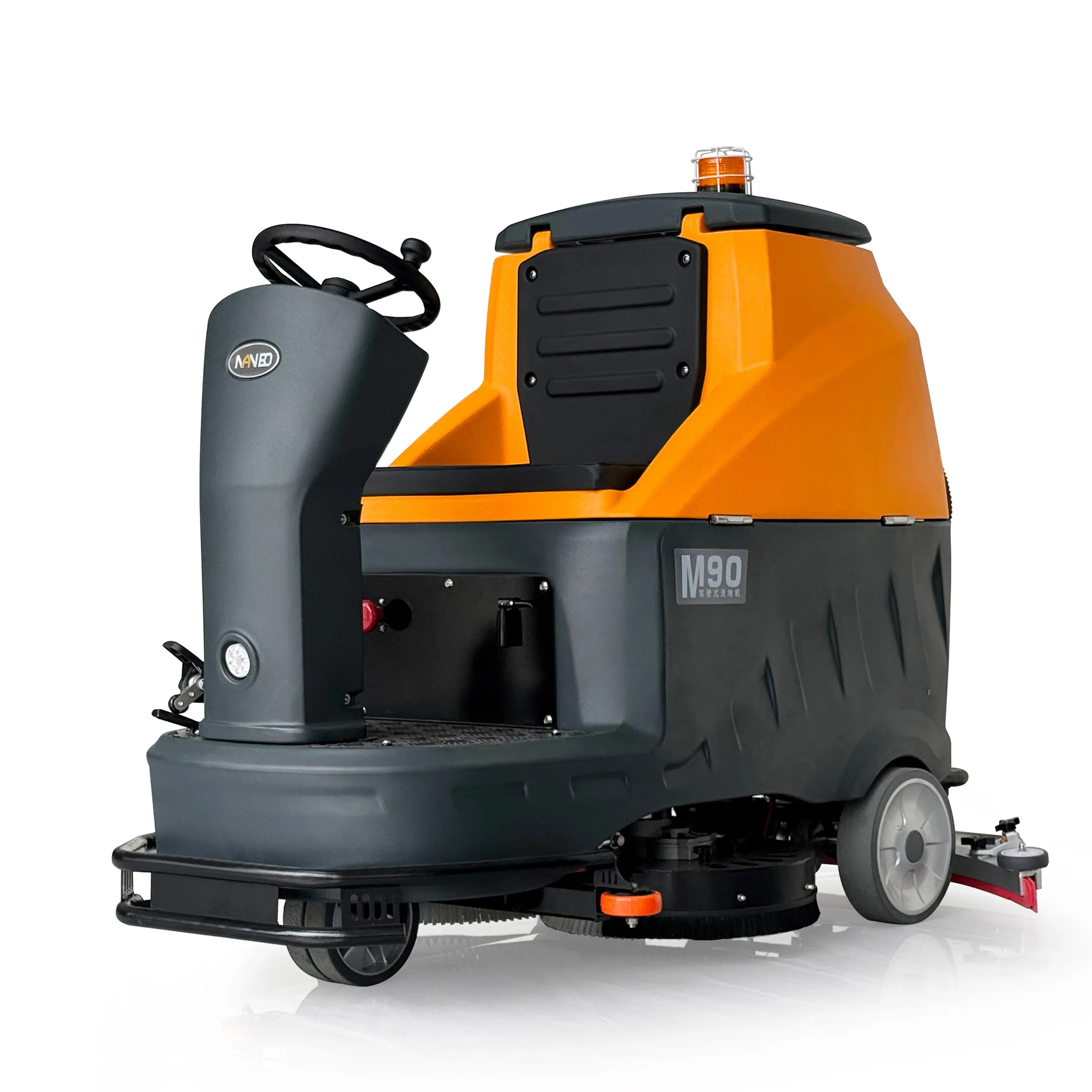
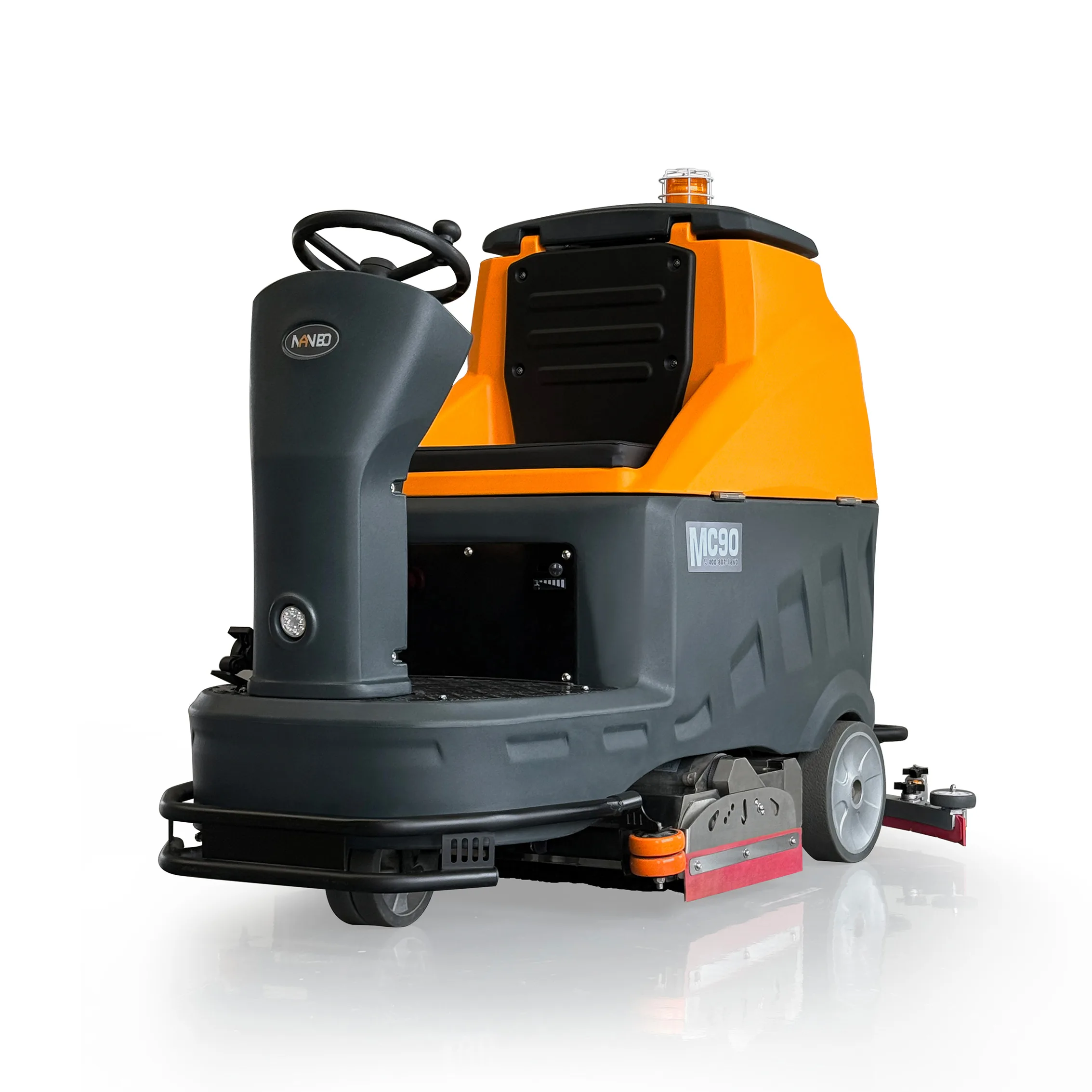
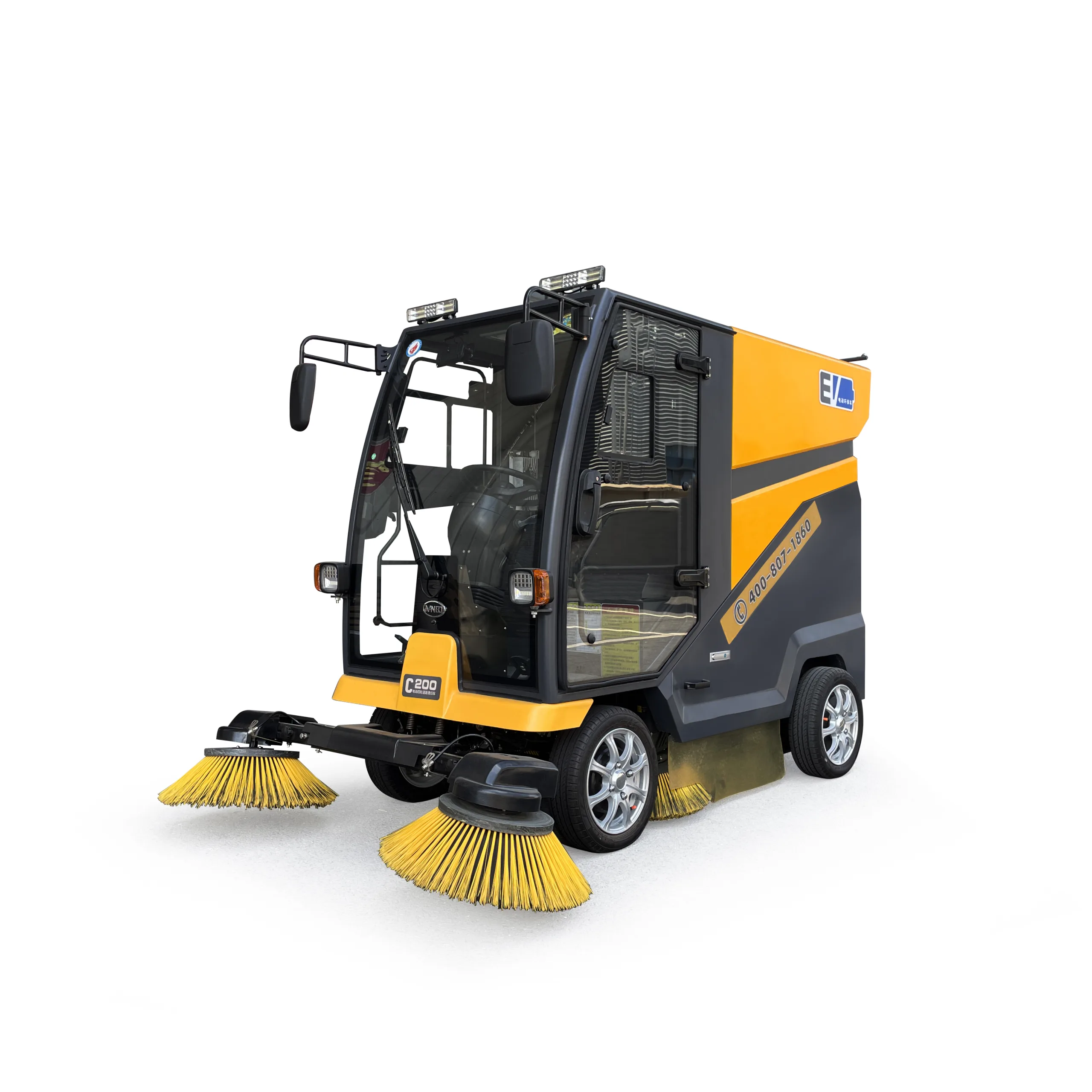
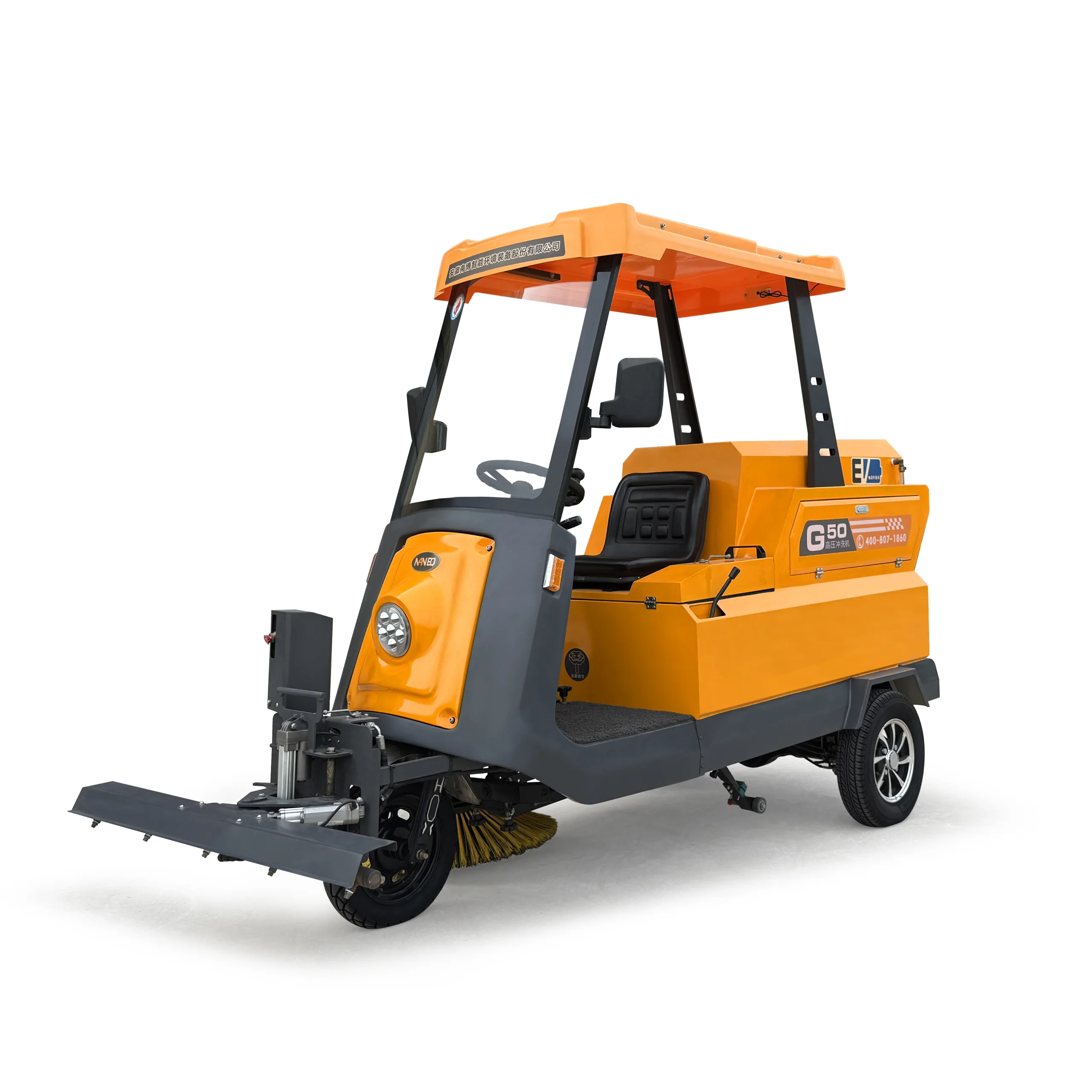
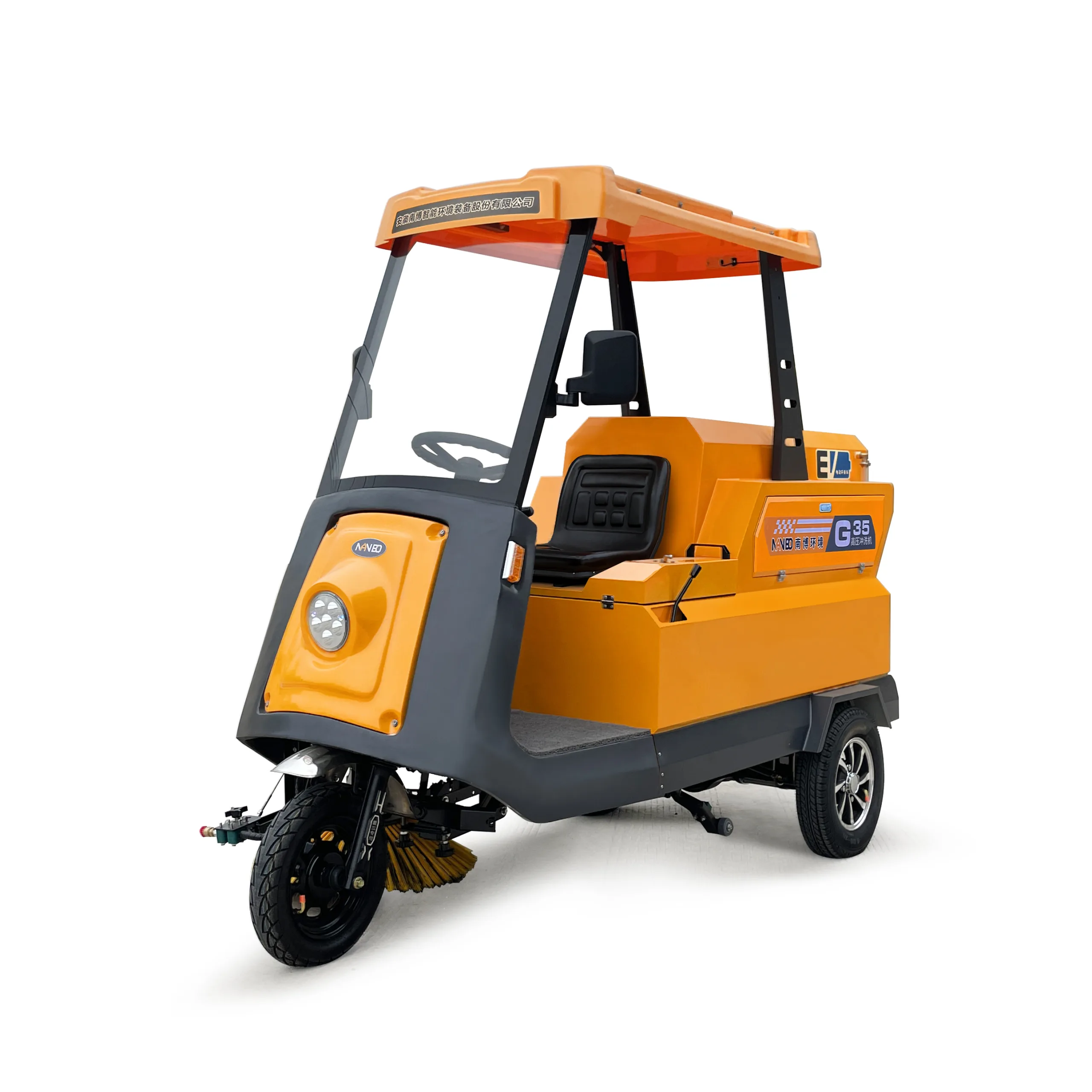
The NANBO MC90 uses dual cylindrical brushes and a debris hopper to collect selected loose material while scrubbing and recovering dirty water. Published specifications include maximum cleaning productivity of 6,200 m²/h, a 1,150 mm maximum working width, a 25 L debris hopper, a 200 L solution tank, a 210 L recovery tank and 3–4 hours of operating time.
The combined format changes the floor scrubber vs floor sweeper calculation, but it does not eliminate the need to classify debris. Oversized pieces, long material that can wrap around brushes, hazardous waste and objects outside the machine’s collection capability still require removal before cleaning.
Start with a contamination audit
Before comparing models, inspect the floor at the beginning, middle and end of a normal production or traffic cycle. Record the contamination by zone instead of assigning one description to the entire building. A documented audit makes the floor scrubber vs floor sweeper recommendation easier to verify.
Dry loose debris
Examples include dust, sand, paper, leaves, crumbs, wood chips and selected metal filings. Record approximate particle size, volume, density and whether the material becomes airborne. A sweeper is usually the first category to test.
Attached dry soil
Fine dust may be compacted by forklift tires or foot traffic. A sweeper may collect the loose portion while leaving an embedded film. Test whether dry sweeping achieves the required result or whether periodic scrubbing is necessary.
Wet or oily contamination
Examples include mud, process water, oil residue and sticky films. Confirm chemical compatibility, wastewater handling and site safety requirements. A scrubber is usually the more relevant category.
Mixed contamination
Warehouses and factories often contain both dry debris and attached wet soil. The floor scrubber vs floor sweeper plan may differ by zone: sweeping at loading docks, scrubbing in production aisles and a combined process in heavily contaminated transition areas.
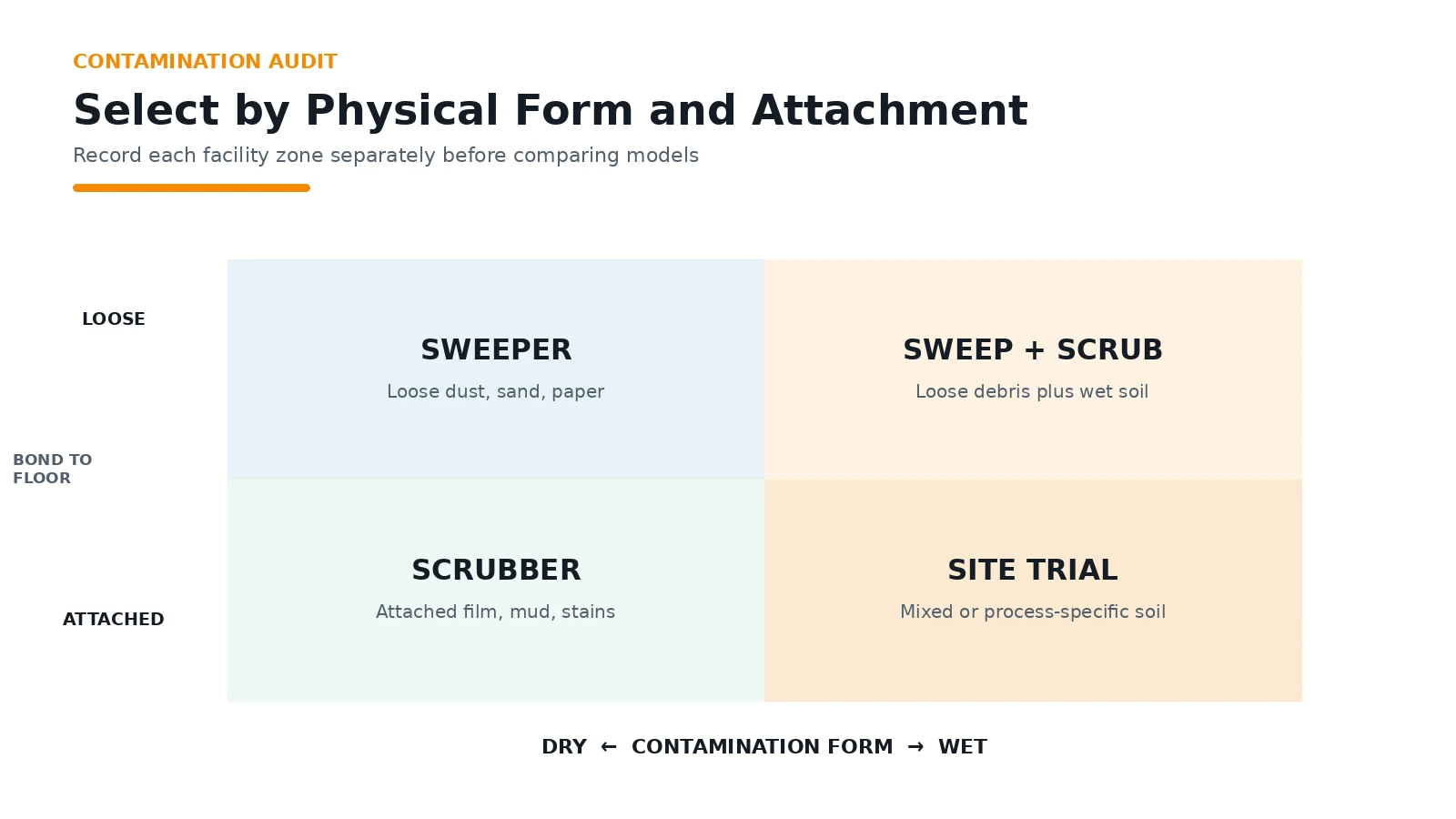
Image 3. Classify contamination by physical form and how strongly it is attached to the floor.
Eight selection factors beyond contamination
1. Required floor result
Define the acceptable result in measurable terms. “Cleaner” is not specific enough. Decide whether the task requires debris removal, visible dust reduction, removal of attached film, wastewater recovery, rapid drying or preparation for a hygiene procedure.
For the floor scrubber vs floor sweeper decision, a requirement to wash and recover dirty water points toward a scrubber. A requirement to collect dry material without wetting the floor points toward a sweeper.
2. Floor material and condition
Inspect whether the surface is sealed concrete, epoxy, tile, stone, asphalt or another material. Note cracks, expansion joints, uneven areas and damaged coatings. Brush or pad selection should match both soil and surface. Test an inconspicuous area when compatibility is uncertain, then record the result in the floor scrubber vs floor sweeper comparison.
3. Cleanable area and route layout
Calculate net cleanable area after removing racks, machinery and permanent obstacles. Measure the narrowest doorway, aisle and elevator. Mark turning zones, dead ends, ramps, drains and refill points. Machine width must include the complete chassis and attachments, not only the published cleaning or sweeping width. Access failures can invalidate an otherwise reasonable floor scrubber vs floor sweeper choice.
4. Realistic productivity
Published maximum productivity helps compare models, but real routes include overlap, turns, dumping, refilling, draining, traffic delays and operator checks.
Planning productivity = published maximum productivity × site efficiency factor
For an early floor scrubber vs floor sweeper model, a buyer may test several assumptions—for example, 70% for an open route, 55% for a mixed route and 40% for a congested route. These are planning examples, not NANBO guarantees. Replace them with demonstration data whenever possible.
5. Hopper and tank interruptions
A sweeper stops when the hopper must be emptied or the filter and brushes require attention. A scrubber stops when the solution tank needs filling or the recovery tank needs draining and rinsing. Compare the time and travel distance for each interruption.
The floor scrubber vs floor sweeper cost model should include all non-cleaning stops. A higher nominal productivity figure may deliver little advantage if the machine repeatedly travels to a distant drain or disposal point.
6. Dust control and indoor air requirements
Dry sweeping can disturb fine particles if brush, suction and filtration systems are poorly matched to the soil. Ask about filter type, filter-cleaning method, dust-suppression water and maintenance intervals. Facilities with sensitive processes need their own industrial hygiene assessment; a machine specification cannot replace exposure monitoring. Dust data should therefore influence the floor scrubber vs floor sweeper decision.
7. Wastewater and disposal
Scrubbing produces wastewater that may contain detergent and process contamination. Confirm local discharge rules and facility procedures before selection. A sweeper produces dry collected waste that may require different handling. The floor scrubber vs floor sweeper decision must include disposal routes, not only cleaning speed.
8. Maintenance and service support
Review daily access to brushes, squeegee blades, filters, hoppers, tanks and hoses. Confirm consumable part numbers, recommended spares, warranty terms, dealer capability and remote technical support. A machine with slightly lower rated output may be the better operational choice if it is easier to maintain locally. Add service response time to the floor scrubber vs floor sweeper scorecard.
NANBO product comparison using published specifications
| Model | Machine type | Published maximum productivity | Working width | Collection capacity | Operating time | Typical starting application |
|---|---|---|---|---|---|---|
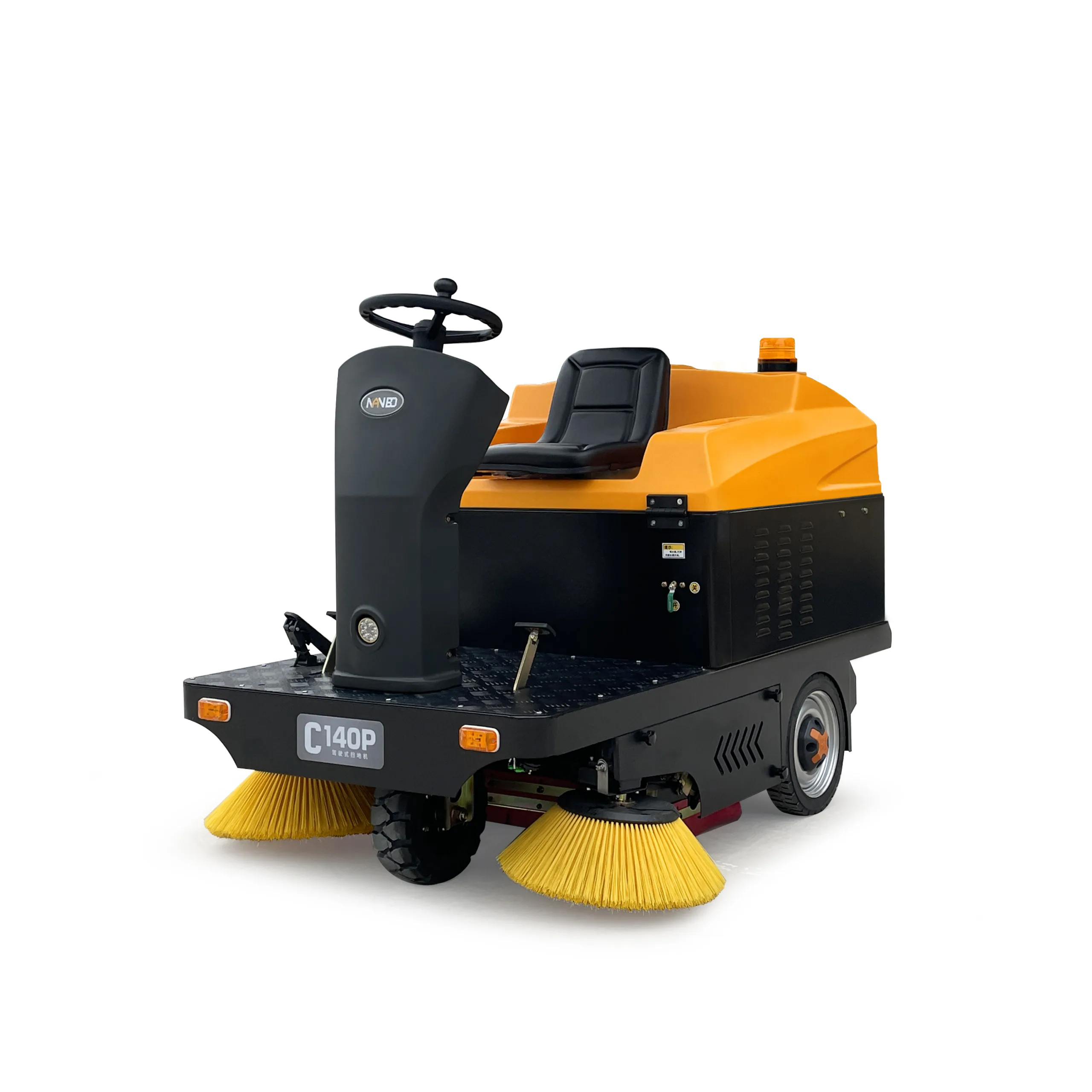
| C90 / C90P | Ride-on floor sweeper | 10,000 m²/h sweeping | 1,250 mm | 85 L hopper; 65 L dust-suppression water tank | 3–4 h | Warehouse, campus, workshop and parking debris |
| C120 / C120P | Ride-on floor sweeper | 7,000 m²/h sweeping | 1,300 mm | 90 L hopper; 50 L dust-suppression water tank | 4–5 h | Large dry-debris routes and outdoor areas |
| M80 / M80F | Ride-on scrubber-dryer | 5,500 m²/h cleaning | 1,050 mm | 130 L solution; 140 L recovery | 4–5 h | Large hard floors with attached soil and wet-cleaning needs |
| MC90 | Ride-on sweeper-scrubber | 6,200 m²/h cleaning | 1,150 mm | 25 L hopper; 200 L solution; 210 L recovery | 3–4 h | Industrial floors with selected debris and wet contamination |
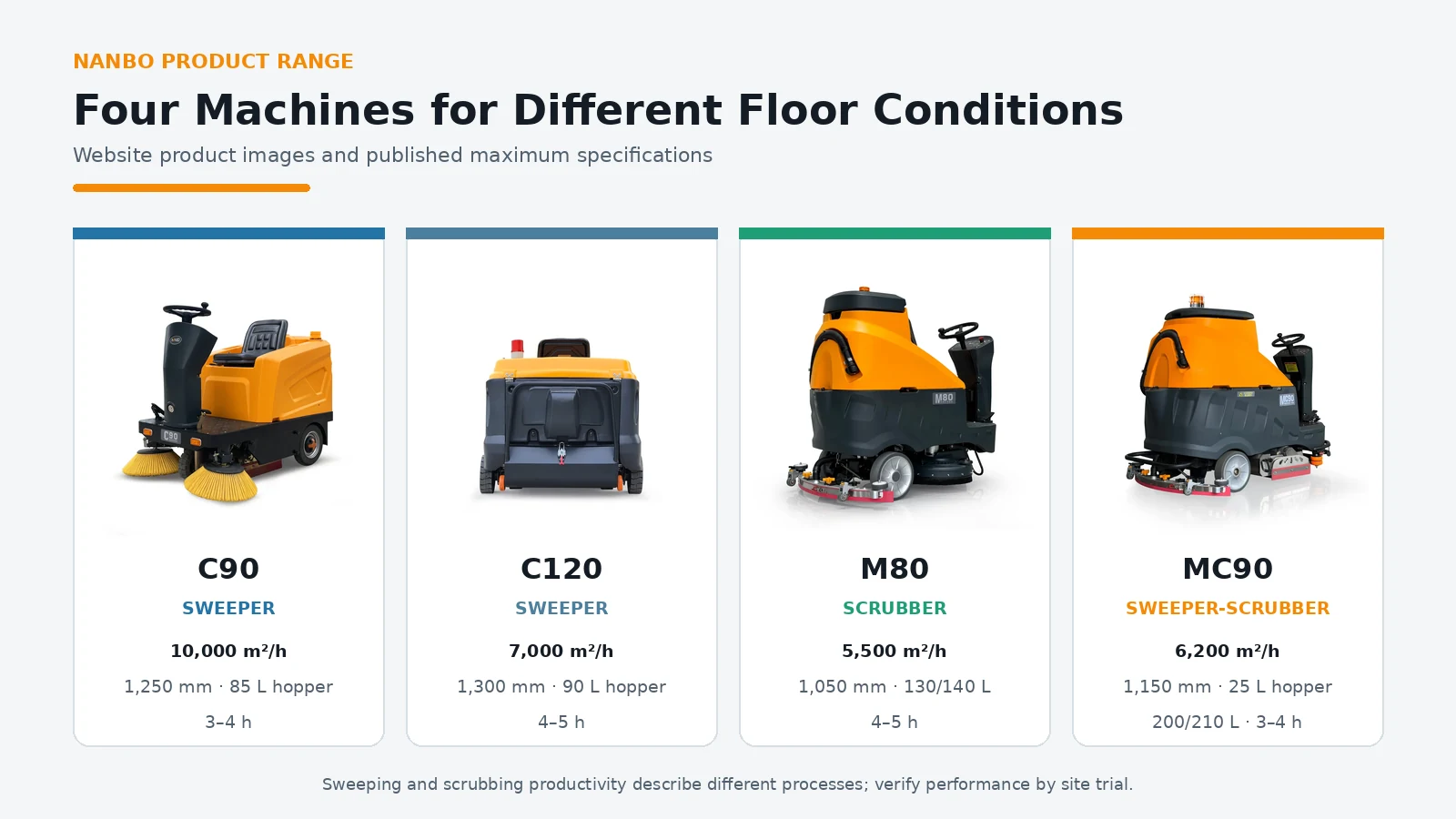
Image 4. Product images and specifications are based on NANBO website materials. Confirm the final configuration before ordering.
This table supports the floor scrubber vs floor sweeper shortlist, but it does not rank the machines from best to worst. Sweeping productivity and scrubbing productivity describe different jobs and should not be compared as if they were the same test. A 10,000 m²/h sweeper does not replace a 5,500 m²/h scrubber when the required outcome is removal of attached oil film.
Recommendations by facility type
Warehouse and logistics center
Use a sweeper where packaging fragments, pallet dust, sand and tracked-in material dominate. Use a scrubber for tire marks, spills and attached soil. Large mixed facilities often benefit from a two-stage plan: sweep the route first, then scrub high-soil lanes. Evaluate a combination machine where both tasks repeatedly overlap and document the floor scrubber vs floor sweeper route by zone.
Manufacturing workshop
Map each process zone separately. Metal filings, wood chips and dry particulate may suit a sweeper within the machine’s collection limits. Coolant residue, mud and oily film may require scrubbing and an approved chemical procedure. The floor scrubber vs floor sweeper recommendation should reflect debris hazards and production controls.
Shopping mall and supermarket
Indoor public areas may require wet cleaning, water recovery and rapid drying, making a scrubber the usual starting category. Entrances, parking zones and loading areas may still require dry sweeping. Test noise, maneuverability and pedestrian separation.
Parking garage
Dry dust, leaves and sand can favor a sweeper, while tire film and wet contamination can require periodic scrubbing. Inspect ramps, drainage, turning space and ventilation. Confirm gradeability and braking requirements for the exact route.
Campus, park and public square
Outdoor litter, leaves, grit and dust usually point toward a sweeper. Scrubbing may be required on washable hard-surface zones with attached contamination. Surface drainage and water availability influence the floor scrubber vs floor sweeper plan.
Food-processing or hygiene-controlled area
The required sanitation procedure, approved chemistry, wastewater handling and verification standard control the decision. A scrubber can support mechanical soil removal, but it does not automatically validate sanitation. Obtain approval from the facility’s quality and food-safety team.
When should you use both machines?
Use separate sweeping and scrubbing passes when:
- the debris volume exceeds a scrubber’s collection capability;
- abrasive grit could damage or reduce the effectiveness of squeegee blades;
- dry and wet cleaning occur at different frequencies;
- separate machines can work in different zones at the same time;
- the facility needs specialized dust filtration and specialized wet cleaning.
This approach can deliver better process control than forcing one machine to handle every condition. In the floor scrubber vs floor sweeper calculation, include the additional operator time and equipment maintenance, but also account for fewer blocked hoses, cleaner scrubber tanks and more consistent squeegee performance.
When does a combination machine make sense?
A combination machine may be suitable when loose debris and attached contamination consistently appear on the same route, cleaning time is limited and the debris falls within the machine’s design range. It can reduce duplicate travel and simplify the cleaning sequence.
However, combination equipment is not automatically the lowest-cost solution. Consider machine size, purchase price, brush and squeegee maintenance, operator training, hopper capacity and service support. Run a demonstration using representative debris and soil before changing the floor scrubber vs floor sweeper plan.
Five-step site trial procedure
- Prepare a representative test zone. Include normal debris, attached soil, turns, edges and traffic conditions.
- Record the starting condition. Photograph the floor and measure the test area.
- Run each machine at an approved operating setting. Use trained operators and the supplier’s recommended brush, pad or filter configuration.
- Measure the result and elapsed time. Record debris remaining, visible film, residual water, dumping or refill stops and operator observations.
- Inspect post-use maintenance. Check the hopper, filter, brushes, squeegee, tanks and time required to return the machine to service.
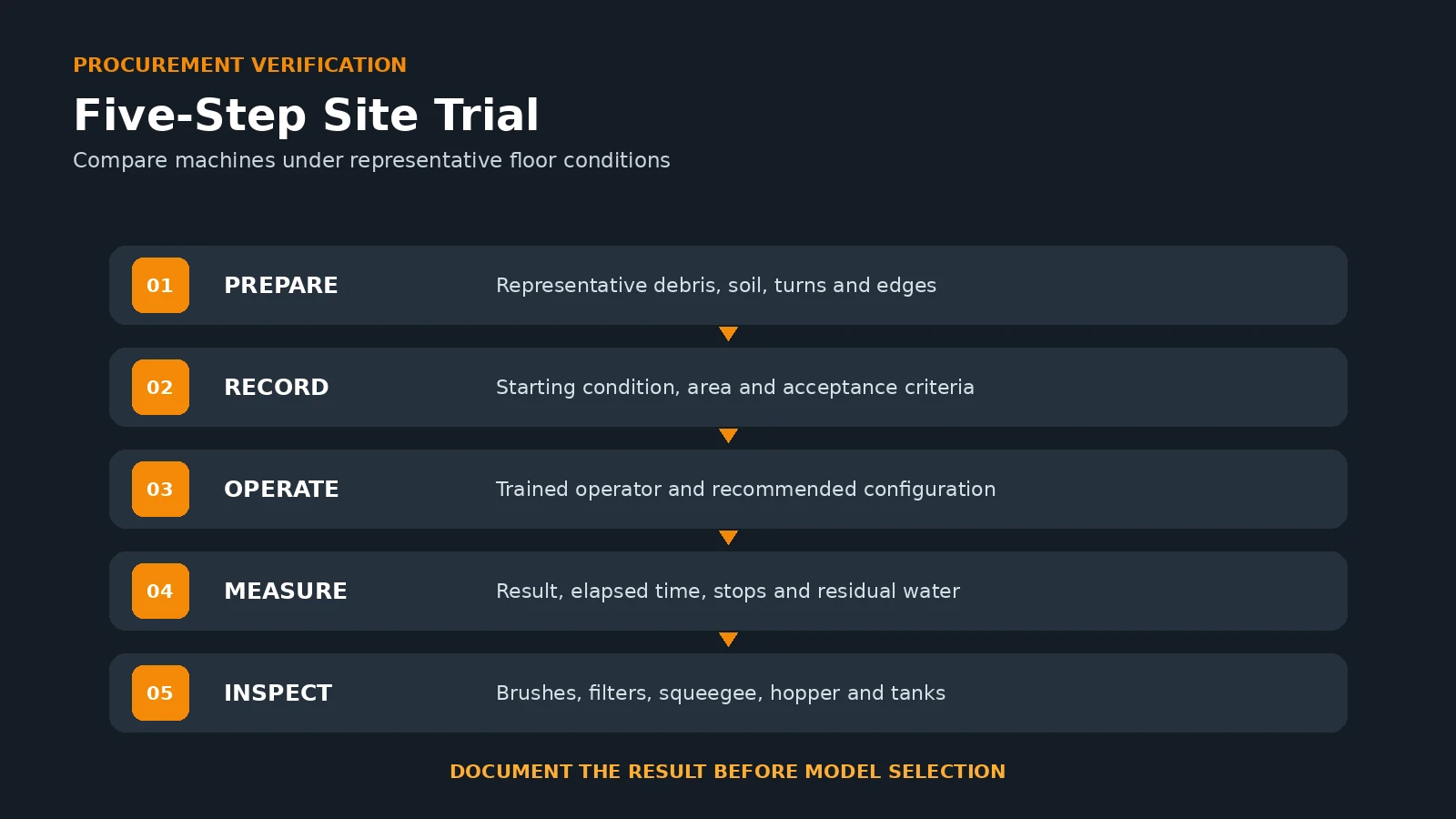
Image 5. A controlled site trial creates better evidence than comparing specifications alone.
The site trial converts a general floor scrubber vs floor sweeper discussion into a documented purchasing decision. For repeatability, keep the test area, operator, contamination and acceptance criteria as consistent as possible. Attach photographs and measured results to the final floor scrubber vs floor sweeper recommendation.
Questions to include in your inquiry
Send the manufacturer or distributor:
- destination country and required quantity;
- net cleanable area and cleaning frequency;
- floor material, condition and slope;
- debris type, approximate size and daily volume;
- wet soil, oil or chemical description;
- minimum aisle, doorway and elevator dimensions;
- indoor or outdoor use and dust-control requirements;
- available cleaning time, charging window and local power supply;
- wastewater and dry-waste disposal arrangements;
- photos, video or a marked facility plan;
- OEM/ODM, spare-parts and delivery requirements.
These details allow NANBO to assess the floor scrubber vs floor sweeper requirement without relying on building size alone.
Frequently asked questions
Can a floor sweeper wash the floor?
No. A conventional sweeper collects dry debris. A water tank may support dust suppression, but it does not provide the solution application, agitation and dirty-water recovery of a scrubber.
Can a floor scrubber pick up dust and debris?
A scrubber can handle limited fine material depending on its design, but a standard disc scrubber should not be used as a bulk debris collector. Remove large or hazardous objects first and pre-sweep when debris volume is significant.
Should a warehouse sweep before scrubbing?
Yes, when the floor contains loose grit, packaging fragments, wood chips or other debris that could obstruct hoses or damage the squeegee. A relatively clean warehouse may not require a separate sweeping pass every time. Base the floor scrubber vs floor sweeper sequence on an actual contamination audit.
Is a sweeper-scrubber better than two separate machines?
It can reduce passes when mixed contamination occurs on the same route, but it has its own size, capacity, cost and maintenance requirements. Compare a combined demonstration with a two-machine process.
Why does the C90 have a water tank if it is a sweeper?
The water supports dust-suppression functions. It should not be confused with the solution tank and recovery tank used for wet scrubbing.
Which NANBO machine suits dry warehouse debris?
The C90 or C120 is a logical starting point for evaluation because both are ride-on sweepers with hoppers, side brushes and dust-control systems. Select the model after checking route dimensions, debris type, hopper cycle and required operating time.
Which NANBO machine suits oily or muddy industrial floors?
The M80 is a starting option for large-area wet scrubbing. When selected loose debris and wet contamination repeatedly occur together, the MC90 sweeper-scrubber may be more appropriate. Test the actual soil and debris before finalizing the floor scrubber vs floor sweeper choice.
How often should brushes, filters and squeegees be checked?
Operators should inspect the applicable wear parts before and after use according to the machine manual and site schedule. Dust load, debris type, floor roughness and operating hours affect service frequency.
Final recommendation
Choose equipment by contamination and required floor result first, then verify access, productivity, capacity, disposal and service support. A sweeper removes loose dry material. A scrubber washes attached soil and recovers dirty water. A combination machine can handle selected mixed conditions in one process.
The most reliable floor scrubber vs floor sweeper decision uses a zone-by-zone contamination audit and a controlled demonstration. Send NANBO your floor plan, route measurements, soil photos, debris samples, cleaning schedule and destination country for a model recommendation.
Review the NANBO floor scrubber range, NANBO floor sweeper range, C90 ride-on sweeper, C120 ride-on sweeper, M80 ride-on scrubber-dryer and MC90 sweeper-scrubber. Contact NANBO to discuss a quotation, distributor package or OEM/ODM requirement.